Part 3
That loop — “but it’s you” — is the whole ethical knot of catfishing in one breath. Karrueche lied about her name and where she lived. She didn’t invent a whole new personality. She used a real connection, a real history, and a real crush. The question becomes: is catfishing always a betrayal, or can it be a misguided attempt to get someone to see you? In this case, Karrueche wasn’t a stranger inventing a fantasy. She was a girl who had already been with Brandon, who knew him, and who wanted him to fall for her — not the girl he’d written off after high school. The lie was a mask. The face underneath was real.
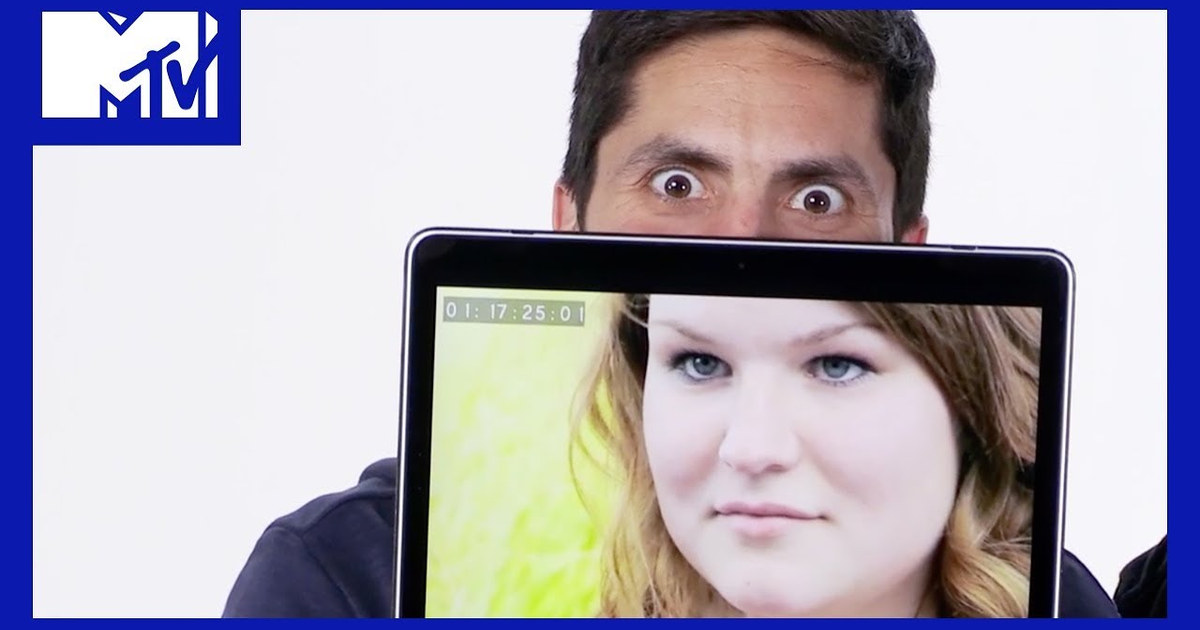
What makes this episode so dizzying is the meta-layer. Karrueche Tran is a public figure — an actress and model known for her role in the TNT series Claws and for her high-profile relationship with Chris Brown. In this episode, she plays a version of herself: a woman who went to school with Brandon, hooked up with him, and then created a fake profile to talk to him. The guest host is also the catfish. That blur between persona and person is exactly what the show is about, and Karrueche leans into it with a kind of unflinching honesty that makes you forget, for a second, that you’re watching a reality show.
The hosts, Nev Schulman and Max Joseph (who left the show after season seven), act as mediators, not judges. They don’t yell or shame. They ask simple questions: “You made the McKenna profile?” “What does Nikki know?” They let the silence do the work. That restraint is part of the show’s appeal. Catfish isn’t a courtroom; it’s a mirror. And in this confrontation, the mirror reflects something uncomfortable: we all curate who we are online. Karrueche just took it one step further.
This isn’t a new story. Cinema has been obsessed with love built on mistaken identity for decades. Alfred Hitchcock’s Vertigo (1958, 128 minutes, available on streaming platforms like Peacock) is the ultimate example: a man falls for a woman who is not who she says she is, and the revelation destroys him. Anthony Minghella’s The Talented Mr. Ripley (1999, 139 minutes, Paramount+) takes it further — identity as a full-blown performance, love as a byproduct of a lie. Catfish sits in that same tradition, but with a twist: the deception isn’t a sociopath’s scheme. It’s a lonely girl’s Hail Mary. The comparison shows that we’ve always been fascinated by the gap between who someone is and who they pretend to be — especially when our hearts are involved.
[[AD]]
So can love survive a lie? Yes — if the lie is a mask over a real person. Brandon loved McKenna’s personality. That personality was Karrueche’s. The name and the location were fake, but the connection was genuine. What can’t survive is the absence of trust. Brandon’s final line, “Yeah, but it’s you,” isn’t anger. It’s confusion. He’s not sure if he’s been tricked or if he’s been seen. The episode doesn’t resolve whether they date. It leaves that open, which is more honest than a tidy ending. Because in real life, love after a lie isn’t a plot twist — it’s a question that hangs in the air.
Karrueche’s confession doesn’t give us a clean answer. It gives us a better question: when you fall for someone online, are you falling for a name, a face, a location — or the person behind the screen? Catfish has always known the answer is messier than we’d like. And that’s why we keep watching.
Reframing the Question: What Catfish Says About Who We Fall For
So here’s the twist you didn’t see coming: the lie isn’t the opposite of love. It’s often a symptom of fear. Karrueche didn’t create McKenna because she wanted to hurt Brandon. She created McKenna because she wanted to talk to him without the baggage of their history. Think about that. She went to school with him for four years. They hooked up. She was obsessed with him—maybe still is. But as Karrueche, she couldn’t just text him. As McKenna, she could. The fake profile wasn’t a weapon. It was a shield.
That reframes everything. The real question isn’t whether the love is real. It’s whether the person you fell for is the person you thought. In this case, the person was Karrueche. But the version he fell for was a curated version of her. A girl from Florida. A girl with a dead phone. A girl who couldn’t video chat. That’s not so different from what all of us do online, is it? We all present edited versions of ourselves. We choose the best photos. We craft the wittiest captions. We leave out the messy parts. Karrueche just took it one step further.
Catfish premiered in 2012, the same year as the documentary’s follow-up, Catfish: The TV Show. It has run for eight seasons on MTV. It has become a reference point for a generation that grew up dating online. The show’s longevity proves that the question is not going away. If anything, it’s getting more complicated. We now live in a world where you can fall in love with someone you’ve never met, someone who might not even be real. And yet, the emotions are real. The connection is real. The heartbreak is real. That’s the paradox at the heart of Catfish.


