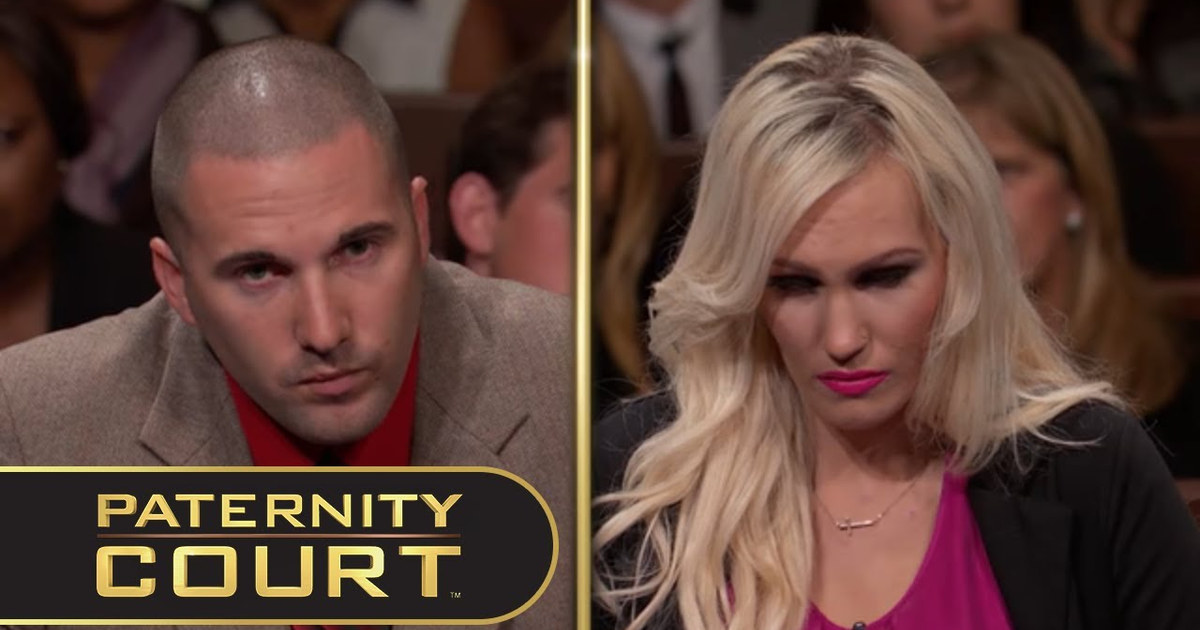
The courtroom is silent, save for the heavy, rhythmic thud of a man’s heart—a sound that seems to vibrate through the very floorboards. Mr. Threlkeld stands there, his posture rigid, a soldier who has survived the deserts of Afghanistan only to find himself fighting a war on his own living room floor. He isn't looking for a medal; he is looking for the truth about a toddler named Liliana. In that singular, agonizing moment before the envelope is opened, the entire history of a fractured marriage hangs in the balance, suspended between the hope of fatherhood and the crushing weight of betrayal.
This isn't just another episode of Paternity Court; it is a masterclass in the collateral damage of long-distance relationships and the toxic erosion of trust. When a spouse is deployed, the distance is supposed to be measured in miles, but for the Threlkelds, it was measured in Facebook messages, secret bank accounts, and the neon glow of a strip club. The transcript of their appearance reveals a couple caught in a cycle of mutual destruction, where every accusation—from 'hooker shoes' to 'makeup sex'—serves as a jagged piece of a puzzle they are both desperate and terrified to complete.
[[AD]]
The Anatomy of a Breakdown
To understand the Threlkeld saga, you have to look at the timeline. It’s a classic case of 'he said, she said' amplified by the pressures of military life. Mr. Threlkeld’s account of finding out about his wife’s infidelity is cinematic in its cruelty: a fellow soldier tapping his boot, the sudden blackout of internet access in a war zone, and the slow, agonizing discovery of digital evidence. It’s a narrative of isolation. While he was serving his country, his home life was being dismantled, one 'like' and one private message at a time.
Mrs. Threlkeld’s defense is equally compelling in its bluntness. She frames her actions not as a betrayal, but as a survival mechanism—a way to bridge the gap left by an 'inadequate' military salary. It’s a clash of perspectives: he sees a moral failing and a violation of the marital contract; she sees a pragmatic, if messy, solution to financial instability. When they finally reunite, the scene is less of a homecoming and more of a collision. The 'clear hooker shoes' anecdote isn't just a petty insult; it’s a symbol of the disconnect between the life he was fighting for and the life he returned to.
[[AD]]
The Paternity Paradox
The most haunting aspect of this case is the 'devious' plan Mr. Threlkeld admits to: intentionally getting his wife pregnant to force her off the pole and back into the home. It’s a desperate, manipulative gambit that highlights the depth of his insecurity. He didn't just want a child; he wanted a tether. He wanted to anchor her to the domestic sphere through the biology of a new life. This admission changes the entire dynamic of the paternity test. It wasn't just about whether he was the father; it was about whether his desperate attempt to save his marriage had actually worked.
The couple’s cycle of 'makeup sex' followed by accusations of infidelity creates a dizzying, repetitive loop. They are trapped in a two-year standoff where the past is constantly weaponized. Mr. Threlkeld admits he hasn't let a single day go by without reminding his wife of her mistakes. It’s a haunting look at how resentment can calcify, turning a marriage into a prison where both parties are both the jailer and the inmate.
[[AD]]
The Verdict and the Aftermath
Spoiler warning: The results arrive, and they are definitive. Liliana is his. The relief that washes over Mr. Threlkeld is palpable, a sudden deflation of the 'wall' he had built between himself and his daughter. But the resolution of the paternity question doesn't solve the marriage. It only clears the path for the real work to begin. As the judge notes, the doubt is gone, but the 'making up' is just starting.
[[VIDEO]]
Returning to that opening moment—the man standing in the courtroom, waiting for the truth—we see him differently now. He is no longer just a soldier or a suspicious husband; he is a man who has been forced to confront the reality of his own actions. The paternity test provided the answer, but the marriage remains a work in progress. It’s a reminder that sometimes, the hardest truth to accept isn't the one in the envelope, but the one we see in the mirror. Stay tuned for our next deep dive, where we explore the psychology of reality TV confrontations and why we can't look away from the wreckage.


