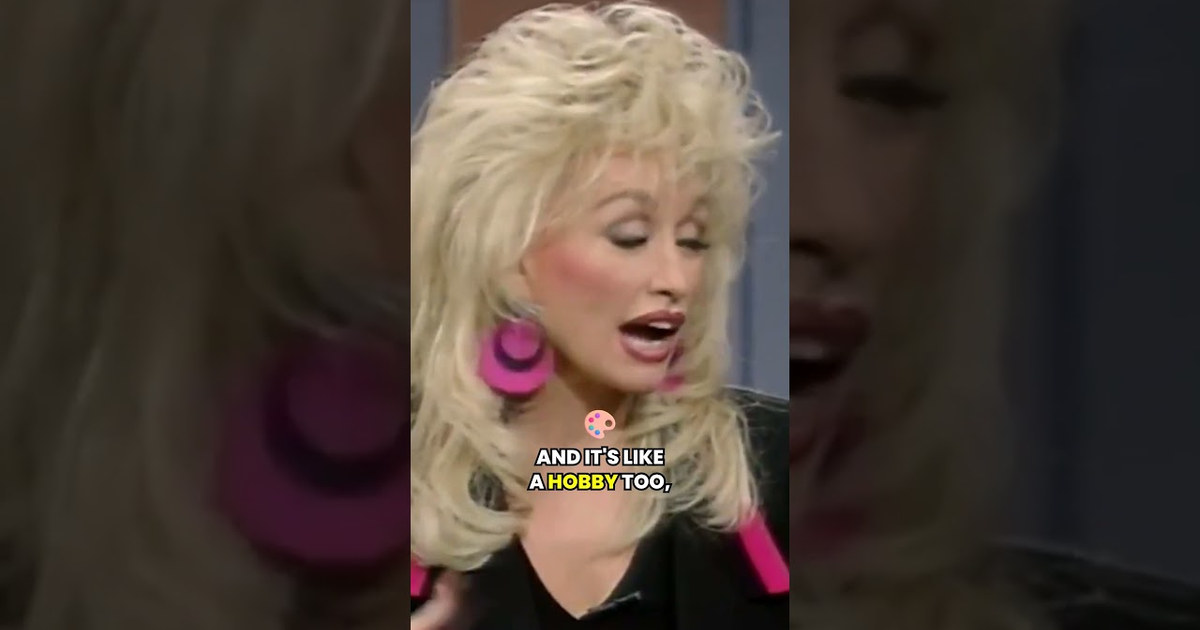
You have probably seen the clip by now. A songwriter sits across from an interviewer, laughing, and admits she can't read music. Not a single note. She doesn't know one note from another on paper. And yet she's written over 3,000 songs.
That moment raises a question that has haunted every artist who ever picked up a guitar or a pen: does creative genius require formal training, or is it something else entirely? The clip doesn't just answer that question. It reframes it.
[[AD]]
The Myth of the Trained Genius
The songwriter explains her process. She makes up melodies, sings them into a tape recorder, and hands them to someone who writes them out. Then she has someone play them on a piano to check the notes. She can tell instantly if something's wrong. "I write the music," she says, "but I still can't read and write music." It hasn't been a hindrance.
It brings to mind "Coal Miner's Daughter" (1980), where Loretta Lynn's songwriting comes not from sheet music but from lived experience. The film understands that some artists are translators of their own lives, not conservatory graduates.
[[AD]]
The Discipline of Inspiration
But the clip's real revelation isn't the lack of training. It's the sheer volume. She writes hundreds of songs a year. She writes while putting on makeup. In the bathtub. She always has a pencil and paper. "They're not all good songs," she admits, "but there's a bunch of them."
She mentions seeing a Jay Leno story about someone whose creative period is midnight to 4 a.m. Her own inspiration hits between 3 a.m. and 9 a.m., when everybody's asleep. She loves the quiet. It gives her a chance to gather "all those wonderful energies." Watching "The Beatles: Get Back" (2021), you see the same truth: songs don't arrive fully formed; they're hammered out in daily sessions.
[[AD]]
The Source of Creativity
That line is the key. She doesn't talk about waiting for the muse. She talks about showing up. She describes God like a farmer, throwing out ideas every morning like chicken feed. Her job is to be there to catch them.
Compare that to "Adaptation" (2002), a film about a writer who agonizes over every sentence, convinced that inspiration is a rare bird. The clip suggests the opposite: ideas are abundant. The discipline is in the gathering.
[[VIDEO]]
So the question isn't whether you can read music. It's whether you can build a life that makes space for the songs. The songwriter in the clip has done that. She's turned creativity into a daily habit, not a lightning strike.
That's the takeaway. You don't need permission or a degree. You need a pencil, a routine, and the willingness to write bad songs until the good ones show up. Next time, we'll look at another artist who turned a limitation into a signature. Until then, keep writing.


