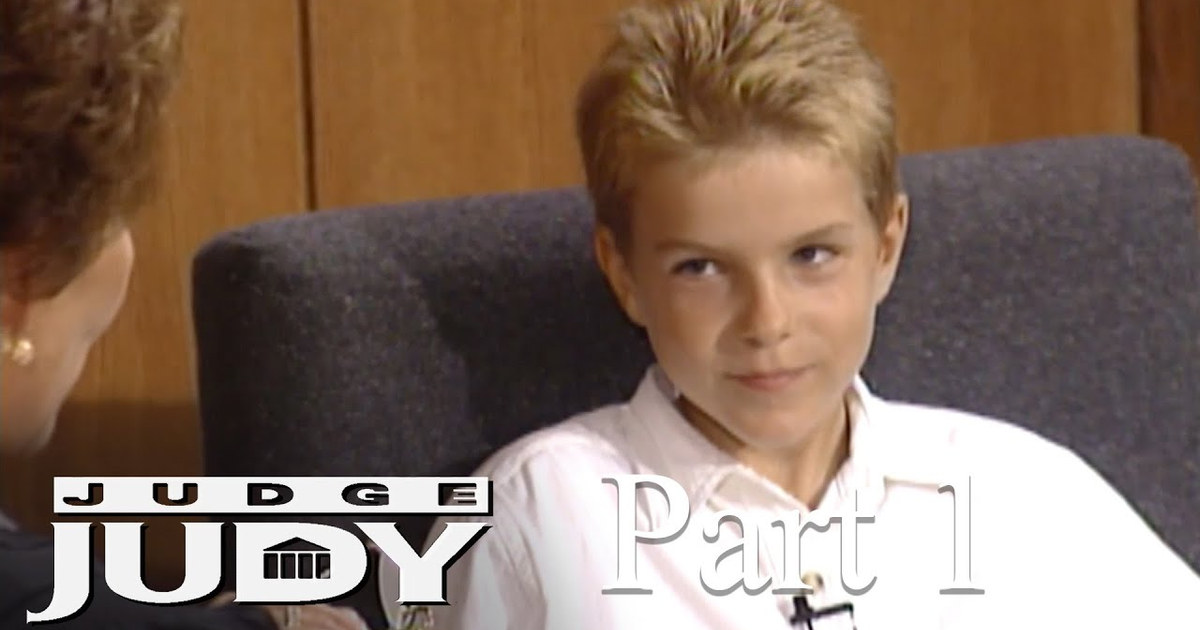
You have probably seen the trailer—or at least the viral clip—of a child standing before a judge, recounting a moment that changed his life. It is the kind of television moment that stops you mid-scroll. But beyond the meme-worthy intensity of Judge Judy, there is a deeper question at play: Can the artificial constraints of a television courtroom actually capture the messy, visceral reality of human conflict?
In the case of Wil versus Norris, we aren't just watching a legal proceeding; we are witnessing the breakdown of the suburban social contract. Much like the tension found in the 1997 film 'The Ice Storm,' where domestic tranquility is merely a thin veneer, this case peels back the layers of neighborly trust to reveal the jagged edges of a traumatic accident.
The plaintiff, Deborah Wil, stands before the bench not just seeking damages, but seeking validation for the terror of seeing her son, Adam, bloodied and wounded. It is a stark reminder that when we bring our private grievances into the public square, we are often looking for more than just a check—we are looking for someone to acknowledge that our pain is real.
[[AD]]
The Reliability of the Witness
The most compelling moment of this episode is the interrogation of young Adam. Judge Judy, ever the pragmatist, treats the child with a mix of sternness and surprising tenderness, testing his grasp of truth versus fiction. It’s a scene that echoes the courtroom dynamics of 'To Kill a Mockingbird' (1962), where the innocence of a child is placed under the harsh spotlight of judicial scrutiny.
By asking Adam to distinguish between a lie and the truth using simple, relatable analogies, the judge isn't just vetting a witness; she is grounding the entire proceeding in the only thing that matters: the lived experience of the victim. When Adam describes the dogs growling and the subsequent bite, the legal jargon fades away, leaving only the raw, unfiltered truth of a child’s trauma.
This is the power of the format. Unlike a scripted procedural like 'Law & Order,' where every line is polished for maximum dramatic effect, the unpredictability of a child’s testimony provides a level of authenticity that feels almost uncomfortable to watch. It forces us to confront the reality that behind every 'case' is a human life permanently altered.
[[AD]]
The Burden of Responsibility
As the case unfolds, the focus shifts from the incident itself to the aftermath—the letters, the arguments, and the shifting sands of accountability. The defendant, Patricia Norris, finds herself in a position that feels eerily similar to the characters in 'The War of the Roses' (1989), where a simple domestic situation spirals into a battle of wills.
The introduction of a written letter, in which the defendant initially accepts full responsibility, serves as a pivot point. It highlights the fragility of neighborly agreements. When emotions run high, even the most well-intentioned promises can be weaponized in a court of law. It is a sobering look at how quickly 'we are neighbors' turns into 'we are adversaries.'
Judge Judy’s reaction to the documentation is classic—she cuts through the noise, demanding clarity where there is only confusion. She isn't interested in the emotional theater of the argument; she is interested in the paper trail. It’s a reminder that in the eyes of the law, intent is often secondary to evidence.
[[AD]]
The Aftermath of the Bite
The physical reality of Adam’s injury—the stitches, the infection risk, the sleepless nights—serves as the anchor for the entire episode. It is a visceral reminder that some wounds, even when stitched, leave a mark that lasts long after the cameras stop rolling. We are reminded of the fragility of our children and the weight of our responsibilities as pet owners.
[[VIDEO]]
Ultimately, this episode of Judge Judy asks us to consider what we owe one another. Is it enough to accept responsibility, or does the damage done require a deeper form of restitution? By the time the gavel falls, we are left not with a neat resolution, but with the lingering sense that some accidents are simply too big to be contained by a half-hour television slot.
The next time you find yourself caught up in the drama of a reality courtroom, look past the shouting and the sharp retorts. Look for the human story beneath the surface. It’s there, waiting to be understood. Join us next time as we dive into the most controversial rulings in the history of daytime television.


