Part 2
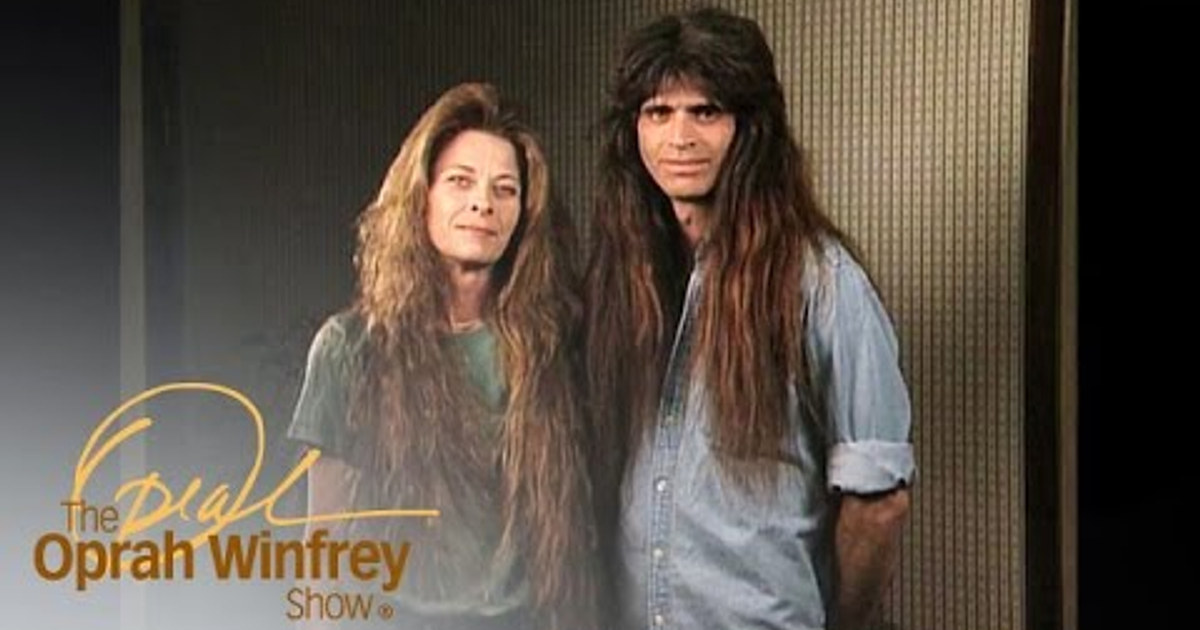
What makes Tim such a compelling subject in the pantheon of television transformations is his total lack of self-deception about the visual cost. Even as he defended his past, he admitted that he looked like a man who had walked a rough road and needed to clean up his act. The tragedy of masculine stasis is rarely malicious; it is sentimental. Tim did not want to abandon the bass player who believed everything was possible; he just needed someone with the authority of the world’s most powerful broadcaster to tell him that his future was worth more than his scrapbooks.
[[AD]]
The Electric Theater of the Reveal: Cutting Away the Past
Daytime television transformations are modern secular epiphanies, structural descendants of Bette Davis shedding her dowdy spectacles in Irving Rapper’s *Now, Voyager* (1942). The genius of the Oprah format was the complete severance of the participants: Wendy and Tim were separated behind closed doors, neither allowed to witness the destruction of the other’s historical record. When Wendy was brought out first, the studio atmosphere cracked like thunder. The grandmother bun had been obliterated, replaced by a radiant, dimensional cut that framed her face in soft, luminous waves.
She did not look like Jennifer Aniston; she looked entirely like herself, liberated from twenty years of accumulated shame. Her stylist had avoided the trap of an over-lacquered, unmanageable studio sculpture, providing instead a versatile, tactile cut that Wendy could wear straight or tousled. Oprah could barely contain her excitement, declaring her a flat-out stunner who had finally been dragged out of the seventies. Wendy’s shoulders, once hunched beneath the weight of her hair and her modesty, squared up. She gasped, laughed, and finally uttered the words every makeover narrative strives to earn: she felt young, desirable, and profoundly alive.
Yet Wendy was only the prelude. The true theatrical coup came when Oprah cued the doors for Tim. The studio had been informed that Tim looked fifteen to twenty years younger, but nothing could have prepared Wendy—or the audience—for the sheer magnitude of the erasure. When Tim stepped through the curtains, clad in an impeccably sharp Prada suit, the studio audience erupted into a near-feral roar. The mane was completely gone, sculpted into a crisp, modern crop that immediately brought the clean lines of his jaw and the piercing warmth of his eyes into breathtaking focus.
[[AD]]
The reunion on that stage remains one of the rawest, most electrifying moments in the history of syndicated television. Wendy did not just clap politely; her knees buckled. Tim broke down in tears, murmuring apologies between breathless declarations of adoration. 'Have I met you yet?' Wendy laughed through her tears, looking at the man she had loved for twelve years as if he were a devastatingly handsome stranger who had just wandered onto the set. 'You want to get married?'
[[VIDEO]]
Oprah, watching the couple embrace with the tactile intensity of newlyweds on their wedding night, delivered the definitive postscript with that unmistakable, knowing grin: 'From the 70s to 2003. There’s going to be some action tonight.' The studio dissolved into laughter, but the heat between Tim and Wendy was completely genuine. In a matter of hours, the production had not merely updated two wardrobes; it had rekindled the romantic voltage of a marriage that had been buried alive beneath forty pounds of hair and thirty years of denim.
[[AD]]
The Mirror as Redemption: Why the Makeover Still Matters
It is easy, from our current vantage point of hyper-curated digital aesthetics, to dismiss the early-aughts makeover show as an artifact of commercial vanity—a convenient way to promote retail labels and boost ratings during sweeps weeks. But to dismiss Tim and Wendy’s transformation as a shallow corporate exercise is to fundamentally misunderstand the psychological weight of appearance. The clothes we wear and the hair we carry are not decorative trifles; they are the external architecture of our self-esteem.
When we look back at the central question posed by this remarkable episode—why we stay trapped in our personal time warps—the answer is rarely that we love the hair. We stay trapped because change requires an admission that time is passing, that youth has slipped away, and that we might fail at being the person we want to become today. For eighteen years, Tim’s mane shielded him from having to see the middle-aged man in the mirror. For twelve years, Wendy’s bun allowed her to remain invisible, safe from the terrifying demand of being seen.
By stripping away that antiquated armor, the stylists did not impose an alien persona upon them; they stripped away the decay to reveal the vitality that had been suffocating underneath. Tim and Wendy’s broadcast remains unforgettable because it reminds us of the radical optimism at the heart of genuine reinvention. We are never truly trapped in the decades of our youth unless we insist on locking the cell door from the inside. The question is never whether we are worthy of a second act—it is whether we possess the courage to walk into the salon and let the past drop to the floor.


