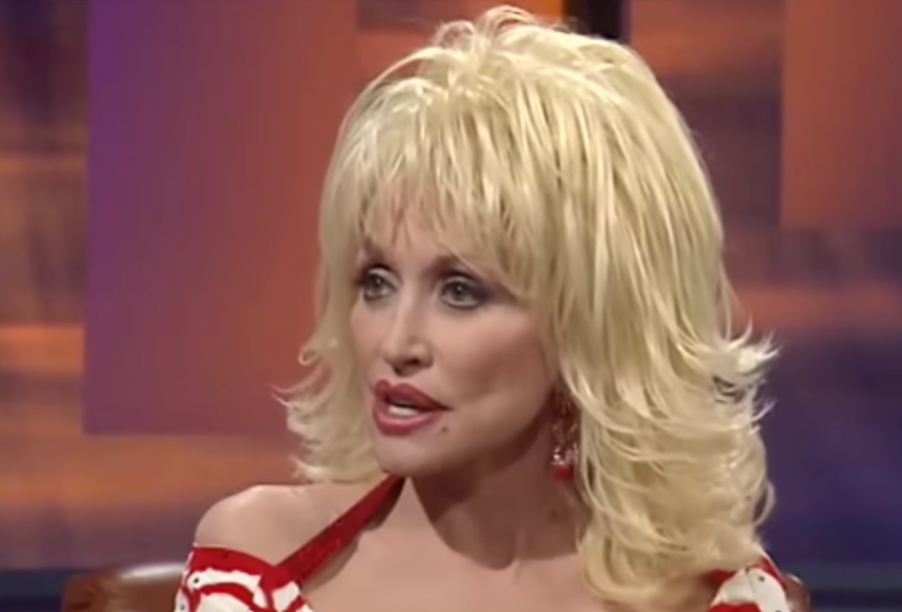
If you just watched that clip of Dolly Parton from her 2002 Irish tour, you already know: the woman is pure magic. There is something almost impossible to replicate about Dolly. She can walk into a room covered in rhinestones, wearing towering heels and a hairstyle that seems to have its own zip code, and somehow make everyone feel as though they are sitting across the kitchen table from an old friend.
There is a reason she has stayed at the top of the cultural mountain for decades, and it isn't just the rhinestones or the instantly recognizable voice. It is the razor-sharp wit and the genuine, down-to-earth soul that shines through every single word she speaks. Dolly has an unusual ability to make herself the biggest star in the room while simultaneously making sure nobody feels intimidated by her presence.
In this deep dive, we are looking back at that pivotal moment in 2002. Dolly was already a global superstar, but she was entering a fascinating phase of her career where she was being rediscovered by a new generation. Let's break down why this specific era of her life was so important.
[[AD]]
The Art of the Persona
One of the most fascinating aspects of Dolly Parton is how she weaponizes her appearance. She famously joked, 'It costs a lot of money to look this cheap.' The line is funny, but underneath the joke is a surprisingly sophisticated understanding of celebrity, branding, and public perception.
Dolly understood early on that the entertainment industry isn't simply about talent. There are thousands of talented singers, but there is only one Dolly Parton. The big hair, the sparkling clothes, and the high heels became part of a visual language that audiences could recognize instantly. You didn't need to see her name on a poster; you could identify Dolly from a silhouette.
By 2002, she had fully leaned into the caricature. She knew that if she made herself the joke first, nobody could ever laugh at her in quite the same way. This gave her an extraordinary amount of control. Instead of saying, 'Please don't judge me based on how I look,' she essentially said, 'Yes, I know exactly how ridiculous this looks. Now let me tell you something interesting.'
[[AD]]
Songwriting as a Survival Tool
We cannot talk about Dolly without talking about the music. By 2002, her catalog was already legendary. Songs like 'Jolene' and 'I Will Always Love You' had transcended the country genre to become global anthems. Her songs could be stripped down, turned into pop, or played as bluegrass, and the emotional core remained intact.
Dolly treats songwriting like a daily job. She doesn't wait for inspiration to strike; she goes to work. That work ethic is the secret sauce behind her massive output. She didn't build her success around one lucky break. She built it through decades of consistent work: writing, touring, recording, acting, and producing.
Many artists have a moment. Dolly built an ecosystem. Her music is only one part of it. Her personality, her business instincts, and her ability to understand audiences are all part of the machine. By 2002, all of those pieces were already in place, and the world was beginning to see her as a complete cultural figure.
[[AD]]
Why 2002 Mattered
The year 2002 sits at an interesting point in Dolly's career. She was no longer the young woman trying to establish herself in Nashville, nor was she simply the country superstar of the 70s. She had become a recognizable American cultural icon. Younger audiences were discovering her through television and movies, asking: 'Who is this woman?'
The answer is that Dolly had already spent decades figuring out how to be Dolly. The 2002 period feels less like a comeback and more like a transition into a new kind of cultural relevance. She didn't have to become younger or abandon her roots; she simply remained recognizable while the culture around her changed.
[[VIDEO]]
The Businesswoman Behind the Rhinestones
It is easy to underestimate Dolly because her public image is so playful. That may actually be one of her greatest strategic advantages. People see the jokes and the rhinestones, and sometimes they forget that underneath all of that is an exceptionally capable businesswoman who has built an empire around hospitality, music, and tourism.
There is consistency everywhere. Her music sounds like Dolly, her stories sound like Dolly, and her theme park feels like Dolly. That consistency is not accidental; it is branding at an unusually high level. But perhaps the most impressive part is that it rarely feels like corporate branding. It feels personal.
What's Next for the Queen of Country?
Stay tuned for our next installment, where we dive into Dolly's massive philanthropic efforts and how she transformed her personal success into programs designed to help children and families. From literacy initiatives to education, Dolly's charitable work reveals another side of the woman behind the rhinestones. Because if the 2002 footage shows us how Dolly learned to control her own story, her philanthropic career shows us what she decided to do with the influence that story gave her.


