Part 2
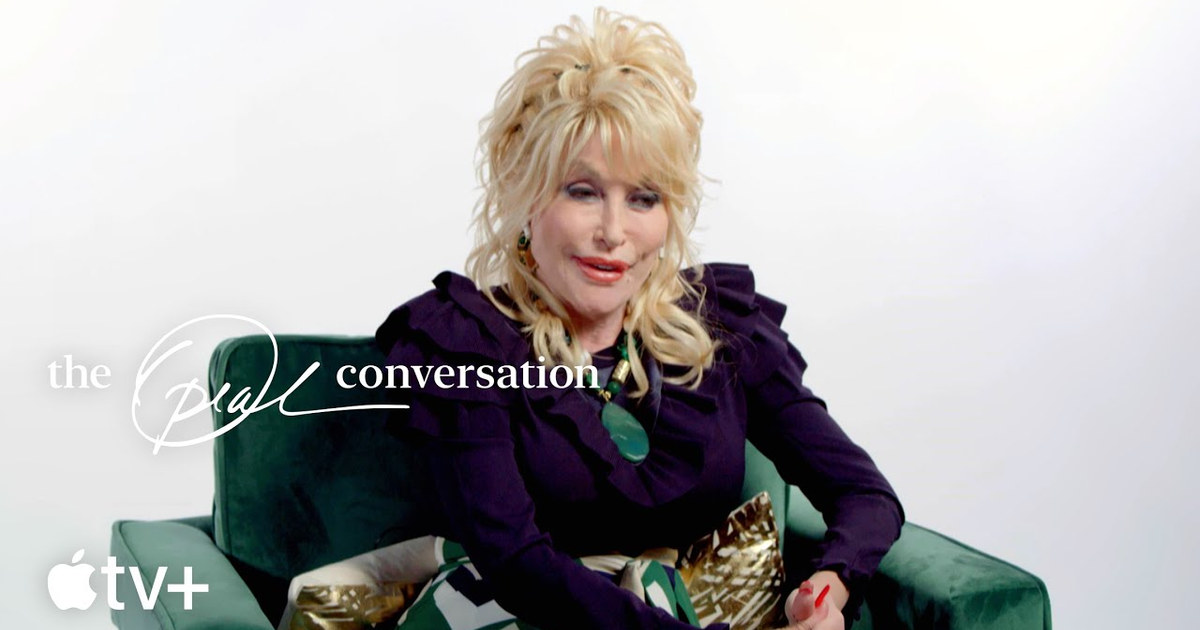
Dolly's answer: "I think about 40. Really? I think I started—yeah. I started thinking, when I was about 40, 'Oh, I need a few little nips and tucks and little pulls and sucks and whatever we get,' you know? 'Cause I'm a firm believer—whatever it takes to make you feel better about yourself—if you've got the nerve, and if you got the money, and, you know, you got the need for it, if it's gonna make you feel better about yourself—if you feel good about you, you can make people feel better about themselves because you feel good."
There's so much to pull from that, but the phrase that sticks with me is "if you've got the nerve." She's not selling plastic surgery as a cure-all. She's acknowledging that it takes a certain kind of person to go under the knife and own it. She's not judging anyone who doesn't. She's just saying: this was my path, and I'm not ashamed of it.
And then Oprah brings up something darker. She reminds Dolly that years ago, men on television would make jokes about her curvy figure, her boobs, her wigs. She mentions that Dolly once told Barbara Walters that the joke was on them because she knew exactly what she was doing with her image. Oprah asks the real question: "Were you ever hurt, though, by any of those jokes, or did you always know that you had created this image, and that was a part of where you were headed? That was a part of your own marketing."
Dolly's answer is a masterclass in self-awareness.
"Well, in my head, I knew where I was headed because, to me, I'm not a natural beauty, and I was always—I wanted to be pretty. I was that backwoods Barbie. I was impressed with that, and I just always felt more inside than how I looked on the outside, so I really patterned my look after the town tramp in our hometown, the trollop, you know."
[[AD]]
Wait. The town tramp?
Yes. She explains: "The one that would kind of walk up and down the streets and get in a car and ride off for a few minutes, come back and get in another car. You know, I didn't know anything about that part then. I just knew she was beautiful. She had all this beautiful blonde hair, red lipstick and makeup, tight, short skirts and high heel shoes, and I just thought she's the prettiest thing I'd ever seen, so I kind of patterned my look after that."
This is the part where you realize Dolly Parton has been playing chess while everyone else was playing checkers. She saw a woman who was judged by the town, and she saw glamour. She saw freedom. She saw a performance of femininity that she could borrow, amplify, and turn into a global brand. She also mentions loving Frederick's of Hollywood magazines — the lingerie catalogs that were risqué for their time — and you can picture young Dolly flipping through those pages, filing away ideas.
Then she gets honest about the early days. "To answer the first part of your question—I think it used to bother me that, you know, when people—well, I mean, it didn't—didn't change me, it didn't make me do it different, but I kinda get a little embarrassed sometimes if somebody made too much fun of it, but that was when I knew they didn't know who all I was."
That last line is the key. "They didn't know who all I was." The jokes didn't hurt because she was insecure about her look. They hurt because they reduced her to the look. They missed the songwriter, the businesswoman, the philanthropist, the actress, the icon. They saw the wig and the heels and the chest and stopped there. And Dolly, being Dolly, turned that into fuel.
So why should you care about another celebrity turning 75?
Because Dolly Parton's approach to aging is radically different from the typical Hollywood panic. She's not trying to look 30. She's not trying to look natural. She's not trying to pretend she hasn't had work done. She's trying to look like Dolly. And that's the point. The goal isn't youth. The goal is continuity. She's been building this character since she was a kid in Sevierville, and she has no intention of retiring it now.
Think about the alternative. Think about the celebrities who spend their later years chasing some impossible standard of agelessness, terrified of being photographed without makeup, refusing to discuss their procedures, pretending that time isn't passing. That's a miserable way to live. Dolly watched the town tramp walk down the street and decided that being seen as "too much" was better than being seen as nothing at all. She's been too much for six decades, and she's still here, still working, still shining.
[[VIDEO]]
That's what hooked me. Not the number. Not the milestone. The fact that Dolly Parton, at 75, is more comfortable in her own skin than most people half her age. She's not fighting time. She's ignoring it. And somehow, that's working better than any anti-aging cream ever could.
In the next section, we'll get into the plastic surgery question in more detail — why she started at 40, what she thinks about people who judge her for it, and how the town tramp became the blueprint for one of the most recognizable images in entertainment history. But before we go there, sit with this for a second: Dolly Parton says she ain't got time to be old. Do you?


