Part 1
The Question We All Ask
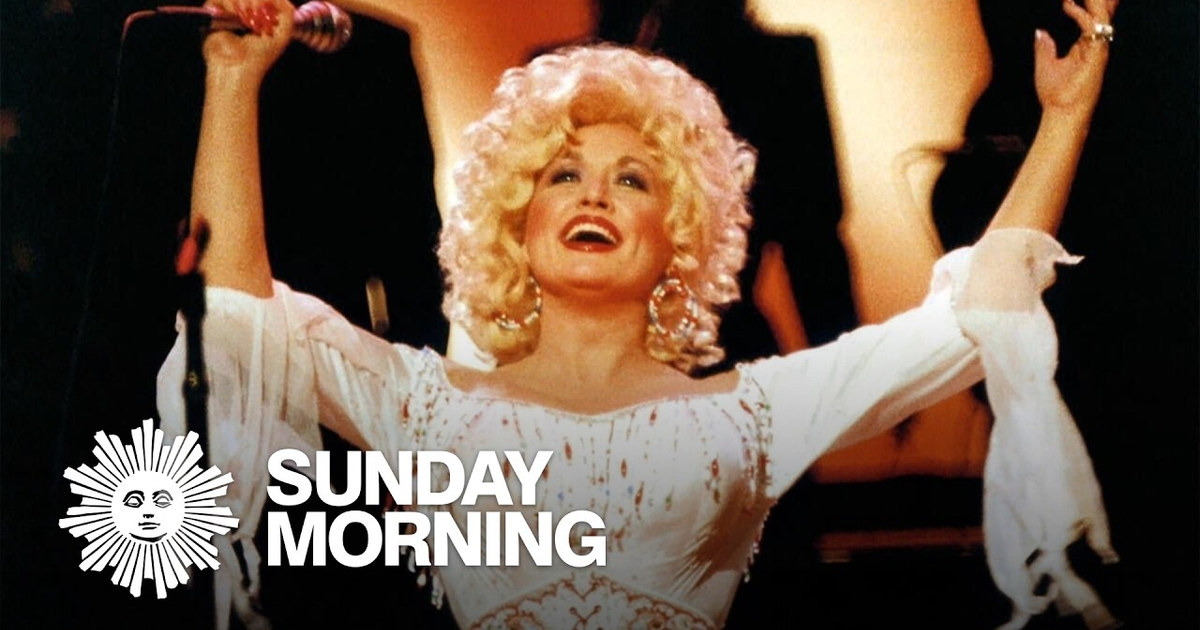
You have probably seen the trailer for Dolly Parton’s latest tribute special. Maybe you caught the Grand Ole Opry show in Nashville last night, where they honored her under the same roof that launched a thousand country careers. Or you scrolled past the week of tributes that poured in after her death — Jane Fonda calling her “the voluptuous embodiment of empathy,” Taylor Swift saying she was “true grace and true grit all in one dazzling person.” Everyone, it seems, has a Dolly story. And that’s the thing: her story was everyone’s story. But why? What is it about this woman — born in a one-room cabin in the hills of Tennessee, the fourth of twelve children — that makes us stop and ask the bigger question: What makes a life well lived?
It’s not a new question. Aristotle asked it. Monty Python asked it in The Meaning of Life (1983, directed by Terry Jones, 107 minutes). But Dolly Parton answers it in a way that feels both cosmic and down-home. In her nearly 70 years of entertaining, she bridged gaps that nobody else could touch. A poll taken five months before her death revealed that 70% of Americans had a favorable view of her — the highest approval rating for any luminary on the list, by far. That’s higher than any president, any movie star, any tech mogul. And she did it without ever pretending to be anything other than a country girl with a guitar and a God-given gift for turning pain into poetry.
Think about the numbers. Over 3,000 songs composed. From country to gospel to bluegrass, she wrote Jolene and I Will Always Love You back-to-back — a feat that still makes Nashville songwriters shake their heads. And she couldn’t even read sheet music. For Dolly, songs came from the heart, not the page. As she told Dan Rather, “Everything I do, I feel to the nth degree. I can’t eat just a little, I have to eat the whole thing. I can’t feel just a little, I have to love all the way.” That’s not just a quote; it’s a philosophy. It’s the kind of all-in approach that separates a legend from a flash in the pan.
But here’s where the question sharpens. Fame is easy to chase. Substance is hard to keep. Look at the reality TV stars who burn bright for a season and then fade into obscurity. Look at the celebrities who court attention but offer nothing beyond a filtered image. Dolly Parton never chased fame for its own sake. She chased connection. She chased truth. And that’s why she’s still with us — not just in memory, but in the culture. Her 1980 film 9 to 5, directed by Colin Higgins (110 minutes), wasn’t just a comedy. It was a rallying cry for working women, and the title song became an anthem. She followed it with The Best Little Whorehouse in Texas (1982, directed by Colin Higgins, 114 minutes) and Steel Magnolias (1989, directed by Herbert Ross, 117 minutes), proving she could hold her own alongside Sally Field, Julia Roberts, and Shirley MacLaine. She wasn’t a novelty act. She was a force.
So what makes a life well lived? Is it the number of hit songs? The box office receipts? The awards? Dolly has all of that. But she also has something else: an unshakable honesty. She once said, “Just because I’m blonde doesn’t mean I’m dumb. I’m not very educated and I’m not that intelligent, but I’m smart. I’m country smart.” That self-awareness is rare. It’s the same quality that made her say, “God made you pretty. Yeah, he did. But I helped him.” She never pretended to be above vanity, but she also never let it define her. She knew who she was, and she never apologized for it.
That authenticity is what we’re really hungry for. In an age of curated feeds and manufactured personas, Dolly Parton was the real deal. She kept her private life private — married only once, to Carl Dean, who ran a road and driveway paving business and passed away in 2025 at 82. They never had children, and she never regretted it. “It was a choice,” she told Tony Dokoupil. “You make your choices, you make your sacrifices.” She also battled depression over her weight, and she came out the other side with a lesson: “Either get off your fat ass and get on with your life.” That’s not just advice; it’s a blueprint.
But the question remains: What makes a life well lived? Is it the ability to make people laugh, like she did when she joked about static electricity picking up “everything but boys and money”? Is it the courage to be vulnerable, as she was when she said, “You have to leave yourself wide open to every feeling. But by doing that, you leave yourself very vulnerable to everything”? Or is it the quiet, consistent generosity — the Imagination Library that has sent one book a month to pre-K kids since 1995, millions of books to children who, like her, grew up in homes with no books except the Bible?
Dolly Parton didn’t just answer the question. She embodied the answer. She showed us that a life well lived is one where you stay true to your roots, you give more than you take, and you love all the way. She could have fled Tennessee for Hollywood, but she didn’t. She built a theme park around her upbringing — not out of vanity, but as a testament to how far she’d come. She was an inspiration for those back in the hollers dreaming of something big. And she did it all with a wink and a smile, reminding us that you can be serious about your purpose without taking yourself too seriously.


