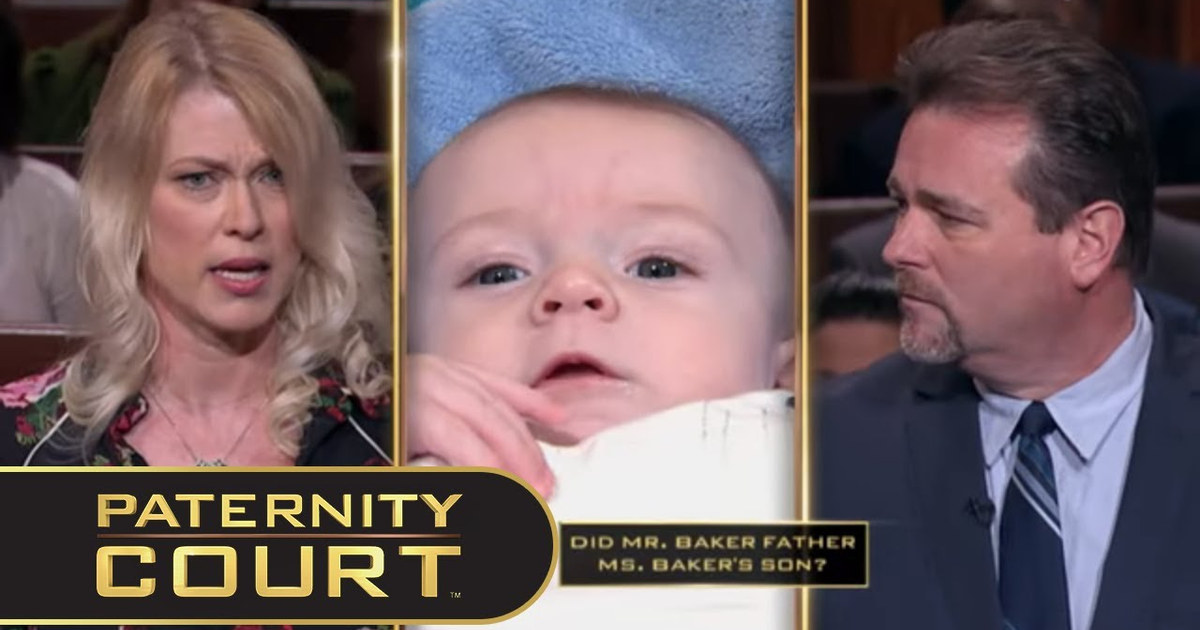
There are two ways to watch a show like Paternity Court. You can watch it for the raw, unfiltered human drama—the kind of high-stakes emotional collision that makes for compulsive viewing. Or, you can watch it like a systems engineer debugging a complex, messy codebase. You’re looking for the variables, the logical inconsistencies, and the statistical anomalies that define the human experience.
The case of Baker versus Baker is a masterclass in both. On one side, we have the genre-viewer’s dream: a marriage built on shaky foundations, a history of public scandal, and the existential dread of a father questioning his own biological legacy. On the other, we have a fascinating technical puzzle involving vasectomy failure rates, medical diagnostic errors, and the brutal reality of probability.
Whether you’re here for the soap opera or the science, the story of Caleb Baker is a reminder that sometimes, the most improbable outcomes are exactly what the data predicts.
[[AD]]
The Architecture of Doubt
Trust is a fragile system. In the Bakers' case, the system was compromised long before the pregnancy test came back positive. Mr. Baker’s skepticism wasn't just about the biology; it was about the history. When you build a relationship on the ruins of two previous marriages, you’re essentially running on legacy code that’s prone to crashes.
The couple’s history—marked by financial dishonesty that played out on a national stage—created a baseline of mistrust. When Mrs. Baker began experiencing symptoms of pregnancy, Mr. Baker didn't see a miracle; he saw a system error. He immediately went to the internet, treating the pregnancy test as a faulty sensor that needed to be cross-referenced against potential 'bugs' like ovarian cancer or tumors.
It’s a fascinating look at how we process trauma. When the stakes are high, we don't look for the simplest explanation; we look for the one that protects us from the pain of betrayal. For Mr. Baker, believing his wife was sick was, in a twisted way, more comforting than believing she had been unfaithful.
[[AD]]
The Biology of the 'Impossible'
From a purely technical standpoint, the case hinged on a single, critical failure: the missed one-year follow-up after a vasectomy. Dr. Jamila Gator’s testimony provided the necessary context that turned a 'miracle' into a statistical probability.
Vasectomies are not absolute firewalls. They are mechanical interventions that can, in rare instances—about 1 in 4,000—fail due to the body’s natural tendency to heal itself. The vas deferens can reconnect, effectively 're-patching' the system. Mr. Baker, like many, assumed the initial clearance was a permanent state, failing to account for the long-term degradation of the procedure’s efficacy.
When you add the age factor—49 for the father, 45 for the mother—the probability of conception drops significantly, but it never hits zero. The 'miracle' the couple clung to was, in reality, a 1.5% chance that had finally executed. It’s a sobering reminder that in biology, as in programming, 'impossible' is often just a synonym for 'highly unlikely.'
[[AD]]
The Verdict and the Human Element
When the DNA results were finally read, the courtroom shifted from a place of cold analysis to one of profound relief. The confirmation that Mr. Baker was the father wasn't just a win for the couple; it was a validation of the narrative they had fought to believe in.
However, the true takeaway here isn't just the biological confirmation. It’s the behavioral change. Mrs. Baker’s sobriety, triggered by the pregnancy, suggests that the 'miracle' served as a catalyst for a system-wide refactor of their lives. They moved from a state of chaotic, high-risk behavior to one of stability.
[[VIDEO]]
Final Thoughts: When Logic Meets Faith
We often treat science and faith as mutually exclusive, but the Baker case shows how they can coexist. The science provided the framework for the doubt, and the faith provided the framework for the hope. In the end, the data confirmed the miracle, but it was the human choice to stay together that defined the outcome.
If you enjoyed this deep dive into the mechanics of the courtroom, stay tuned. Next time, we’ll be breaking down the psychological triggers behind high-conflict custody battles and why some cases are destined to repeat their own history. See you then.


