Part 2
The Dynamic Mid-Game: Sculpting Light and Structure
Once the foundations are laid, the narrative transitions into the dynamic phase of vertical growth. This is where the architectural vision truly begins to manifest, and the videographer skillfully captures this ascension. The rising walls, initially just rows of concrete blocks, soon form geometric patterns against the sky. The camera angles become crucial here, often employing wide-angle lenses to encompass the full height of the emerging structure, or using a slightly telephoto lens from a distance to compress the scene and emphasize the density of the construction.
The steel beams, an essential part of the modern structure, are presented with an industrial elegance. Their stark lines and metallic gleam, particularly when caught by direct sunlight, create powerful visual leading lines that draw the eye upwards, reinforcing the verticality of the design. Tracking shots, possibly achieved with a camera slider or a Steadicam/gimbal, move alongside these rising elements, giving the viewer a sense of being right there, observing the precise placement of each component. This sustained visual journey helps maintain engagement, ensuring the complex process doesn't feel monotonous.
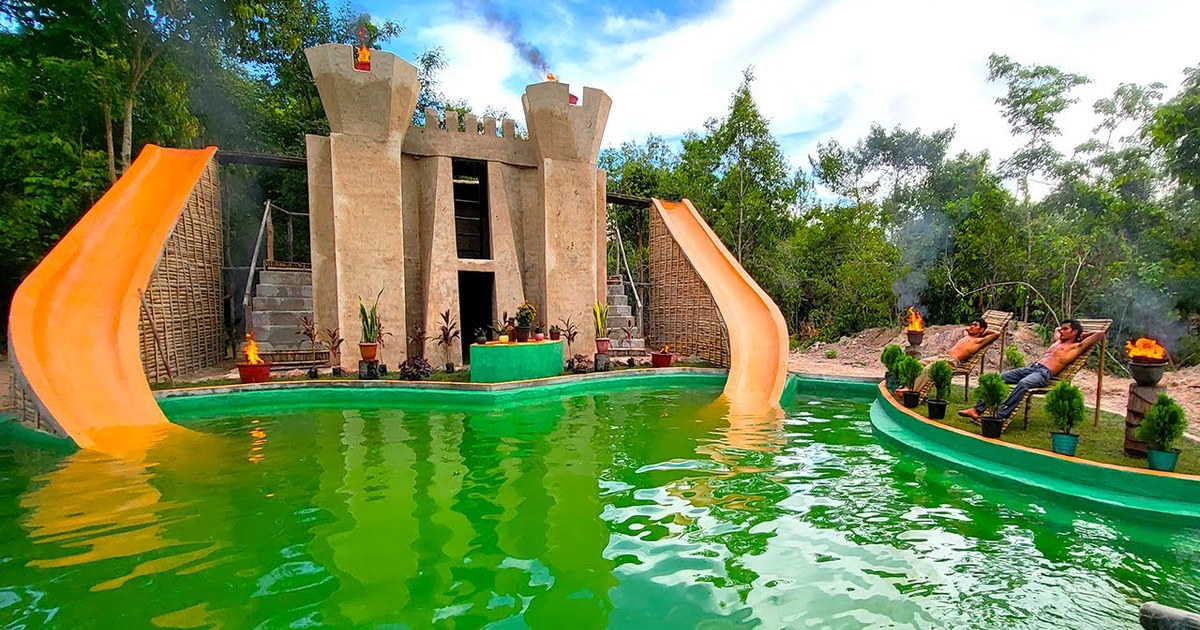
However, the absolute star of this mid-game act, from a visual storytelling perspective, is the construction of the water slide. This isn't just a functional element; it's a sculptural, dynamic form that demands special attention. The camera zooms in on the intricate concrete work as the flume takes shape, following its elegant, sweeping curves. The challenge of shooting something so curvilinear and integrated into the main structure is immense. Close-ups highlight the smooth finish of the concrete, contrasting it with the rougher, exposed areas of the building.
[[AD]]
The choice of lens for these details is critical: a macro or close-focus lens could capture the fine textures of the freshly laid concrete, while a standard prime (say, a 50mm equivalent) would give a natural, undistorted view of its graceful arc. The movement of workers on and around the slide, carefully shaping its contours, emphasizes the human craftsmanship involved in creating such a bespoke feature. The lighting, again, primarily natural, plays a role in defining these curves, with highlights on the edges and soft shadows in the recesses, giving the slide a tangible, almost inviting presence even before it's functional.
[[AD]]
Simultaneously, the narrative dives underground to reveal the genesis of the spectacular swimming pool. The excavation for the pool is captured with an intriguing mix of wide shots and dramatic, descending camera movements. The deep shadows cast within the pit create a sense of mystery and anticipation, playing on the viewer's curiosity about what lies beneath. The contrast between the bright, open sky and the dark, subterranean space is a powerful visual metaphor for the hidden depths of this ambitious project. Here, the videographer might employ artificial lighting – perhaps some construction work lights – to illuminate the darker corners, ensuring that crucial details aren't lost to shadow, even as the overall mood remains one of profound excavation.
The pouring of concrete for the pool is a monumental event, visually akin to the foundation work but with added complexity due to the waterproofing and intricate shaping. The sheer volume of concrete, conveyed through wide-angle time-lapses and dynamic close-ups, reinforces the scale of this underground aquatic sanctuary. The installation of the glass wall, a key feature of the pool, is another moment of visual drama. The fragility of the massive glass panels, juxtaposed with the brute strength of the concrete, creates a palpable tension. The reflections and transparencies of the glass, even before water fills the pool, offer a glimpse into the future visual experience – an underwater window to a unique world.
Inside the main villa, the interior framing emerges as a visual labyrinth of repetitive lines and open spaces. The camera moves through these nascent rooms, using the framing itself to create interesting compositions – doorways and windows acting as natural frames within the frame. The play of light through these newly opened apertures, creating geometric patterns on the floor, speaks to the future ambiance of the house. This stage is about hinting at the final form, building anticipation for the finished interiors, even as they remain skeletal.
[[AD]]
Throughout this 'mid-game' section, the videographer maintains a consistent visual rhythm, alternating between expansive time-lapses that compress weeks into seconds and focused real-time shots that highlight specific, intricate tasks. This editorial balance prevents viewer fatigue and ensures that both the macro progress and the micro craftsmanship are appreciated. The visual coherence across these disparate elements – from soaring walls to subterranean pools – is a testament to an overarching vision, whether explicitly planned or intuitively executed, that guides the narrative forward with compelling force.
The Climactic Reveal: A Masterpiece in Post-Production
The final act of this cinematic construction saga is where all the painstaking effort culminates in a breathtaking reveal. This is the payoff, the moment the audience has been waiting for, and the videographer executes it with a flourish that any Hollywood production would admire. The exterior finishing is captured with an emphasis on texture and clean lines. The application of render, the precise installation of windows and doors, and the intricate roofing work are shown in rapid succession, often with time-lapses that convey the swift, satisfying completion of these surface elements.
The transformation from raw concrete and block work to smooth, finished surfaces is dramatic. The camera, perhaps using a polarizing filter to enhance colors and reduce glare, captures the crispness of the newly painted walls, the reflections in the pristine glass, and the geometric patterns of the roof tiles from an elevated perspective. The natural light, often showcasing the villa at different times of day – perhaps a golden hour shot for warmth, or an overcast day for soft, even lighting – helps to bring out the architectural nuances and the chosen color palette.


