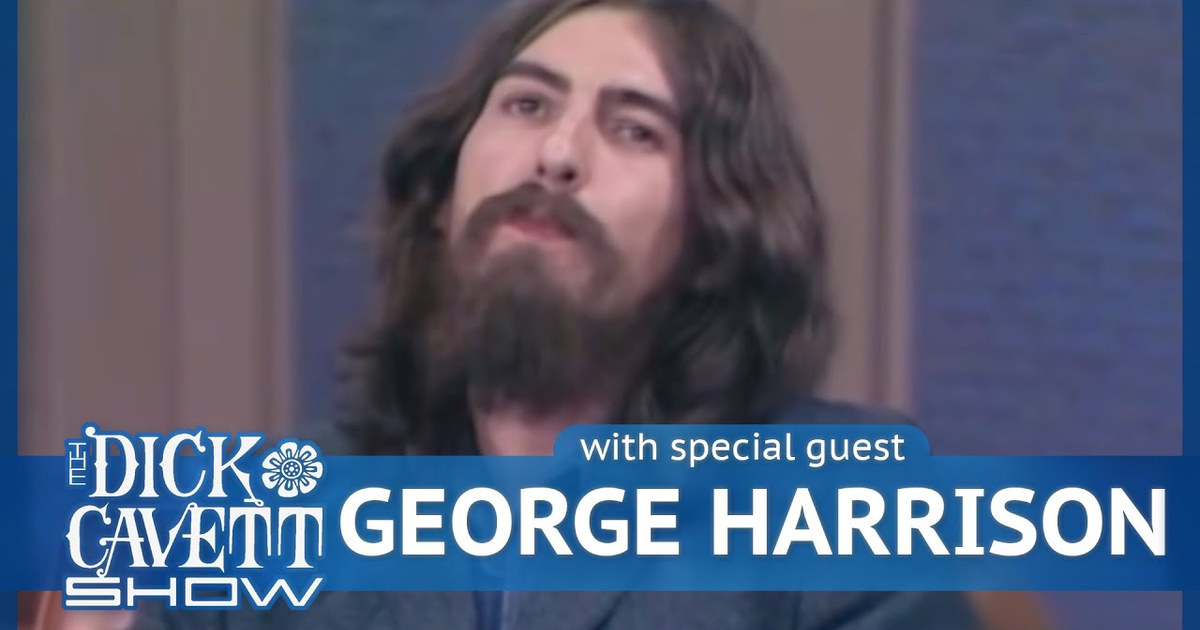
The camera never lies, but the people behind the lens—and the ones framing the narrative—certainly do. When we look at the history of rock and roll through the archival footage of icons like George Harrison, we aren't just watching a musician talk; we are watching a masterclass in how the media constructs a reality that the subject never asked for. The truth of fame isn't found in the headlines, but in the uncomfortable, unscripted moments where the subject realizes the game is rigged.
Think of this like a poorly lit set. You have the subject, the talent, trying to deliver an honest performance, while the production team—in this case, the press—is constantly cutting to commercial breaks, interrupting the flow, and demanding a specific, sensationalized reaction. It’s a classic case of bad blocking. The audience is left with a fragmented, jumpy edit that feels like a reality, but it’s really just a series of manufactured 'dings' designed to keep us watching.
The Responsibility Trap: Who Owns the Narrative?
When Harrison discusses the 'responsibility' of fame, he’s speaking about the burden of being a light source in a room that prefers shadows. The media loves to frame the Beatles' experimentation with LSD as a moral failing, ignoring the fact that the 'experiment' was foisted upon them by a dentist in a coffee cup. It’s a classic case of a director blaming the actor for the script they forced them to read.
[[AD]]
The press, much like a second-unit crew scraping for B-roll, spends months lifting up the pavement to find the dirt. They aren't looking for the story; they are looking for the scandal that sells the paper. When they ask a star if they’ve taken drugs, they aren't looking for a health update—they are looking for a headline that says 'Icon Admits Guilt.' It’s a setup, and the stars know it.
The High Cost of the 'Hard' Life
There is a persistent, ugly myth that to create great art, one must live in the 'fires of hell.' We romanticize the tragedy of Billie Holiday or Bessie Smith, assuming that their pain was a prerequisite for their genius. Harrison cuts through this with the precision of a prime lens. He notes that for many, drugs aren't an artistic choice; they are a buffer against a world that is fundamentally hostile to the human spirit.
It’s a technical reality of the industry: the higher the pressure, the more the subject looks for a way to level the exposure. When the grind becomes too much, the 'high' becomes the only way to balance the frame. But as Harrison rightly points out, the most dangerous drugs—the ones that kill—don't offer a higher perspective; they just offer a faster exit from the set.
[[AD]]
Misunderstanding the Discipline
Perhaps the most egregious misfire in the media's coverage of music is the association between Eastern discipline and psychedelic excess. When Ravi Shankar brought Indian classical music to the West, the hippies saw a soundtrack for their trip. They missed the years of rigorous training, the discipline, and the sheer technical mastery required to play those ragas.
It’s like watching a cinematographer pull focus on a complex tracking shot and assuming they must be on something to keep it that sharp. No, they’re just good at their job. The audience’s inability to distinguish between the 'high' of a drug and the 'high' of pure, disciplined craft is the ultimate failure of the viewer's eye.
[[VIDEO]]
What to Watch For
In the next installment of this series, we’ll be breaking down the specific lighting setups and camera movements that defined the 'counter-culture' aesthetic of the late 60s. We’ll look at how directors used wide-angle lenses to distort reality, mirroring the very drug culture they were documenting. Stay tuned—we’re going to see how the camera itself became a participant in the chaos.


