Part 2
Just as Jeannie is walking out the door, the phone rings. It is Jane, checking in with maternal, drill-sergeant intensity: 'Where are you going? To whom?' Jeannie tells her it is a women's luncheon at the Greenbrier. Jane instantly seizes the moment: 'All women! Jeannie, promise me you'll make a statement!' Jane knows Jeannie's default instinct is to revert to her PE major roots—no accessories, no fuss, purely functional clothing.
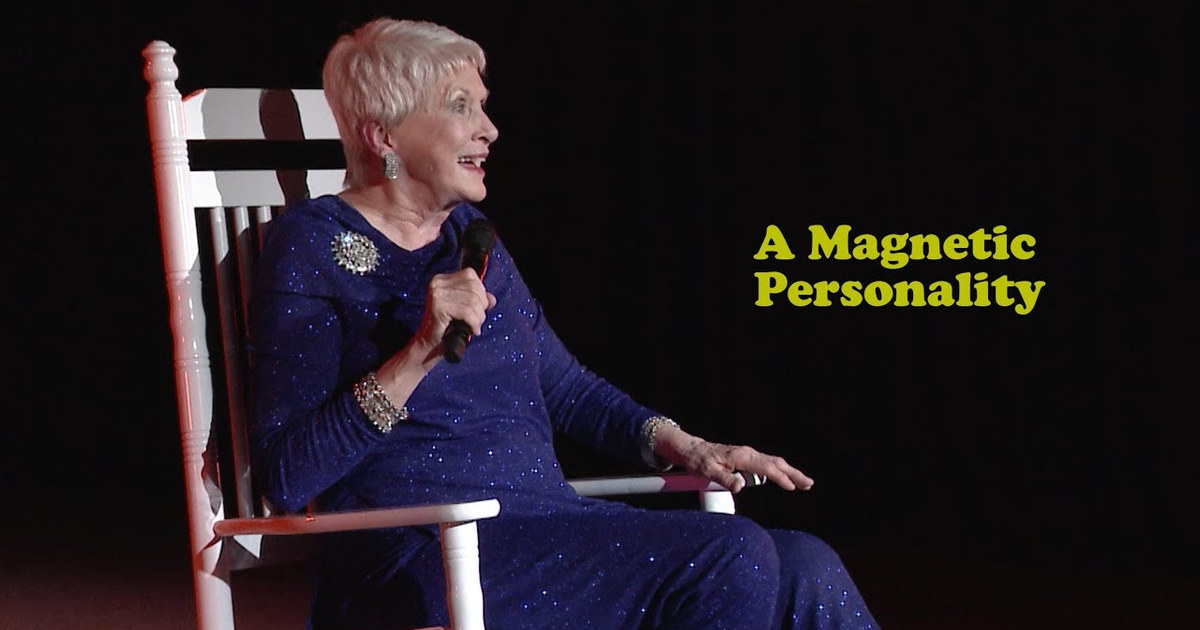
Jane forces a promise: Jeannie must wear the magnetic bracelets, and she must wear all five of them on the same arm. Paralyzed by guilt over the arthritis lie she told back in Manhattan, Jeannie folds. She straps on the full five-piece magnetic gauntlet and heads down to the grand ballroom. She has unintentionally turned her right wrist into an industrial scrap-metal electromagnet.
Look at the craft in this setup. Every single element has been justified. Why five bracelets? Because Jane demanded a visual statement and Jeannie felt guilty. Why on the same arm? Because that was the fashion directive. Why is the setting so prim? To make the inevitable disruption as deeply humiliating and hilarious as humanly possible.
[[AD]]
Table Dynamics: Seating Charts as Comedy Staging
The way Jeannie sketches the luncheon table layout shows how deeply she understands spatial blocking. This is not just telling a story; it is building a three-dimensional comedic arena. She sits at a round table of eight women, flanked by the convention's two committee co-chairs. One sits on her left; one sits on her right.
The chair on her right immediately offers a crucial warning: she is left-handed and apologizes in advance if their elbows collide during the meal. Jeannie graciously shifts her chair slightly to give her elbow room, subtly establishing that both women are hyper-aware of personal space and physical proximity. Meanwhile, the salads are served, complete with heavy banquet flatware.
Then comes the casual request that pulls the pin on the grenade. The woman to Jeannie's left asks, 'Could you pass the salt and pepper?' To reach across the centerpiece, Jeannie has to extend her right arm across the space where the left-handed neighbor on her right is actively lifting a forkful of salad toward her mouth.
The physical geography here is pristine. You can see the angle of the chairs, the reach of the right arm, the trajectory of the fork. When comedy relies on physical mishaps, vagueness kills the laugh. Because Jeannie maps out every single coordinate with crystal clarity, your brain renders the upcoming collision in high definition before it even happens.
[[AD]]
The Grand Theft Silverware: Breaking Down the Climax
Here is the exact moment the bit transcends into legend. Jeannie reaches for the condiments. As she describes it, her five bracelets 'got in sync'—forming a localized magnetic field capable of lifting small automobiles. The moment her forearm passes within striking distance of the salad plate, the force field activates: 'I reached for the salt and pepper and sucked the fork right out of her hand.'
Think about the sheer sensory absurdity of that image. The poor woman on her right is in mid-chew, hand shaped around empty air, completely baffled. The fork didn't fall to the floor with a clatter; it didn't bounce off the table. It vanished entirely. And because the five bracelets snapped the fork flat against the underside of Jeannie's forearm, neither Jeannie nor the victim could see where it went.
Jeannie's immediate reaction is pure Southern politeness meeting absolute ignorance. She drops her arm to her side, effectively concealing the evidence under the tablecloth. The woman starts looking around her feet, muttering, 'Well, that's the strangest thing... I must have dropped my fork, but I don't know what happened to it.'
And then Jeannie delivers the line that completely breaks the audience: 'Look in your purse.' She says it with that deadpan, helpful seriousness that makes it sound like an entirely reasonable suggestion. Imagine sitting at an elite ballroom luncheon and having the keynote speaker casually imply you are discreetly pocketing the silverware inside your handbag.
[[AD]]
The Unspoken Punchline: When the Room Takes Over
One of the toughest skills in live performance is knowing when to let the audience do the work. Jeannie and the victim are both pushing their chairs back, crawling around looking under the carpet, utterly bewildered. But the women sitting across the round table have had a direct, unobstructed line of sight the whole time.
They saw the fork fly out of the woman's grip. They saw it weld itself to Jeannie's forearm. And they are laughing so violently that their vocal cords have completely seized up. They cannot form words; they can only point. 'POINT. POINT. POINT,' Jeannie says, pantomiming the trembling fingers across the table until she finally turns her wrist over and sees a standard-issue banquet fork pinned to her arm like a badge of honor.
That is the hallmark of top-tier comedic escalation. The humor doesn't just come from the original accident; it comes from the secondary layer of social paralysis. The onlookers are incapacitated by the spectacle, the victim is questioning her own sanity, and the perpetrator is actively accusing the victim of petty theft—all because of five street bracelets.
[[VIDEO]]
The Callback: Landing the Final Button
Every legendary routine needs a killer button, and Jeannie circles right back to the original thematic promise. The luncheon finishes. Jeannie survives the keynote. She walks back to her quiet room at the Greenbrier, her cell phone buzzing on the nightstand. She picks it up, and before she can even say hello, Jane's voice rings through the receiver with breathless anticipation: 'Tell me you made a statement.'


