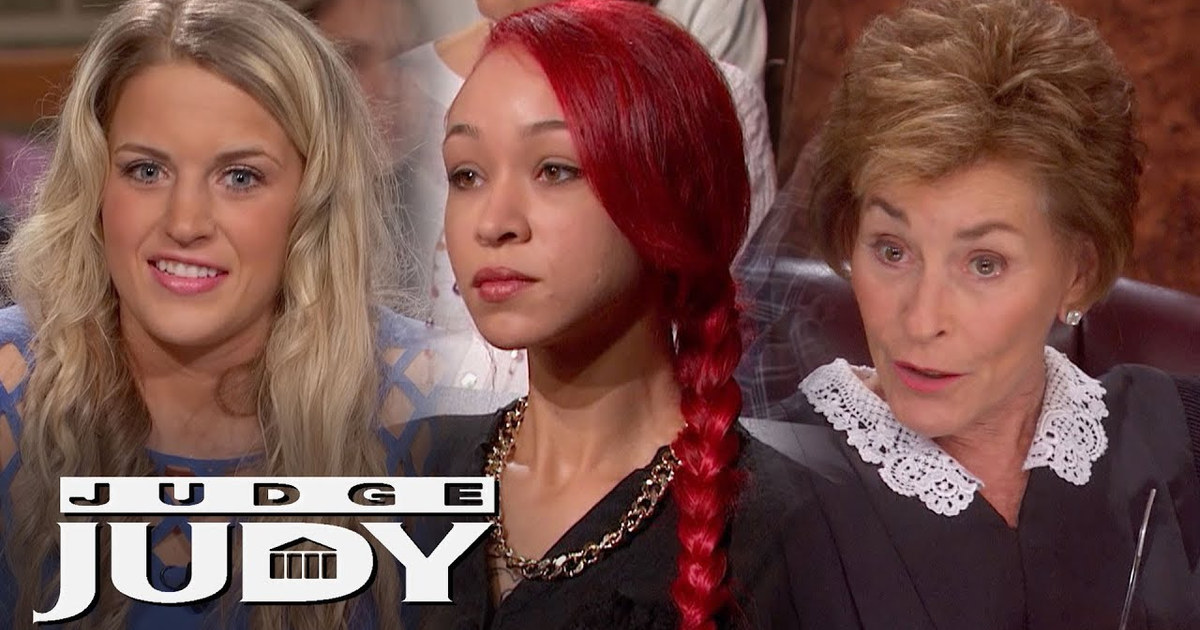
If you think Judge Judy is just a daytime talk show, you’re missing the most precise visual storytelling on television. The way this show frames human conflict isn't just functional; it’s a masterclass in second-unit efficiency, using tight lenses and aggressive lighting to turn a small-claims courtroom into a stage for absolute psychological exposure.
When we look at the case of Soncrant v. Nichols, we aren't just watching a dispute over a mattress and a tattoo. We are watching a masterclass in how to use the camera to strip away a defendant's defenses. The production team understands that in a courtroom, the truth isn't found in what people say—it's found in the micro-expressions captured by a 50mm prime lens.
The lighting setup here is clinical. It’s flat, high-key, and unforgiving. There are no shadows to hide in, no soft-box diffusion to make the subjects look sympathetic. It’s a harsh, overhead wash that mimics the feeling of being under a microscope. As a cinematographer, I appreciate the honesty of it; it forces the subjects to exist in a space where they cannot retreat.
[[AD]]
The Wide Shot vs. The Close-Up
The scene opens with a wide establishing shot that sets the geography of the room. We see the plaintiff, the defendant, and the looming authority of the bench. But the magic happens when the camera cuts to the close-up. When Judge Judy asks about the 'K with a heart' tattoo, the camera doesn't linger on the room; it isolates the subject.
By cutting to a tight frame, the director forces us to confront the absurdity of the situation. We aren't looking at a legal argument anymore; we are looking at the embarrassment on the plaintiff's face. The lens choice here is crucial—it’s tight enough to capture the twitch of an eye or a nervous swallow, which is exactly what the audience needs to see to judge the character of the witness.
The rhythm of the cuts is also aggressive. It mimics the staccato pace of Judy’s questioning. There’s no room for a slow, cinematic pan. It’s cut-cut-cut, keeping the energy high and the defendant off-balance. It’s the visual equivalent of a rapid-fire interrogation.
[[AD]]
The Power of the Negative Space
When the new girlfriend enters the frame, the composition changes. She becomes a piece of negative space that disrupts the balance of the shot. Judge Judy’s reaction—ordering her removal—is a directorial decision as much as a legal one. She is literally cleaning the frame to restore the focus to the primary subject.
Notice how the camera operator handles this. They don't linger on the girlfriend once she’s dismissed. The camera immediately snaps back to the defendant, now isolated and vulnerable. It’s a brilliant use of visual hierarchy. By removing the 'distraction,' the production team ensures that the audience is locked into the defendant's inevitable collapse.
The use of the 'Shakespeare' comment regarding the emails is the final act of this visual sequence. The camera doesn't need to show the text of the emails; it shows the reaction of the man holding them. The framing here is tight, focusing on the hands and the face, emphasizing the weight of the evidence through the subject's own body language.
[[AD]]
The Verdict of the Lens
Spoiler alert: The defendant loses. But the way the scene ends is pure cinema. The judge doesn't just give a verdict; she delivers a visual punctuation mark. The camera pulls back just enough to show the finality of the room before cutting to black. It’s a clean, decisive end to a sequence that relied entirely on the power of the frame.
[[VIDEO]]
Next time you watch, look past the shouting. Pay attention to the camera angles. Look at how they use the depth of field to isolate the guilty and how they use the lighting to expose the truth. It’s not just a courtroom; it’s a set, and every shot is designed to tell you exactly who to believe.
In our next installment, we’ll break down the 'walk-off'—how the exit framing tells us more about the loser's state of mind than any closing statement ever could.


