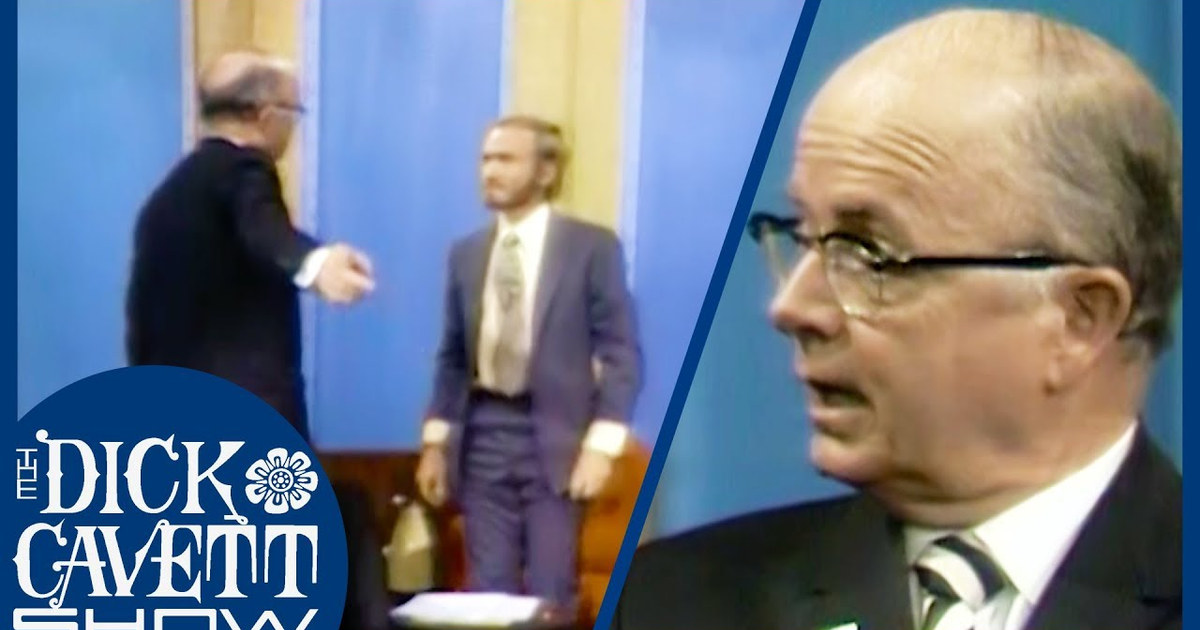
True cinematic tension isn't found in the CGI explosions of a summer blockbuster; it is found in the claustrophobic framing of a live television interview where the social contract is about to shatter. The famous 1970 confrontation between Dick Cavett and Governor Lester Maddox remains a masterclass in how lighting, lens choice, and spatial awareness dictate the power dynamic of a scene.
As a cinematographer, I look at this footage and see more than just a political spat. I see a carefully constructed stage where the key light is harsh, the depth of field is razor-thin, and the psychological stakes are pushed to the breaking point. When Maddox stands up to leave, he isn't just walking off a set; he is breaking the visual continuity of the broadcast.
The brilliance of this moment lies in the framing. Cavett is shot in a classic medium close-up, his face bathed in a soft, controlled fill that suggests intellectual vulnerability. Maddox, conversely, is framed with a slightly more aggressive, high-contrast setup that highlights the tension in his jaw. It is a visual shorthand for the 'intellectual vs. the populist' narrative that defined the era.
[[AD]]
The Geometry of Confrontation
Watch the way the camera tracks the movement. In the early segments, the wide shots establish the geography of the studio. We see the distance between the two men, a physical manifestation of their ideological divide. When the conversation shifts to the topic of 'bigots' and 'admirers,' the camera operators tighten the frame significantly.
This is a deliberate choice. By pushing into a tighter lens—likely an 85mm or 100mm prime—the production team effectively traps the subjects. There is nowhere for them to hide. The background, slightly out of focus, becomes a blur of studio lights that adds to the sense of isolation. Every twitch, every blink, and every shift in posture is magnified by the glass.
Maddox understands the power of the frame. When he demands an apology, he isn't just speaking to Cavett; he is playing to the lens. He knows that by controlling his own physical presence—leaning forward, occupying the negative space—he can dominate the screen despite Cavett’s attempts to maintain a neutral, journalistic distance.
[[AD]]
Lighting the Fuse
The lighting setup here is quintessential 1970s broadcast. It is flat, functional, and unforgiving. There is no cinematic 'mood lighting' to soften the blow of the insults being traded. This lack of artifice is exactly what makes the scene so visceral. We are seeing the raw, unfiltered reality of a man losing his composure under the heat of the studio lamps.
Notice the catchlights in their eyes. They are bright, sharp, and constant. They serve as a reminder that this is a performance. Even in his most 'outrageous' moments, Maddox is performing the role of the aggrieved Southerner, while Cavett is performing the role of the unflappable host. The lighting doesn't allow for shadows, which means there is nowhere for the truth to hide.
When the walk-off finally happens, the sudden shift in the composition is jarring. The frame that once held two people is suddenly occupied by one, leaving a 'dead' space that feels heavy with the weight of the silence. It is a visual void that the director has to scramble to fill, a perfect example of how the camera operator must react to the unpredictability of human emotion.
[[AD]]
The Technical Aftermath
What happens after the walk-off is just as important as the act itself. The camera lingers on Cavett, who is left to navigate the empty space. The production team is forced to pivot, and you can see the slight hesitation in the camera movement—a rare glimpse into the 'invisible' work of the crew.
[[VIDEO]]
This moment is a reminder that in film and television, the camera is never a neutral observer. It is a participant. It shapes how we perceive the 'truth' of a situation. Whether it's the choice of lens, the placement of the key light, or the decision to cut away, the cinematographer is always telling us who to trust and who to fear.
As we look back at this footage, we aren't just watching a political argument. We are watching a masterclass in how to build tension through the lens. Stay tuned for our next installment, where we’ll break down the lighting techniques used in the most iconic 'heist' sequences in cinema history.


