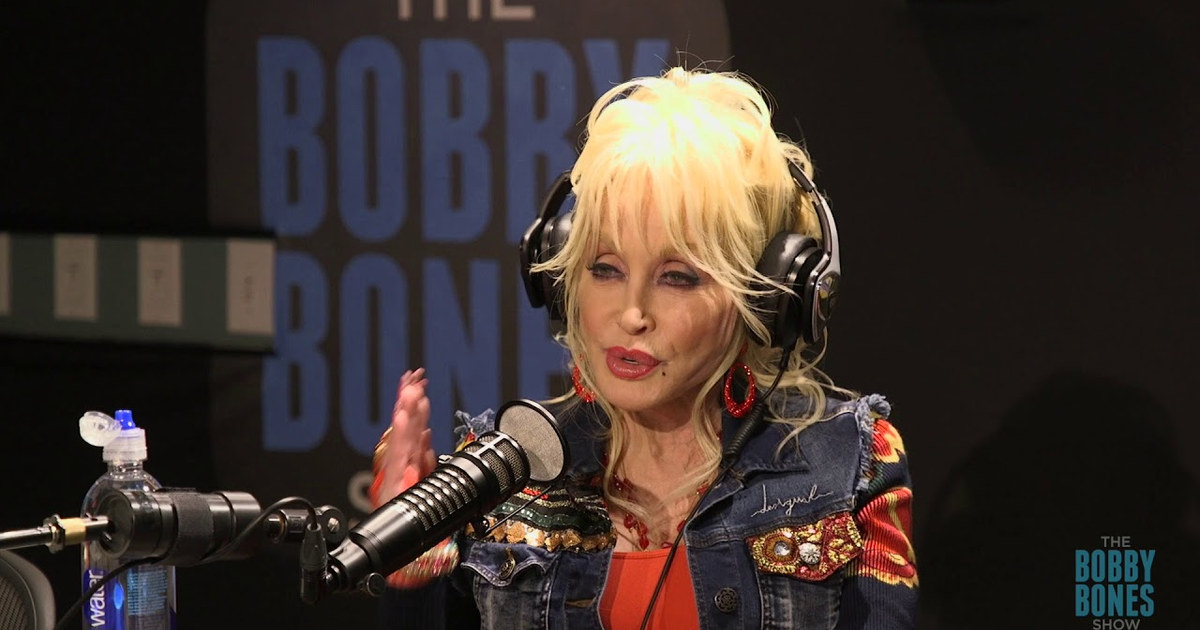
You have probably seen the viral clips—the rhinestone-studded charm, the quick-witted humor, and that unmistakable laugh. But beneath the glitter and the carefully curated public persona lies a question that has defined Dolly Parton’s career for over half a century: Is she a performer who writes, or a writer who performs? To understand the woman who gave us the soundtrack to our lives, you have to look past the fame and into the notebook.
Dolly doesn’t just write songs; she constructs emotional architecture. Much like Bob Dylan in the 1960s, Parton treated the craft of songwriting as a sacred, daily discipline. In our recent look at her creative process, it became clear that for Dolly, the act of writing is less about commerce and more about survival. It is her therapist, her confidant, and her connection to the divine.
She admits to having written over 5,000 songs, yet she remains humble about the output, claiming only five or so are truly 'good.' It’s the kind of self-deprecation you’d expect from a legend, but it masks a profound truth: she views her work as a necessary contribution to the world, a way to leave something behind that wasn't there yesterday.
[[AD]]
Navigating the Boys' Club
To talk about Dolly’s rise is to talk about the mid-century Nashville machine—a place where, much like the Hollywood studio system of the 1940s, the power was almost exclusively held by men. While many artists of her era might have felt stifled by the industry's attempts to force them into 'pop' or 'rockabilly' boxes, Dolly had a secret weapon: her upbringing.
Growing up with six brothers gave her a masterclass in navigating male personalities. She didn't enter the boardroom as a victim; she entered as a professional. When producers tried to steer her toward a sound that didn't fit, she pushed back. When they flirted, she handled it with the same sharp, redneck-rooted confidence she used to write a hit record. She knew she had the goods, and she knew exactly how to protect them.
Her breakthrough wasn't just about talent; it was about persistence. When she sang harmony on Bill Phillips’ 'Put It Off Until Tomorrow' in the mid-60s, she wasn't just a voice on a track—she was a songwriter proving her worth. That moment, where listeners called in asking 'who is that girl?', was the turning point that forced the industry to stop looking at her as a novelty and start seeing her as a force.
[[AD]]
The Anatomy of a Classic
If you want to understand the sheer efficiency of Dolly’s songwriting, look at the legendary 1972 session that produced both 'Jolene' and 'I Will Always Love You.' It’s the stuff of music history myth, reminiscent of the Beatles’ prolific output during the 'Rubber Soul' era. These weren't just songs; they were emotional exorcisms.
The story of 'I Will Always Love You' is particularly telling. It wasn't written for a movie; it was written for a mentor, Porter Wagoner. It was a professional breakup song, a way to say goodbye to a partnership that had become a cage. When she sang it to him, it wasn't a performance—it was a resolution. That raw, human honesty is exactly why, decades later, Whitney Houston’s version could stop Dolly in her tracks while driving down a highway.
Hearing that song on the radio, unaware it was her own composition being reimagined for 'The Bodyguard' (1992), was a moment of pure, overwhelming validation. It proved that her writing possessed a universality that transcended genre. It wasn't just a country song anymore; it was a global anthem.
[[AD]]
A Legacy Built on Words
Today, artists like Kelsea Ballerini and Carly Pierce cite Dolly as their north star. They aren't just admiring her outfits; they are admiring the blueprint she laid down for female autonomy in music. She proved that you can be a business mogul, a songwriter, and a performer without sacrificing your identity.
[[VIDEO]]
As she continues to release new projects—from children's albums to potential comedy specials—the question remains: what drives her? It’s the same thing that drove her at 3:00 a.m. in the early days of her career. It is the need to create. Dolly Parton isn't just a country icon; she is a testament to the idea that if you stay true to your own voice, the world will eventually have to stop and listen.
Whether she’s writing poems, jokes, or chart-topping ballads, Dolly remains the ultimate example of a creative life well-lived. And if you think you know her story, just wait—she’s probably already writing the next chapter. Stay tuned for our deep dive into the evolution of the 'Dolly Sound' in our next installment.


