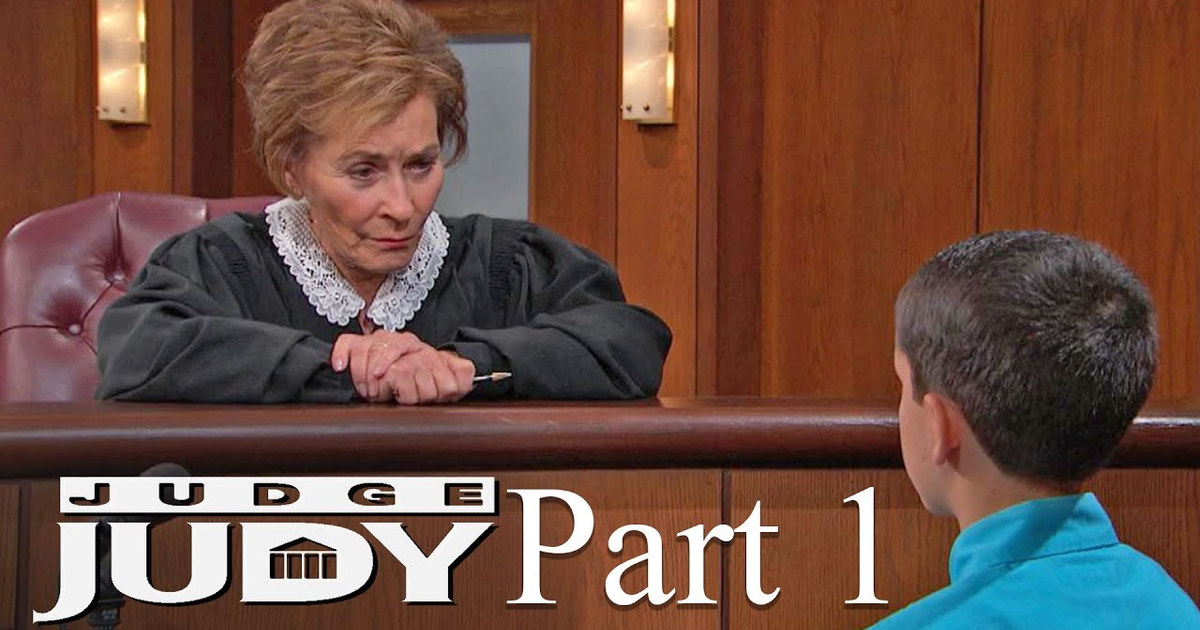
The boy stands in the center of the courtroom, his voice small, describing the terrifying moment a white, fluffy dog lunged from behind a stroller. It is a scene of mundane suburban horror—a walk home from school interrupted by teeth and panic. But the true drama isn't the bite; it is the way the defendant, Ms. Rodriguez, begins to weave a narrative so thin that Judge Judy’s sharp, practiced intuition begins to shred it before the first sentence is even finished.
This is the essence of Judge Judy Sheindlin’s enduring appeal. She doesn't just adjudicate law; she adjudicates reality. In this specific case, we see a masterclass in how a seasoned interrogator dismantles a story that has been 'practiced in the mind' until it no longer resembles the truth.
When we watch these clips, we aren't just watching a small-claims dispute. We are watching the friction between human fallibility and the cold, hard demand for objective truth. It is a high-stakes performance where the prop is a life, and the script is being rewritten by the judge in real-time.
[[AD]]
The Architecture of a Fabricated Narrative
Ms. Rodriguez makes a fatal error early on: she tries to control the narrative by anticipating the judge’s questions. She speaks as if she is reciting a rehearsed monologue, carefully positioning herself as the responsible dog owner who merely stood to the side. She paints a picture of a calm, controlled environment, hoping the judge will accept the aesthetic of innocence.
But Judge Judy is a predator of inconsistencies. She notices the shift in the defendant's posture and the way her story changes the moment she is pressed on the 'why' of her actions. When Rodriguez claims she 'directed' the boy to pass, Judy pounces. She knows that in the heat of a crisis, people rarely act with the calculated grace Rodriguez is describing.
The judge’s warning—'You know, when you start to say things that you've been practicing in your mind... they sound stupid'—is the turning point. It is the moment the mask slips. The defendant is no longer telling a story; she is trying to sell a version of herself that doesn't exist.
[[AD]]
The Power of the 'Small Detail'
What makes this exchange so compelling is the focus on the minutiae. The shots in the arm, the color of the dog, the specific time of day—these are the anchors of truth. When the father enters the fray with police reports and secondary incidents, the case expands from a 'he-said-she-said' into a pattern of behavior.
Judy’s refusal to allow hearsay is not just a procedural quirk; it is a defensive wall. She understands that if you let a witness wander into the realm of 'what my mother-in-law said,' you lose the thread of the actual event. She forces the participants back into the cage of their own direct experience.
The Psychology of the Interrogation
There is a rhythmic quality to Judy’s questioning. She uses silence as a weapon. She lets the defendant talk until the contradictions become loud enough to drown out the original defense. It’s a literary technique as much as a legal one—letting the character hang themselves with their own dialogue.
[[AD]]
The Verdict of the Viewer
Watching this, we feel a strange sense of catharsis. In our own lives, we are often forced to endure the 'practiced' lies of others, unable to call them out without appearing aggressive. Judy does it for us. She serves as the proxy for our collective desire for accountability.
[[VIDEO]]
Returning to that boy on the stand, we realize that his simple, unvarnished truth was the only thing that mattered. The dog bit him. He got the shots. The rest—the stroller, the 'direction' given to pass, the hearsay about pit bulls—was just noise designed to obscure the bite. Judy saw the bite, and in the end, that is all that ever matters in her courtroom.
Next time, we’ll dive deeper into the 'Byrd Factor'—how the silent observers in the courtroom shape the tension of these confrontations. Stay tuned.


