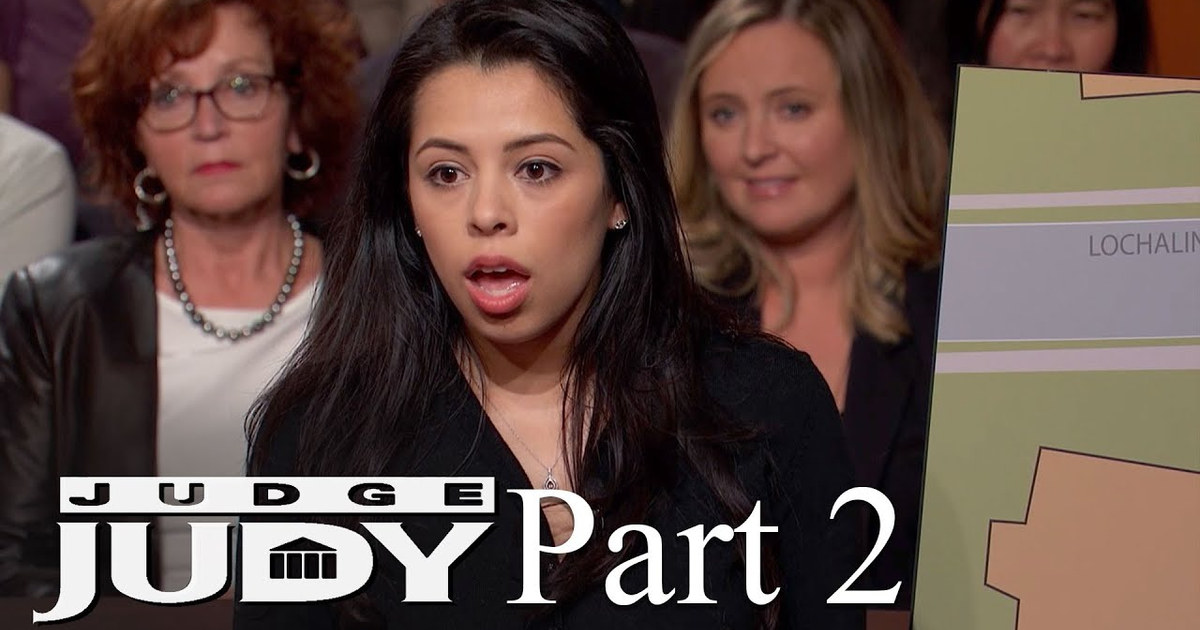
The courtroom is silent, save for the rhythmic, sharp tap of a pen against a stack of legal documents. Judge Judy Sheindlin leans forward, her eyes narrowing behind her glasses, focusing on a single, shaky sentence in a deposition. She isn't looking for a legal loophole; she is looking for the fracture in a human narrative. When she utters the phrase, 'If you tell the truth, you don't have to have a good memory,' the air in the room shifts. It is the moment a lie stops being a defense and starts being a trap.
This specific exchange—a clash between a pet owner and a victim of a dog bite—is a masterclass in the theater of truth. The defendant, Ms. Rodriguez, arrives with a story she has rehearsed, yet it is a story that refuses to sit still. She tries to paint a picture of a protective pet, but the ink on her own signed deposition bleeds into a different reality. It is a scene that resonates because we have all been there: watching someone try to weave a tapestry of excuses, only to have the threads unravel under the slightest pressure.
Judge Judy’s brilliance lies in her ability to treat the courtroom not as a place of dry statutes, but as a stage for human behavior. She doesn't just listen to the words; she listens to the cadence, the hesitation, and the desperate need to be perceived as the hero of one's own story. When she confronts Rodriguez about the 'simple story' versus the 'elaborate' one, she is highlighting the fundamental flaw in deception: the complexity required to maintain a falsehood is exhausting.
[[AD]]
The Architecture of Deception
Why do we lie? In the context of this case, the lie serves as a shield for the ego. Admitting that a beloved pet—a 'baby' of five years—is capable of unprovoked aggression is a devastating blow to the owner's identity. The defendant isn't just defending her dog; she is defending her own judgment. She wants to believe that Nala is a saint, and she wants the world to see her as a responsible, careful mother.
The Judge, however, is immune to the sentimentality. She cuts through the 'dog mom' narrative with the precision of a surgeon. She identifies the jealousy, the shift in the household dynamic, and the subtle signs of agitation that the owner chose to ignore. It is a chilling reminder that our pets, like our stories, are often reflections of the environments we create for them. When the environment becomes tense, the truth usually follows suit.
The most compelling part of this segment is the realization that the truth doesn't require a script. Truth is static. It is a rock that doesn't change shape regardless of how many times you move it around. A lie, conversely, is a liquid—it takes the shape of whatever container you put it in, and eventually, it spills over.
[[AD]]
The Courtroom as a Mirror
What keeps us watching Judge Judy after all these years? It isn't the legal precedents or the complex litigation. It is the visceral satisfaction of seeing the mask slip. We live in an era of curated social media lives, where everyone is editing their 'simple story' to look better, stronger, or more righteous. Seeing someone forced to confront the messy, unedited version of their own actions is a rare, cathartic experience.
The defendant’s insistence that her dog is 'not a dangerous dog' despite the evidence is a classic example of cognitive dissonance. She is holding two conflicting ideas in her head: 'I am a good person' and 'My dog hurt a child.' To resolve this, she chooses to deny the reality of the bite. The Judge, however, refuses to let her off the hook. She forces the defendant to look at the reality of the situation, not through the lens of her affection, but through the lens of the victim’s pain.
This is where the 'hype' of the show comes from. It’s not just a TV show; it’s a moral audit. When the Judge delivers her final verdict, it’s not just about the $2,500. It’s about the acknowledgment that actions have consequences and that the truth, no matter how inconvenient, will eventually find its way to the surface.
[[AD]]
[[VIDEO]]
The Final Verdict
As the episode draws to a close, the Judge leaves the defendant with a haunting warning about the future. It is a moment that transcends the specific case and speaks to the universal experience of denial. We are all prone to ignoring the warning signs in our lives, whether it's a jealous pet, a failing relationship, or a lie we've told ourselves so many times we've started to believe it.
Returning to that opening moment, when the pen tapped against the paper, we see the full trajectory of the encounter. The lie was the seed, and the courtroom was the soil where it grew into a full-blown crisis. The defendant walked in thinking she could control the narrative, but she left with the realization that the truth is the only thing that can't be edited. And in the end, that is the most powerful lesson of all.
Stay tuned for our next deep dive, where we analyze the psychology of the 'angry litigant' and why some people simply cannot stop arguing, even when the evidence is staring them in the face.


