Part 1
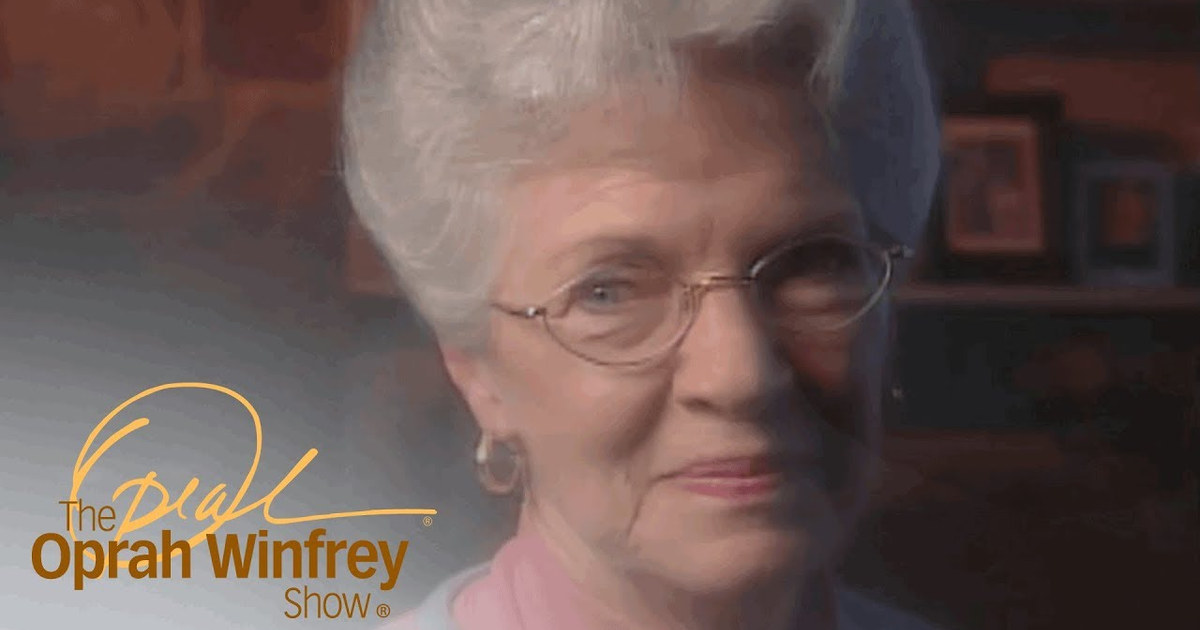
You have probably seen the clip circulating in degraded resolution across your feeds: a woman named Joan Levine, sixty-three years old, sitting beneath the flat fluorescent lights of a pre-taped segment, explaining with deadpan suburban stoicism that she canceled an entire vacation out of terror that the dozen industrial bobby pins holding her hair aloft would trip an airport magnetometer. You watch her daughters, Christine and Cindy, plead directly to the lens like hostages begging for an airlift. And in that moment, before Oprah Winfrey even introduces her handpicked cadre of celebrity beauty specialists, you find yourself confronted by the central question that mid-2000s makeover television posed with feral intensity: why do we construct elaborate domestic fortresses out of our own appearances, and what terrifying social bargain do we strike when we agree to let a daytime television show tear them down?
The daytime makeover was never merely about aesthetic remediation; it was a ritual of public confession and secular baptism. In this specific dispatch from the imperial era of *The Oprah Winfrey Show*, the stakes feel operatic. Joan Levine is not simply a woman with an outdated coiffure. She is a woman who has maintained an architectural wonder on top of her head since approximately 1967, an unbroken thirty-seven-year regime of backcombing, chemical lacquer, and mechanical setting that outlived administrations, cultural revolutions, and the complete collapse of mid-century domesticity. Watching it now is like excavating a lost temple where the presiding deity demanded four hours of liturgical labor every Wednesday morning.
What makes the spectacle so compelling is that Joan is entirely aware of the absurdity of her condition, yet she remains powerless against its gravity. When she jokes about looking as though she stuck her finger into an electrical socket the moment the pins come out, she is flashing the gallows humor of an inmate who loves the prison. To understand why this viral artifact endures, we have to look past the punchline and examine the machinery of identity, control, and transformation that made the daytime television makeover the definitive American morality play of the turn of the millennium.
[[AD]]
The Architecture of Armor: The Bouffant as Fortress
Consider the sheer engineering required to maintain the status quo in Joan Levine’s household. Every Wednesday at 5:30 in the morning, while the rest of upstate New York slept, Joan began her four-hour sacrament. This was not grooming; it was a construction schedule. Twelve metal pins extracted from a graying mass; a kitchen-sink shampoo; an alternating battery of oversized orange and tighter yellow rollers calibrated for spatial tension; and an unyielding forty-five to sixty minutes spent trapped beneath a vintage hooded bonnet dryer whose motorized hum must have sounded like an industrial air intake. It recalls Todd Haynes’s *Far from Heaven* (2002), where Julianne Moore's immaculately lacquered silhouette operates less as a styling choice and more as a gilded cage designed to withstand emotional fallout.
Her daughters reveal the collateral damage of this obsession with casual intimacy. They recount growing up on a lake in the Adirondacks, where their mother’s refusal to wet her crown transformed casual family leisure into high-stakes aquatic theater. If Joan entered the water at all, she swam with her head craned impossibly skyward, protecting the tower of teasing like an Olympic athlete safeguarding a fragile torch. The beehive was not an ornament; it was an exclusionary zone. It dictated how she navigated physical intimacy, maternal spontaneity, and geographic travel.
There is a profound melancholy beneath the daughters' exasperated laughter. Cindy and Christine detail a uniform that had calcified into parody: infinite iterations of blue denim, racks of beige khakis in every conceivable shade, and a signature bubblegum-pink lipstick that belonged to an entirely different decade. When a look remains unchanged across four distinct decades of a woman's life, it stops being a fashion statement and becomes armor against the passage of time itself. Joan froze her silhouette in the late 1960s—the precise moment, one imagines, when she felt most visible, most potent, and most secure in her own skin.
[[AD]]
By clinging to that sculpted salt-and-pepper monolith, Joan turned herself into an immovable monument. The teased hair stood four inches off her scalp, hard as porcelain under coats of what her family rightfully termed 'shellac.' In suburban America, where aging women are routinely rendered invisible by popular culture, Joan ensured she could never be overlooked. You could disagree with the hair, you could laugh at the hair, but you could never ignore the hair. That was the hidden utility of the bouffant: it commanded the perimeter.
The Triumvirate of Erasure: The Ken Paves and Rita Hazan Machine
Enter the demolition crew. The genius of *The Oprah Winfrey Show* during this golden epoch lay in its access to pure cultural power. When Joan agreed to surrender her helmet, she wasn’t pawned off on a local mall aesthetician; she was fed into the apex predator machinery of early-2000s celebrity glam. Victoria Principal, functioning here as both fairy godmother and venture capitalist, introduced a team that represented the highest tier of Hollywood beauty: hairstylist Ken Paves, colorist Rita Hazan, and makeup artist Kathy Hyland.
Ken Paves was not merely a hairdresser in this era; he was the mythmaker behind Jessica Simpson’s blonde ambition and the reigning champion of hyper-voluminous, undulating, modern Hollywood hair. Rita Hazan was the high priestess of tonal depth, trusted by everyone from Jennifer Lopez to Mariah Carey to strip away flat, aging hues and replace them with warm, multidimensional, multi-million-dollar warmth. Watching them approach Joan’s head is reminiscent of the aggressive, luxury makeover sequences in Garry Marshall’s *Pretty Woman* (1990), where social elevation is executed not through subtle adjustments, but through wholesale cultural replacement.


