Part 1
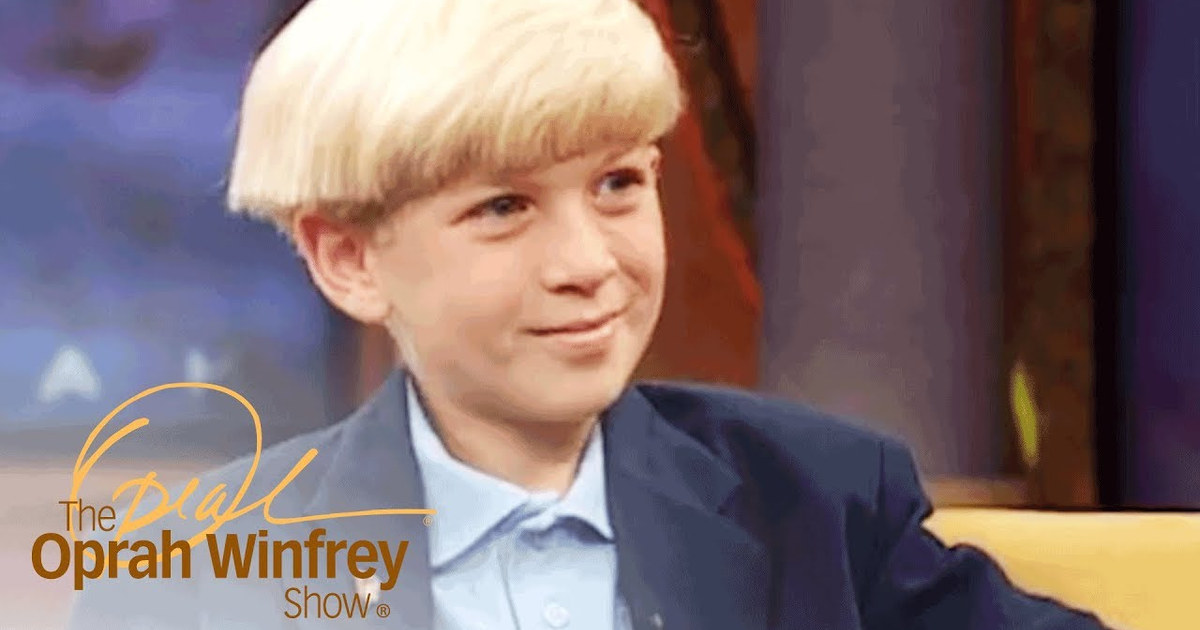
Picture this: you are sitting across from Oprah Winfrey at the absolute height of her daytime cultural dominance. The studio lights are searing, millions of living rooms are tuned in, and most adults would be sweating through their tailored suits just trying to remember their own zip codes. Then there is Greg Smith. Ten years old, legs dangling toward the studio floor, casually laying out a life plan so audacious it makes Silicon Valley pitch decks look like grocery lists.
He does not blink. He does not fidget. He tells Oprah, with the utter serenity of a tenured statesman ordering coffee, that he intends to earn three separate doctorates—aerospace engineering, biomedical research, and political science—before stepping into the Oval Office somewhere between the ages of forty and fifty. It is the kind of TV moment that stops you dead in your tracks with a sandwich halfway to your mouth.
If you missed this broadcast when it first aired, or only caught grainy clips circulating on retro social feeds, you might assume you are watching classic late-nineties daytime sensationalism. We have all seen the variety shows parade miniature performers across the stage to do parlor tricks. But this was completely different. Greg was not reciting memorized trivia for an applause cue; he was a fully enrolled, seventeen-credit college freshman who genuinely saw the world as an engineering puzzle waiting for him to finish his homework.
[[AD]]
The Application That Broke the Admissions Office
The whole saga jumped into hyperspace when Randolph-Macon College in Ashland, Virginia, opened an application packet from a kid who technically should have been trading Pokémon cards in fifth grade. Dr. John Conkright, the college’s admissions director, put their initial reaction in plain English: 'This must be a joke.' It sounds like an urban legend or a discarded premise for an early-2000s Disney Channel original movie, but the transcripts were indisputable.
Greg had torn through grades nine through eleven in literally a handful of months, graduating high school with honors at age nine. He was not just scraping by on novelty either. He showed off his National Honor Society credentials and his placement in the top ten percent of his graduating class with zero posturing. For him, academic milestones were not trophies to hoard; they were just speed bumps he had cleared on his way to the library.
When he arrived on the Virginia campus, he instantly became the youngest freshman in the school's entire history. While ordinary eighteen-year-olds were having full existential crises about picking an introductory major, Greg registered for a brutal seventeen-credit load featuring calculus, physics, French, Western civilization, and an advanced course on warfare in antiquity. To put that in perspective, that course load is an absolute grinder for a sleep-deprived twenty-year-old fueled by espresso; Greg tackled it with a smile and a backpack that practically weighed more than he did.
[[AD]]
The Hallway and the Closet: The Broken Pipeline for Outliers
You might wonder why his parents, Janet and Bob Smith, pulled the trigger on sending a ten-year-old to a university campus in the first place. Wouldn't you want to protect your kid and let him have a normal childhood? That is the immediate question everyone asks at the bar when this tape comes up. But the interview uncovers a heartbreaking reality about what happens to radical outliers inside standard institutional schooling.
Janet dropped a detail during the segment that completely reframes the entire narrative. When Greg was attending regular elementary school, his parents would ask him how his day went. His answer was chilling: 'Well, I sat in the closet and read my work by myself while the other children were working on different things.' On other days, administrators literally parked his desk out in the hallway because he was blazing through fifth-grade curriculum while his peers were sounding out the first letters of the alphabet.
Think about that imagery for a second. An institution tasked with nurturing a young mind essentially exiled him into physical isolation because the system simply did not possess a container for his velocity. They were hiding him in supply closets so he would not disrupt the pacing of the standard classroom. His parents realized staying in that environment was far more psychologically damaging than accelerating him into higher education. If the choice is between sitting isolated in a dark storage room or discussing Plato with nineteen-year-olds, college suddenly looks like the safer, more humane option.
[[AD]]
Debunking the Tiger-Parent Fallacy
The knee-jerk reaction whenever an audience meets a prodigy is to squint suspiciously at the parents. We instantly look for the hyper-controlling stage mom or the drill-sergeant dad drilling flashcards until 2:00 AM. Oprah, being the master interviewer she is, asked the question everyone in America was screaming at their screens: 'What did you do to cause this? Were you using flash cards?'
Greg shut that down immediately. 'No, my mom and dad didn't believe in flash cards.' Janet and Bob were not running an academic boot camp. In fact, they seemed just as overwhelmed by the reality of their genetic lottery as everyone else. Bob pointed out that even as an infant, Greg’s level of concentration was alien. He was not looking around with unfocused baby eyes; he locked onto objects with razor-sharp intensity. By twelve months old, he was retrieving books, opening to specific pages, and reciting what was printed there after hearing it a single time.


