Part 1
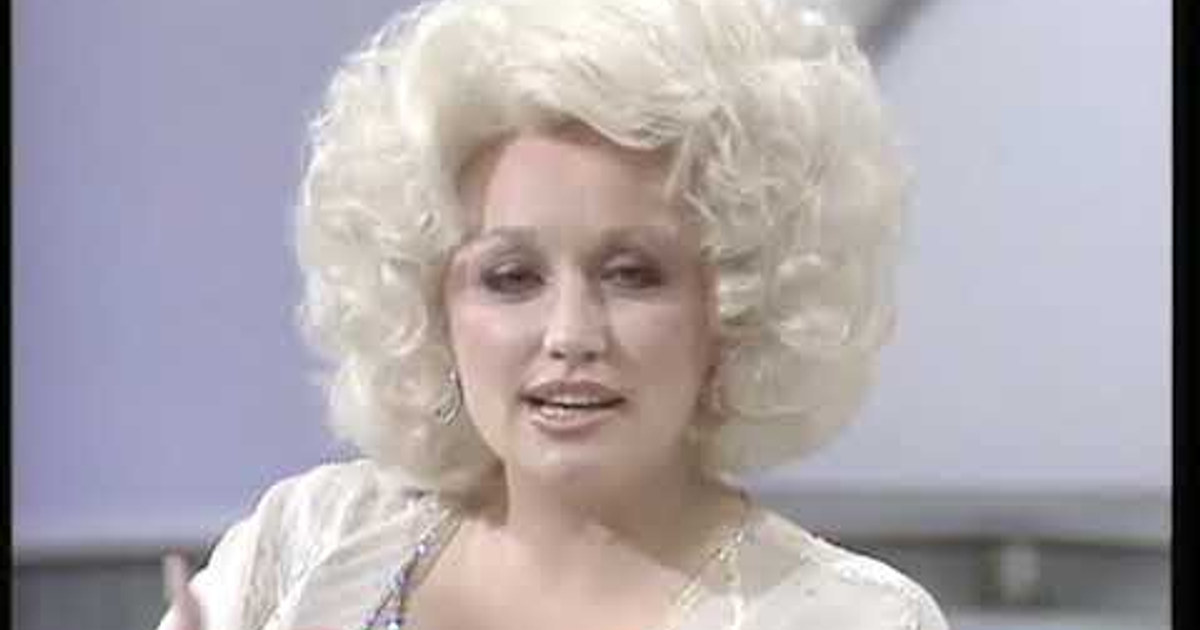
Here's what nobody tells you about the clip: you get dropped in mid-sentence. 'Coming with me today—' and that's it. No title card. No context. No name. Roughly forty seconds later, two people are singing 'Here You Come Again' and you've completely forgotten you were supposed to be doing something else with your evening. That's the whole trick. The scene doesn't warm you up. It just starts, like a conversation you walked into late, and it trusts you to catch up.
So let's catch up. Somebody has 'gone to all that trouble.' We never find out what the trouble was, and honestly, we don't need to. Our singer — the one with the hit records — says she's not the pushy sort. Then, in the very next breath: 'I'm kind of pushy.' Two sentences. One entire personality.
That's the line that got me. Not the song — the correction. Because anybody who has to announce they're not pushy is usually, at minimum, a little bit pushy, and she knows it, and she'd rather say it herself than let you think it. It's the kind of self-awareness that turns a character into a person instead of a script. You've met her. You've probably been her.
[[AD]]
Then she gets to the real question, and here's the strange part — it isn't about her at all. Since she doesn't get to do what someone else did (the auto-caption offers a name that could be Bev, could be Bit; captions are famously useless with proper nouns), she wondered whether that person ever sang a song with him.
The answer is quiet. 'No, no, we didn't sing a song.' No big pause written into the script. No music cue. Just the flat little fact of a thing that never happened, handed over like a receipt.
'Well then I can do that.' Six words and she's already moving. That's the engine of the whole scene: somebody spots a gap in another person's life and steps into it — not because they're owed anything, not because it'll get them anything, but because they can. It's generous. It's a little bit reckless. It's enormously watchable.
[[AD]]
'With You?' 'I Would.' — Three Lines That Carry the Entire Scene
Then comes the bit you probably replayed. 'Would you like to sing a song with me?' 'With you?' 'I would.'
Watch what happens inside that middle line. 'With you?' is not a no. It's a double-take. It's somebody checking they heard correctly, because being asked to sing with this particular person is not a normal Tuesday. And 'I would' might be the most understated yes in the English language — a full-throated agreement wearing a cardigan.
The scene could have had him say 'I'd love to.' It could have had him say nothing and just reach for the guitar. Instead he says 'I would,' which is the answer of a man who has agreed before he's had time to get nervous about it. That's the honesty the whole thing runs on. Nobody in this room is performing — except the one person who's actually supposed to be.
[[AD]]
Why 'Here You Come Again' Was Exactly the Right Song to Pick
Then she names it. 'Be honest, this is one of my hit records in the States, and it's called 'Here You Come Again.'
If you know the song, you already felt the floor tilt. 'Here You Come Again' is Dolly Parton, 1977 — the title track of the album that turned a country star into a pop one. It became her first Top 10 pop hit in America, and it's the record that made a lot of people who'd never bought a country album walk out and buy a country album.
It was written by Barry Mann and Cynthia Weil, which matters more than it sounds. Mann and Weil were Brill Building songwriters — the people behind 'You've Lost That Lovin' Feelin'' and 'On Broadway' and a hundred others. They wrote pop songs for a living, and 'Here You Come Again' is built like one: a hook you can hum before the first chorus is over, wrapped around a lyric that's doing something sneakier than it lets on.
[[AD]]
Because listen to what the song is actually about. 'Here you come again, just when I'm about to make it work without you.' That's not a love song. That's a relapse song. It's about the person who keeps showing back up and you keep letting them, and the truly brutal part is that you know exactly what you're doing and you do it anyway, and you'd probably do it again tomorrow.
So when our singer picks that song — one of her hits, she reminds us — she isn't just reaching for a crowd-pleaser. She's reaching for a song about somebody walking back into a room you'd finally gotten empty. In a scene about a man nobody ever sang with, that is not a small thing. Whether it was scripted that way or the clip just got lucky, it lands like a freight train.
And then there's the chorus: 'You look into my eyes and lie those pretty lies, and pretty soon I'm wonderin' how I came to doubt you.' File that away. We're coming back to it.
[[AD]]


