Part 2
Chris describes the morning wake-up cycle as the worst recurring sequence imaginable. Sleep provided a temporary reprieve from processing memory arrays; waking meant the immediate reloading of catastrophic loss. This exchange bridges the genre fan’s hunger for emotional authenticity with the craft analyst's appreciation for honest character pacing. The interview resists the urge to jump directly from devastation to redemption.
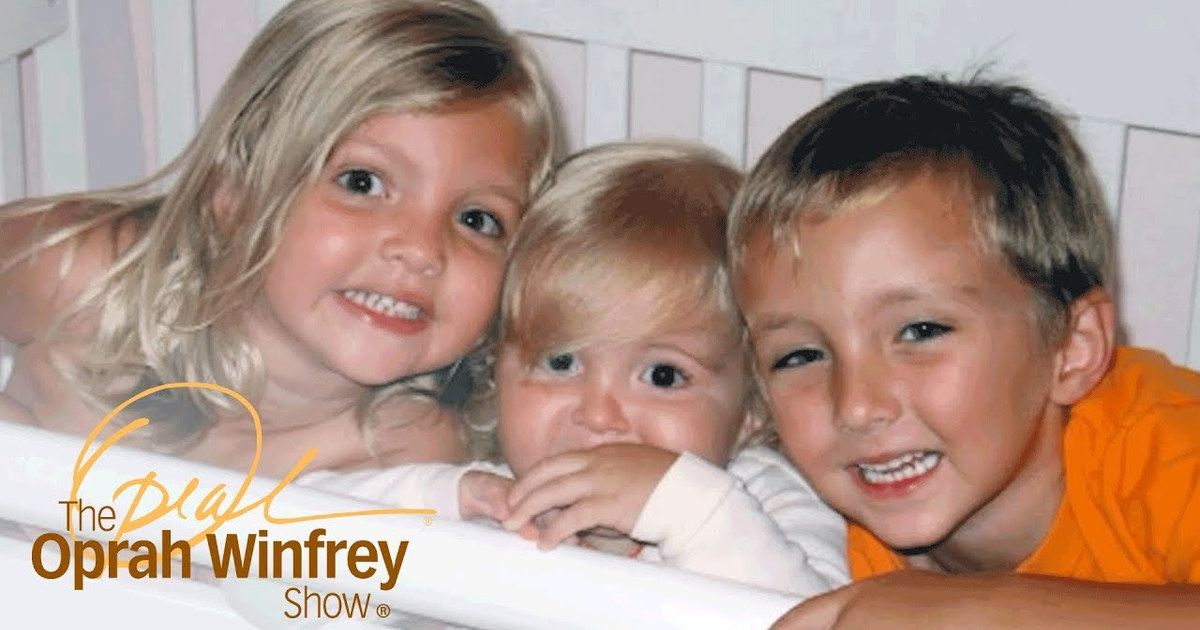
Instead, the broadcast inserts dedicated memory cards: Kyle's outgoing, angelic nature; Emma's adventurous, independent spirit; Katie's loud, joyful princess dress-up dances. Chris recalls the ritual of arriving home from work, arms outstretched as three children rushed the entryway at full speed. By cataloging the exact shapes of the missing pieces, the narrative deepens the emotional weight before initiating its second movement.
[[AD]]
The Re-Initialization Vector: Choosing to Rebuild
Three months after burying their entire nuclear family, Chris and Lori made the choice to pursue pregnancy once more. To the outside observer, three months looks like an impossibly narrow margin. But as Chris explains, their entire identity had been constructed around the daily responsibilities of parenting young children. They were, in his words, parents without children.
From a narrative standpoint, this is the turning point where despair gives way to intentional action. Because medical procedures prior to the crash had closed natural conception pathways, rebuilding required assisted reproductive technology through in vitro fertilization (IVF). The decision to re-enter parenthood was not an erasure of the past, but an active declaration that Kyle, Katie, and Emma would want their home filled with laughter again.
The production frames this transition with exceptional clarity. Rather than painting the choice as reckless or naive, the interview honors the logic of the Cobles' survival instinct: Lori survived the highway impact to stay with Chris, and together they needed to restore their family unit.
[[AD]]
The Statistical Anomaly: The Arrival of Triplets
Here is where the narrative system delivers an event so mathematically improbable that it completely satisfies both the faith-driven genre enthusiast and the probability-minded structuralist. During the IVF cycle, multiple embryos were transferred. When ultrasound telemetry returned, the result defied standard statistical projection: three developing children.
Not merely triplets, but a boy and two girls—the exact demographic distribution of Kyle, Katie, and Emma. Delivered almost one year to the exact date of the tragedy, the arrival of Ashley, Ellie, and Jake operates on a level of narrative poetry that any screenwriter would discard as impossibly sentimental. In real life, it simply happened.
The live stage reveal shifts the entire energy of the production. Toddlers Ashley, Ellie, and Jake enter the frame—chaotic, vocal, chewing on microphone moments, and running around the studio furniture. The visual contrast between the opening morgue-like recounting and this burst of kinetic toddler energy provides the ultimate release valve for the audience's accumulated tension.
[[VIDEO]]
System Integration: Living with Ghosts and Miracles
The ultimate test of any story dealing with deep grief is how it handles the resolution. A poorly constructed segment would frame the triplets as replacements, cleanly closing the file on the tragedy. But Oprah’s interview presses into the deeper, far more complex operational reality: how do you integrate the memory of lost children into the lives of the new ones?
The Cobles demonstrate a transparent architecture of memory. Ashley, Ellie, and Jake share the exact middle names of Kyle, Katie, and Emma. Their photographs line the walls of the family home. The triplets are raised knowing they have two sisters and a brother, visiting the cemetery for casual afternoon family picnics. The triplets do not replace the fallen; they carry their names forward into the future.
For the genre consumer, this provides an immensely satisfying emotional resolution: love persists across the boundary of mortality. For the craft purist, it is an inspiring demonstration of thematic closure. The piece ends not by declaring the pain healed, but by showing how a family engineered a stable, beautiful reality out of total catastrophic collapse.


