Part 2
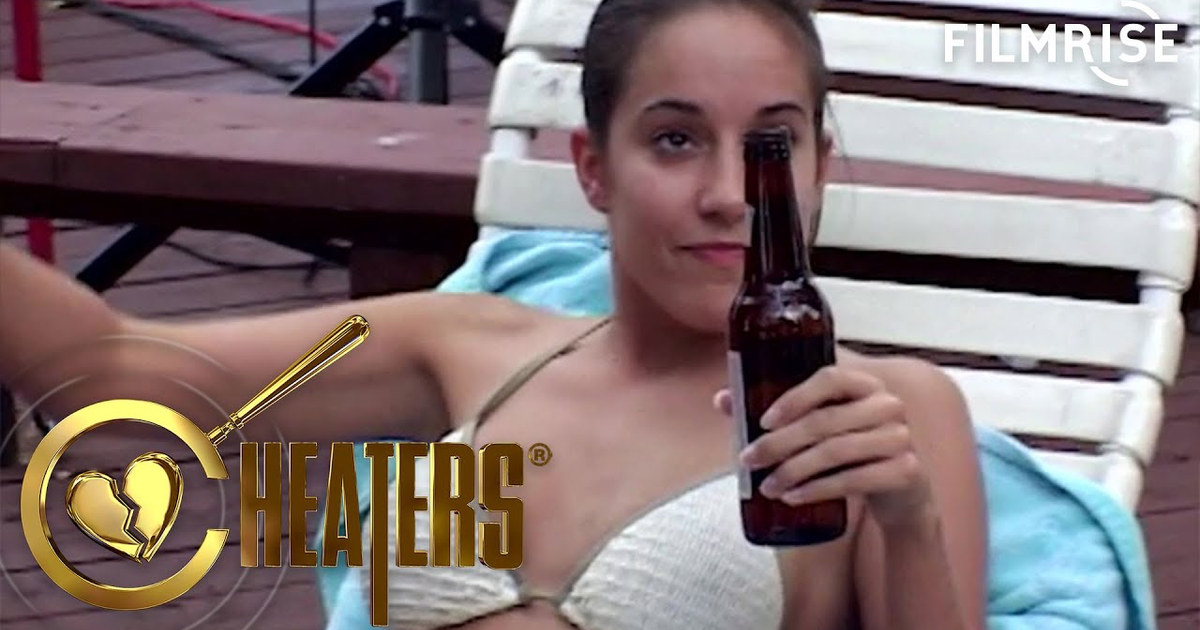
The scene’s ultimate climax belongs not to romance, but to property rights. 'Give me my car keys!' Holly screams, piercing through the evasive double-talk. 'You’re toodling around in another girl’s car for God’s sake!' In that instant, the romantic illusions shatter completely. The confrontation strips Falloon of his performative swagger, reducing him to a squatter caught red-handed joyriding on his partner's dime. He retreats indoors to finish his beer, while Holly walks away with her ignition keys and the remnants of her self-respect.
[[AD]]
The Aftermath and the Bizarre Confessions of the 'Cheaters Reveal'
If the primary segment operates as a traditional morality tale, the post-show 'Cheaters Reveal' pulls back the curtain to reveal the bizarre, carnivalesque ecosystem that surrounds this type of television. The program shifts focus to Carl Burmeister, a thirty-three-year-old paramour previously caught in bed with another man’s fiancée, Carrie, by field host Tommy Habeeb.
Burmeister’s subsequent sit-down interview is an astonishing piece of vernacular pop-philosophy, recalling the unvarnished exhibitionism of Ron Howard’s *EDtv* (1999). Unrepentant and deeply amused by his five minutes of televised infamy, Carl dissects the night of the bust with zero moral introspection. He recounts thinking the DEA or local police had raided the house before fourteen cameras shoved lenses into his mattress.
Rather than expressing contrition for derailing an engagement, Burmeister treats the entire saga as a masculine sport. He offers crass assessments of the unfaithful fiancée—comparing her bedroom demeanor to Pamela Anderson while dismissing her as an 'unchained rocket'—and confesses that his only genuine pang of guilt was realizing the fiancé had likely slept on the very sheets he had just occupied.
Carl’s interview serves as a meta-textual mirror for the entire series. He compliments the production crew for having 'balls of steel,' declaring that he has since become an avid fan of the show because he loves watching 'how many people are idiots out there.' In Burmeister, *Cheaters* found the ultimate realization of its format: a subject who has so thoroughly metabolized the grammar of reality television that he views his own illicit behavior as pure spectator sport.
[[AD]]
[[VIDEO]]
Meanwhile, the postscript for the Blackhall-Falloon investigation confirms the permanence of the rupture. Holly reports feeling immense relief, resolving to stay single and recognizing that Jonathan’s predatory double life was rooted in an insatiable, deep-seated vanity. For his part, Jonathan walks away thoroughly unbothered, while Brandy Bates openly admits to the producers that she was just along for the ride, unbothered by the collateral damage left in their wake.
Reframing the Question: The Cost of the Televised Truth
So we return to the question this artifact forces upon us: When trust fractures, does the lens provide genuine justice, or merely the illusion of it? The spectacle of Holly retrieving her car keys under the Dallas sun is unquestionably cathartic—a lightning bolt of clarity cutting through months of gaslighting and manufactured confusion. In that isolated moment, the apparatus of the surveillance state serves the powerless.
Yet the broader reality of the show’s legacy remains profoundly complicated. By dragging private heartbreak into the syndicated arena, *Cheaters* established the foundational blueprint for our modern digital panopticon. It taught an entire generation of viewers that romantic grievance is meaningless unless it can be cataloged, edited, scored, and broadcast to an audience of strangers.
Jonathan Falloon’s vacant shrug at the lakeside and Carl Burmeister’s leering post-bust commentary remind us that exposure does not guarantee repentance. The lens can document infidelity with pinpoint forensic accuracy, but it cannot manufacture shame where none exists. Holly Blackhall got her keys back, but the circus rolled on to the next Dallas suburb, hungry for another soul to put on display.


