Part 1
You have probably seen the syndicated late-night glow of the broadcast monitor: a grain-heavy telephoto lens shaking in the Dallas dark, an ominous synthesizer drone pulsing beneath a grainy voiceover, and a breathless field host marching an aggrieved partner across a parking lot toward inevitable social ruin. Long before algorithm-driven TikTok stings and algorithmic exposure turned romantic betrayal into bite-sized content, syndicated television engineered a ruthless apparatus designed to answer a singular, unsettling question: When intimacy quietly dies, do we seek surveillance to uncover the truth, or do we demand a public execution to sanctify our pain?
For over two decades, Bobby Goldstein’s infamous syndication juggernaut *Cheaters* operated not merely as tabloid voyeurism, but as an industrialized confessional booth wrapped in the aesthetic of a true-crime procedurals. It promised its subjects empirical proof, yet what it delivered was something far rawViewer: ritual humiliation under halogen studio floods. In the case of twenty-four-year-old insurance agent Holly Blackhall and her elusive partner Jonathan Falloon, that machinery captured one of the purest, most devastating studies of romantic detachment ever broadcast on daytime television.
To watch this episode today is to confront the exact inflection point where private domestic tragedy was definitively repurposed as blue-collar performance art. It forces us to ask whether the lens actually liberates the wounded lover, or whether it simply strips them of their dignity twice over—first by the errant partner, and second by the camera crew demanding they weep on cue.
[[AD]]
The Mechanics of the Sting: Telephoto Lenses and Stolen Coupes
The investigation of Jonathan Falloon begins under the deceptive quietude of domestic banality. Holly Blackhall presents as the quintessential mid-2000s complainant: articulate, fragile, yet stubbornly clinging to the naive hope that private investigators will return with an exoneration rather than a guilty verdict. She describes a year of cohabitation that began in total devotion and slowly withered into unexplained absences, late shifts at the office, and that sickening, phantom gut feeling familiar to anyone who has ever watched a lover’s focus drift across a crowded room.
Enter host Joey Greco, whose deadpan moral authority and faux-chivalric gravitas echo the stylized alienation of Francis Ford Coppola's *The Conversation* (1974). Greco does not merely narrate infidelity; he treats every grainy license plate and flicked cigarette as forensic exhibits in a capital trial. The licensed private eyes shadow Falloon for eight scoreless days, teasing the audience with the possibility of false alarms, before cracking the routine wide open.
What the telephoto glass captures on Day 8, Day 12, and Day 14 is not an erratic, guilt-ridden tryst, but a fully formed parallel life executed with total nonchalance. Jonathan is tracked driving Holly’s own vehicle to an undisclosed apartment complex to collect Brandy Bates. The cameras trail the duo through Dallas: playful dates at the multiplex, drinks on a sunlit patio in Lower Greenville, hand-holding, and eventually, public displays of neck-grabbing affection that betray zero hesitation.
[[AD]]
The knife turns deepest on Day 12, when investigators film Brandy herself hopping into the driver’s seat of Holly’s black coupe. This detail elevates the transgression from ordinary two-timing into cold parasitic exploitation. Falloon is not merely breaking a domestic contract; he is actively funding and transporting his secondary courtship with the physical assets of the woman waiting for him back home.
The psychological coup de grâce arrives during a recorded phone call between Jonathan and Holly. As Falloon lounges on a Greenville patio preparing to down cocktails with his escort, he feeds Holly a tired shaggy-dog excuse about being trapped at work, whining about how much he wishes he could simply be home with her. When the apartment lights finally extinguish ten minutes after they retire to Brandy’s flat, the production crew has achieved what no therapist could: undisputed, photorealistic evidence of absolute deceit.
Spoiler Warning: The Lakeside Ambush and the Anatomy of the Shrug
**Warning:** Deep narrative breakdowns and episode outcomes follow. Proceed only if you are ready to dissect the final confrontation.
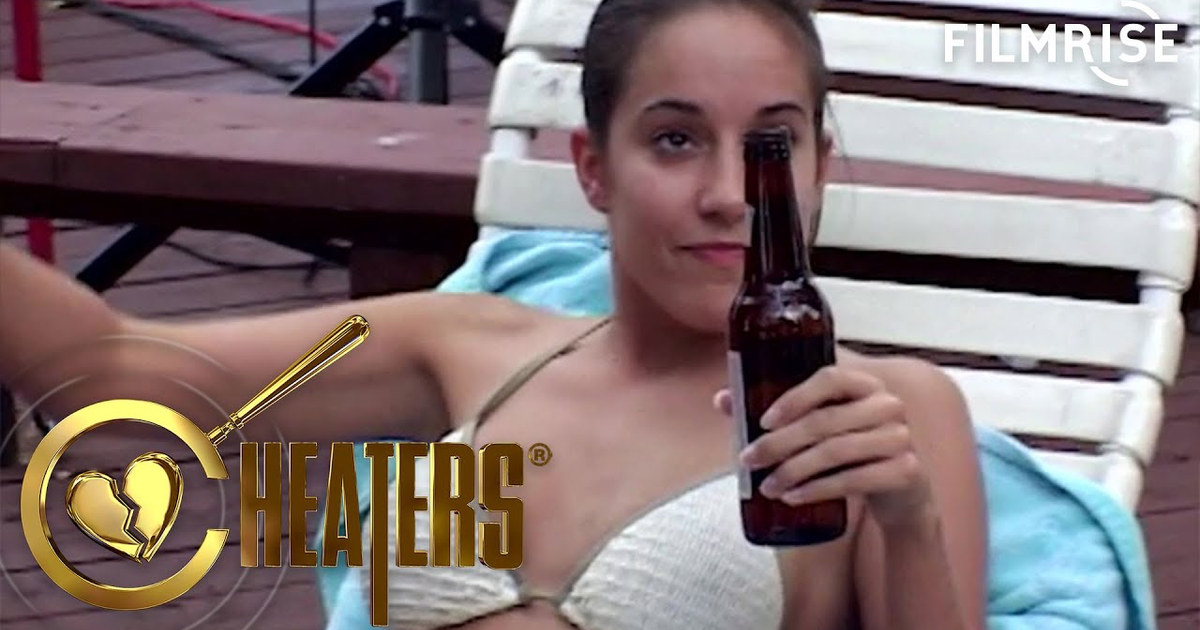
The showdown does not occur in a claustrophobic parlor or behind closed doors; it takes place outdoors, by the water, where Jonathan and Brandy sit comfortably nursing a bucket of beer. The aesthetic dissonance is jarring: an sunny afternoon gathering violently punctured by Greco, Holly, and an entire phalanx of burly camera operators barreling across the lawn like a tactical strike team in cargo pants.
[[AD]]
Much like the explosive, chaotic street theater of *The Jerry Springer Show* throughout its peak 1990s run, the confrontation relies on sensory overload. Holly’s anguish is immediate, breathless, and profoundly raw. 'My name’s Holly, I’m his girlfriend!' she proclaims directly to Brandy, before pivoting to the boyfriend who just hours prior had whispered declarations of love over morning coffee. But while daytime television traditionally trades in screeching meltdowns, Falloon offers something far more chilling: absolute indifference.
Faced with hard footage of his betrayal, Jonathan does not grovel, panic, or flee. He casually sips his drink, bats away the boom microphones, and offers a vacant defense that sounds like corporate PR: 'Life goes on... What the hell can I do? We have our problems.' When pressed on the hypocrisy of professing his love while carrying on a months-long affair, he attempts a frantic pivot, claiming Holly had stepped out on him previously—a half-hearted attempt to balance the moral ledger that Greco immediately dismantles.


