Part 3
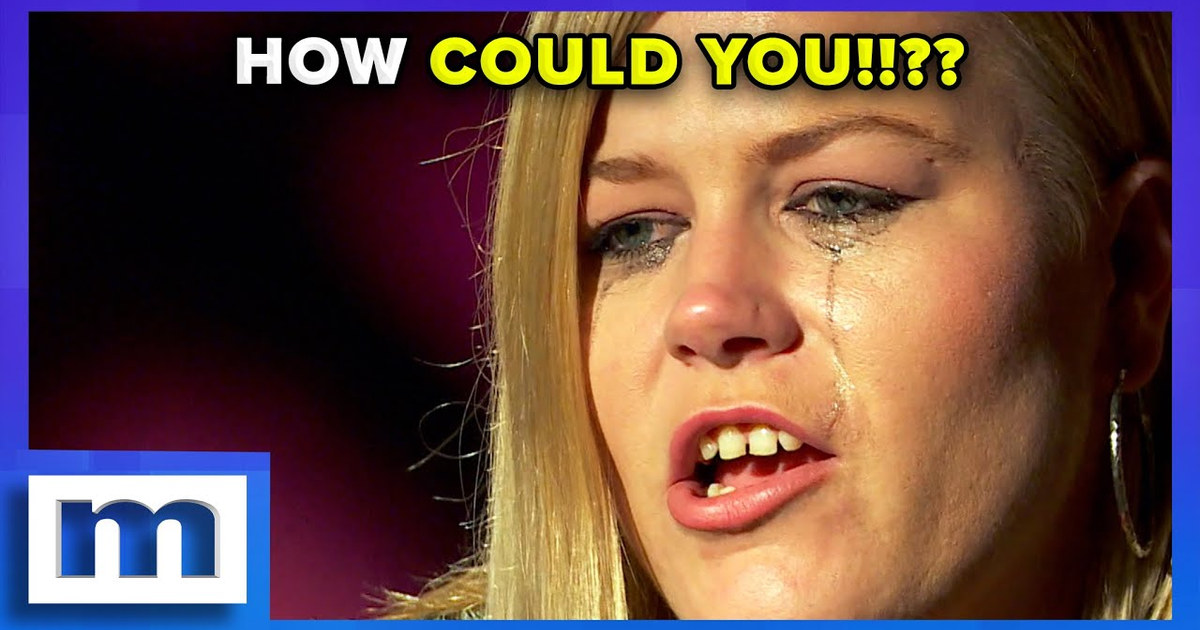
Elizabeth’s raw reaction cuts through every excuse. “That’s my man. That’s my child’s father,” she says, her voice cracking. And later, backstage: “I’ll never forgive her for him. She’s stupid.” The transcript doesn’t soften this. The hurt is real. And Jessica caused it. Not Charlie alone — Jessica walked into that studio knowing exactly what she was about to do. She had six months to tell her sister privately. She chose the spotlight instead.
[[AD]]
Even Maury, who has hosted every kind of family implosion since 1991, draws a line. “You’re family. Worse than he is actually cuz you’re family.” That’s the consensus’s best evidence. Maury isn’t moralizing from a distance. He’s saying that the blood bond makes Jessica’s betrayal cut deeper than Charlie’s. Charlie was a boyfriend. Jessica was a sister. And sisters are supposed to have each other’s backs.
Dr. Jim, the show’s counselor, echoes it: “It is a horrible, horrific betrayal that your sister did this.” He holds her responsible for her choices. 100%. And he’s right to. Jessica wasn’t sleepwalking. She was an active participant in a six-month affair, and then she helped produce the reveal. That’s not just weakness. That’s a decision.
So yes, the counter-argument is strong. Jessica knew better. She watched her sister’s pain up close — Elizabeth had already been on the show years earlier to find out Joe wasn’t her biological father, and Jessica saw that heartbreak firsthand. She knew what another betrayal would do. And she did it anyway. On camera. With Maury’s producers rolling.
But here’s where the consensus overshoots. Jessica’s guilt doesn’t erase Charlie’s greater culpability. Both can be true. The question isn’t who is innocent — nobody is. The question is who built the fire and who poured the gasoline. Charlie built it. Over ten years, he had every chance to leave. He had a child with Elizabeth. He had a home. Instead, he complained about his relationship to Jessica — Dr. Jim calls that “the gateway drug to film” — and crossed a boundary he never should have crossed.
Charlie’s pre-taped segment is the smoking gun. He didn’t confess to Elizabeth. He confessed to Maury’s producers. “I just don’t love her anymore. I’m in love with her sister, Jessica,” he says, calm as a man reading a weather report. “I deserve to be happy.” That’s not a man trapped by passion. That’s a man who calculated the cost and decided Elizabeth’s pain was acceptable. He built the fire. Jessica poured the gasoline. But Charlie struck the match.
And let’s not pretend the show itself is innocent. Maury’s producers followed the sisters backstage. They filmed the counseling session with Dr. Jim. They aired every second. This is a machine that has been turning family collapses into segments since the 1990s — the same machine that gave us “You are not the father” as a catchphrase. The real villain might be the format that turned a private betrayal into a public execution. The cameras didn’t just capture the pain. They choreographed it.
So here’s my fair verdict. Jessica deserves blame. She’s not innocent. She knew better, and she did it anyway. But the consensus that she’s the sole villain lets Charlie off the hook — and that’s the take I’m rejecting. Charlie had ten years, a child, and every chance to leave with dignity. He chose betrayal. Jessica chose the spotlight. Both are guilty. But only one of them was a father.
The next time a Maury clip goes viral, watch who gets the pre-taped segment and who gets the ambush. The format tells you who the show wants you to hate. And often, the person who gets the ambush is the one the audience is supposed to blame — while the person who got to speak calmly to producers walks away with a clean edit. That’s not justice. That’s television.
We’ll be back with more Maury moments where the audience blamed the wrong person — and the real villain got a sympathetic cut. Stay tuned.


