Part 1
The Consensus: Jessica Is the Villain — And I Think It's Wrong
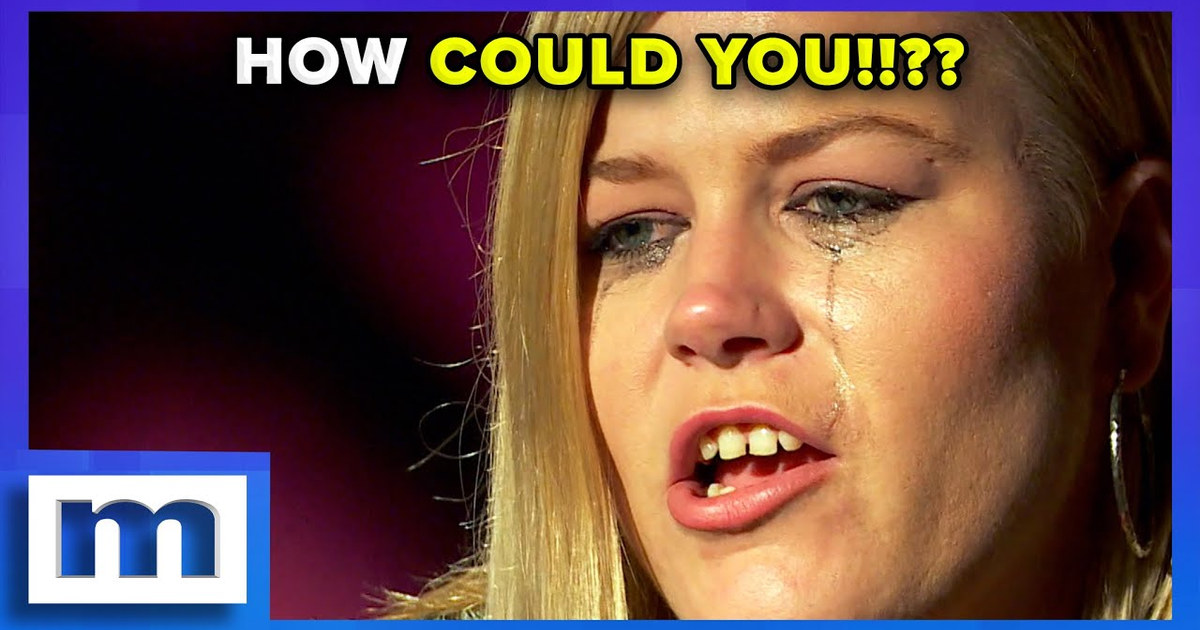
If you've been anywhere near social media in the last few weeks, you've seen the clip. Elizabeth sits in that chair, hopeful and nervous, and Maury Povich's voice drops into that familiar register of doom. Backstage is her sister, Jessica. The secret? Jessica has been sleeping with Elizabeth's boyfriend, Charlie, for six months. The audience gasps. Elizabeth crumbles. And the internet — oh, the internet — wasted no time. Jessica is a monster. A snake. A sister who deserves the scarlet letter branded on her forehead. The verdict was swift, unanimous, and merciless.
I'm here to tell you that verdict is wrong. Not because Jessica is innocent — she's not — but because the consensus has been played. The Maury show is a machine, and it knows exactly how to make you feel. It gives you a villain you can hiss at, a sister you can hate, and a man who gets to deliver his betrayal from the comfort of a pre-taped segment. And we fell for it. We always fall for it.
So let's be clear about my thesis: Jessica is not the primary villain here. Charlie is. The man who spent ten years building a life with Elizabeth, who fathered her child, who looked her in the eye every single day — he's the one who detonated the bomb. Jessica lit a match, sure. But Charlie built the bomb, stocked the explosives, and then walked away whistling while the women burned. The consensus focuses on the sister betrayal because it's more visceral, more televisual, more shareable. But that's misdirection. That's the show's oldest trick.
Now, before you sharpen your pitchforks, let me give the opposing view its due. Jessica made a conscious choice. She knew Elizabeth for their whole lives. She watched Elizabeth's earlier paternity heartbreak with Joe on this very same show — a moment that shattered Elizabeth on national television. Jessica saw that. She held her sister's hand through it. And then she crossed the line anyway. That's real harm. That's not an accident. That's a decision, made over and over, for six months. The people calling Jessica a villain aren't inventing the betrayal. They're just misplacing the blame.
But here's where the framing falls apart. The Maury show — like all daytime talk shows of its ilk — is structurally designed to make the woman the star of the betrayal. Think about it. Charlie gets a pre-taped segment. He gets to sit in a chair, if he shows up at all, and deliver his lines like a romantic hero in a bad indie film. 'I just don't love her anymore,' he says. 'I deserve to be happy.' He pre-frames himself as a man following his heart, a protagonist in his own love story. Meanwhile, Jessica has to face Elizabeth in person. She has to sit there while the audience gasps. She has to wear the scarlet letter. The man gets a monologue. The woman gets a mob.
This isn't accidental. It's the architecture of the genre. From the heyday of Jerry Springer in the 1990s to the countless Maury episodes that followed, the format thrives on female-on-female conflict. Two women, one man, and a studio audience baying for blood. The man is often absent, or pre-recorded, or brought out last like a prize. The women do the emotional labor of the reveal. They cry. They scream. They confront. And the audience directs its rage at the one who broke the sisterhood, not the one who broke the commitment.
Let's talk about Charlie's actual words. In his pre-taped message, he says, 'Elizabeth deserves to know the truth. I just don't love her anymore. I'm in love with her sister, Jessica.' Notice the framing. He's not apologizing. He's not groveling. He's announcing. He's the guy in a rom-com who finally admits his true feelings. 'I deserve to be happy,' he says, 'and I'm happy with Jessica.' That's not remorse. That's a press release. He's writing his own narrative while Jessica has to stand there and take the hits.
And then there's Dr. Jim, the counseling session. This is the part the consensus loves to skip. Dr. Jim says, 'He went over there crossing a boundary he never should have crossed.' He calls Charlie 'not a loyal guy.' He warns Jessica — yes, Jessica — that she's signing on for a lifetime of pain because if Charlie will sleep with his ten-year girlfriend's sister, he'll ultimately do this to her too. The expert's own words undercut the sister-as-sole-villain narrative. Dr. Jim isn't letting Jessica off the hook — he says he holds her responsible for her choices, 100%. But he names the real problem: Charlie wasn't man enough to end the relationship before he started a new one. He didn't come to Elizabeth and say, 'This isn't working.' He went to Jessica and complained about his relationship, which Dr. Jim calls 'the gateway drug' to infidelity. That's on Charlie. That's the root.
This pattern isn't new. Go back through the Maury canon — the 2000s, the 2010s, the episodes that racked up millions of views on YouTube and TikTok. Men revealed as serial cheaters, sometimes with multiple women, sometimes with relatives, sometimes with best friends. And every time, the audience's rage lands hardest on the 'other woman.' She's the homewrecker. She's the Jezebel. He's just a guy who made a mistake. It's a tale as old as daytime television, and it's baked into the DNA of the format. The woman who betrays a woman is the ultimate sin. The man who betrays a woman is just Tuesday.


