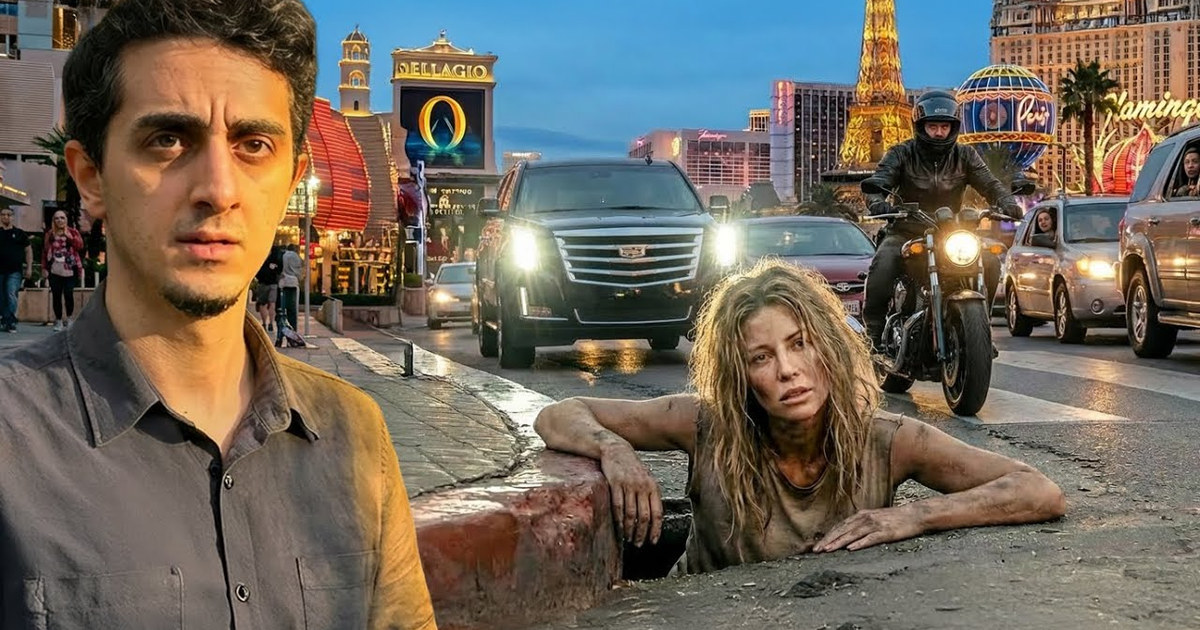
Las Vegas is cinema’s cruelest dual-exposure frame: a multi-billion-dollar high-key set piece running twenty-four hours a day directly above two hundred miles of impenetrable, zero-lux subterranean reality.
When you shoot second-unit in the desert, you learn real fast that Vegas is built on pure optical trickery. You rig 18K Arrimaxes, blast gold bounce onto reflective hotel glass, and push saturation so hard your histogram screams. But pull your lens thirty feet below the asphalt, kill the practicals, and you hit absolute zero. That is where fifteen hundred human beings are currently surviving.
This documentary trip beneath the neon isn't just another shock-value urban exploration reel. It is a textbook masterclass in deep environmental contrast. The strip above operates at blinding stops of fake daylight, while the drainage concrete below swallows raw ambient light down to the sensor floor.
[[AD]]
Beat One: Framing Caesars Palace Through a Storm Grate
The camera tilts upward through a rusted storm grate, pulling focus from ankle-deep toxic runoff to catch the towering facade of Caesars Palace baking in high noon. You hear the rumble of heavy traffic grinding overhead on hot asphalt while the team stands in pure damp darkness. Nevada casinos pull down fifteen billion dollars a year up on that tarmac, but twice a day their industrial air filtration runoff drains directly onto the heads of people sheltering below.
Up top, tourists blow three-thousand-dollar luxury hauls after chasing a hundred-dollar slot jackpot, running on cheap day-drinking adrenaline. Down below, dwellers like Nate and Beverly survive by dumpster diving, scavenging abandoned luggage, and hoarding copper wire just to swap for dry clothes and bike parts. Bikes are the only vehicles that operate down here; without wheels, navigating miles of dark storm corridors is a lethal foot slog.
From a visual standpoint, you cannot match this kind of dynamic range in an artificial studio rig. No sensor on earth can hold both exposures without blowing the highlights or crushing the floor. The city treats the underground like dead space behind the curtain, but the boundary between the VIP lounge and the concrete gutter is literally five inches of reinforced concrete.
[[AD]]
Beat Two: Zero-Lux Survival and Practical Rigs in the Concrete
The camera crew cuts their headlamps, and the frame falls into genuine, suffocating zero-lux void where dweller Tony guides them purely by touch, keeping one hand flat against the damp stone wall. He has lived down here six years without running a tactical flashlight. When you burn zero batteries, your retina widens to its physical limit, turning subtle drafts and faint pipe echoes into a mental map of your entire camp.
Look at the makeshift rigs these dwellers build to keep breathing. They press aluminum sheets into frying pans, burn hand sanitizer as a clean, smokeless blue flame to cook salvage rations, and seal five-gallon bucket latrines in corners carved out of storm runoff basins. But the emotional cost of that ambient shadow is brutal. Long-term dwellers literally talk about skin turning gray from total solar deprivation.
Then you walk into Jay’s section, and the scene staging flips completely. He has arranged salvaged baby strollers, discarded toys, and curated items into a surreal underground art installation. Jay survived a close-range gunshot wound to the skull that took his eye, yet he keeps his patch clean in the dark, dodging hallway bullies, territorial raids, and what he describes as pitch-black auditory phantoms that mimic human voices down the shaft.
Without state IDs or digital paperwork, these people are erased from administrative call sheets entirely. If you handed out fresh plastic cards tomorrow, it would not magically wrap the shoot. The collective trauma, untreated physical violence, and constant sensory deprivation lock them onto this soundstage indefinitely.
[[AD]]
Beat Three: The Twenty-Minute Flash Flood Kill Switch
The guide points out chalky white mineral rings etched eight feet up the concrete walls—calcified flood markers left behind by past deluges that drowned dwellers in their sleep. Las Vegas soil is baked into hardpan caliche that cannot absorb surface water. When a summer storm dumps rain on mountain ranges fifteen miles out, that water does not soak in; it funnels straight into these subterranean chambers.
On a clear, cloudless afternoon on the Strip, thousands of cubic feet of stormwater can slam into these concrete chambers in less than twenty minutes. The current sweeps rolling debris, shopping carts, and sewage directly through personal tents. Veteran dwellers like Phil, who spent a decade underground after losing his home, lived with zero early-warning tech outside the sudden sonic roar of incoming water.
There are hand-carved memorial crosses and plastic flowers taped directly to the tunnel pillars where residents drowned or overdosed overnight. As Phil noted before his own passing shortly after filming: the current never loses. It is nature’s practical reset button, wiping out years of hoarded belongings in a single crushing tracking shot.
[[VIDEO]]
What to Watch for on the Underground Monitor
When you study this footage, keep your eyes on the background bokeh whenever the camera catches glimpses of overhead daylight through drainage slots. Watch how quickly the subject matter changes the second you step out of the beam into the dark pockets where local police radios fail to establish signal. The documentary crew brings Narcan and emergency rations, but the camera never flinches from the cold, damp texture of human isolation.
Most Americans are just two missed paychecks away from losing their grip on standard shelter, and this footage proves just how fast the fall really is. Las Vegas keeps its neon cranked to maximum wattage so you never look down at the floorboards. Watch the full underground descent, examine the contrast ratios for yourself, and catch the next deep-dive dispatch on ReelDrop.


