Part 2
[[AD]]
Watch the editing rhythm after the verdict. Shot lengths shrink. Two seconds. One second. Half a second. It mimics a heartbeat — the audience's, not the subject's. That's not an accident. That's an editor cutting to a click track you can't hear but your body can.
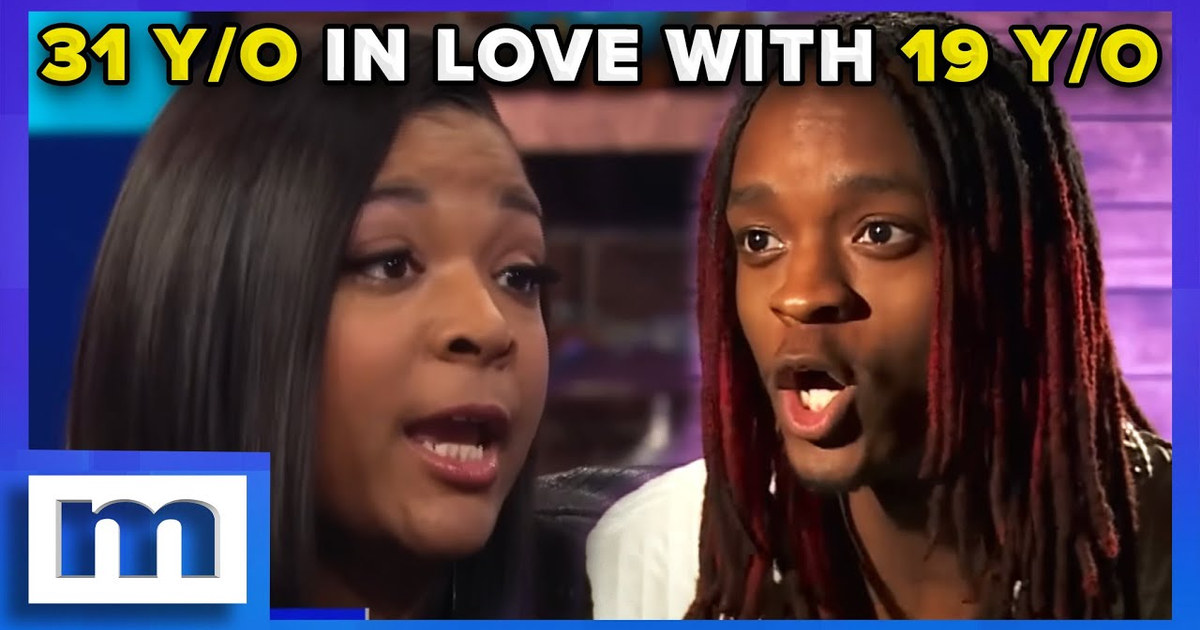
Then Travis speaks. "I'm very mature for my age, and I've always dated older women. Girls my age are boring." The camera holds on him for an extra beat. No cut. Just his face, mid-sentence, selling his own defense. Then it cuts to Zukih. Skeptical. Eyes narrowed. Mouth tight. She doesn't say a word. She doesn't have to.
[[VIDEO]]
That's the Kuleshov effect, and it's older than television. Alfred Hitchcock built entire sequences on it in Rear Window (1954) — cutting between Jimmy Stewart's face and the windows across the courtyard, letting you read fear, suspicion, and desire without a line of dialogue. Here, the juxtaposition does the same work. Travis's words say "I'm mature." Zukih's face says "You're lying." The audience believes the face. That's not journalism. That's montage.
AD_MARKER
The crash zoom itself has a pedigree. Martin Scorsese and DP Michael Ballhaus used it in Goodfellas (1990) to make you feel the paranoia in Henry Hill's veins. The lens doesn't just move. It lunges. On Maury, the same technique does the same thing at a fraction of the budget. It makes you feel like you're in the room, and the room is closing in.
But the most interesting camera work in this segment isn't on faces. It's on a phone. When Maury pulls up the Facebook messages — "You are his bread and butter, and he is using you for your money" — the show uses a split-screen. The graphics are lower-third overlays, clean and readable. But the camera also does a slow pan across the screen. It treats the phone like a character. The pan is deliberate. It's not a screen recording. It's a performance. The phone is the third witness in the interrogation, and the camera gives it the same respect it gives Zukih and Travis.
That's a choice. You could just show the messages as a static graphic. Instead, the camera moves. It makes the audience lean in. It makes the evidence feel discovered, not presented. And it keeps the visual language consistent: everything on this show is either pushing in or panning across. Nothing is still. Stillness would mean neutrality. Maury doesn't do neutral.
AD_MARKER
The camera work tells you who to believe before the polygraph does. But the polygraph itself has a visual language, too. The wires. The clipboard. The slow reveal. That's not science. That's staging. And it's the final piece of the puzzle.
The Polygraph as Prop: How the Lie Detector Test Is Staged for Maximum Drama
The lie detector administrator—often a retired police officer—sits off-camera. We never see his face. We never see the machine’s readout. Instead, we see Maury, holding a card like a verdict from on high. The camera frames his face in a medium close-up, the card just visible at the bottom of the frame. This is not a documentary. This is daytime television’s version of a high-stakes courtroom, and the polygraph is the prop that seals the deal.
[[AD]]
In the Travis interrogation, the polygraph equipment is rarely shown in close-up. We don’t see the needles, the pens, the graphs. We see Maury’s reaction. That’s a directorial choice—by hiding the machine, the show makes the result feel like an oracle, not a scientific instrument. The audience is asked to trust the host, not the technology. And in the hands of a skilled editor, that trust is everything.
Compare this to David Fincher’s 'Zodiac' (2007, DP Harris Savides). In that film, the polygraph is shown in clinical detail. We see the subject’s sweat, the needles scratching, the operator’s skeptical glance. Fincher and Savides emphasize the fallibility of the machine. Maury does the opposite. The machine is a black box. The audience is asked to trust the host. And that’s the point: the drama isn’t in the science. It’s in the reveal.
When Maury says, 'The lie detector determined that was a lie,' the camera does a slow zoom out from Travis, revealing the audience’s reaction. This is a 'pull-back' to show isolation. The lighting on Travis subtly shifts—a flag (black cloth) is used to create a slight shadow on one side of his face, a technique called 'negative fill' to suggest moral ambiguity. It’s a classic cinematographic trick: shape the light, shape the judgment.
This visual language echoes Francis Ford Coppola’s 'The Conversation' (1974, DP Bill Butler). In that film, Harry Caul (Gene Hackman) is isolated by sound and framing. The camera keeps him at a distance, often shooting through glass or from high angles. The paranoia is palpable. Maury’s team does something similar with Travis: the slow pull-back, the negative fill, the reaction shots of the audience. It’s all designed to make you feel like you’re watching a guilty man squirm.
But here’s the thing: the polygraph is not a lie detector. It’s a fear detector. It measures heart rate, blood pressure, respiration, and skin conductivity. It can be fooled. It can be misinterpreted. And in the hands of a daytime TV producer, it’s a prop. The real drama is in the staging. The real verdict is in the editing.
After the lie detector result, the show cuts to a wide shot, then a tight close-up of Zukih’s reaction. The lighting remains flat—no dramatic shift. This undercuts the emotional weight. It’s a missed opportunity for visual storytelling, but it’s consistent with the show’s brand. Maury isn’t trying to be 'Zodiac.' It’s trying to be Maury. And that means the lighting stays even, the camera stays on the faces, and the drama stays in the words.
So next time you watch Maury, notice how the camera frames the lie detector card. Notice how the lighting never changes. Notice how the editing pace accelerates as the result is read. These are the tools that make you believe the results—even when the science is dubious. The polygraph is a prop. The real lie detector is the camera.
And that’s the final reveal: 'You are not the father.' The camera cuts to a wide shot, then a tight close-up of Zukih’s reaction. The lighting remains flat—no dramatic shift—which undercuts the emotional weight. This is a missed opportunity for visual storytelling, but it’s consistent with the show’s brand. The show isn’t interested in subtlety. It’s interested in spectacle. And in that, it succeeds.
So watch for the card. Watch for the pull-back. Watch for the negative fill. These are the visual cues that tell you who to believe. And remember: the polygraph is just a machine. The real lie detector is the lens.


