Part 1
The Set Is the Tell: How Maury's Studio Lighting Primes You for the Verdict
The Maury show's visual language—from its high-key studio lighting to its crash-zoom editing—is engineered to make you trust the lie detector before a single result is read. I've shot second-unit on enough sets to know that nothing in that frame is accidental. Every softbox, every lens choice, every cut is a promise: "What you're about to see is the truth." And the Zukih/Travis episode is the perfect case study.
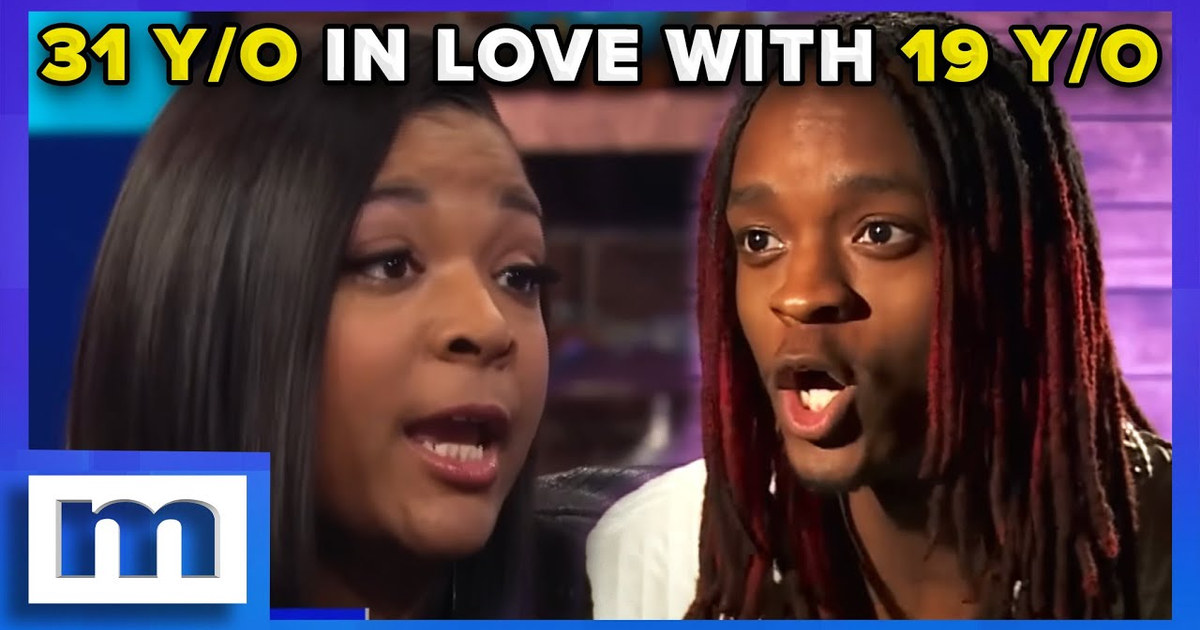
Let's start with the establishing beat. Zukih, 31, sits in the guest chair as Maury introduces her and 19-year-old Travis. The camera holds a two-shot with a shallow depth of field—likely an 85mm at T2.8. That's a portrait lens wide open, and it does exactly what it's designed to do: it softens the audience into a bokeh blur, isolating the couple in a bubble of apparent intimacy. You've seen this in The Social Network (2010, David Fincher, 120 min), where Aaron Sorkin's dialogue is framed like a deposition. But here, the isolation isn't about tension—it's about trust. We're being told: focus on them. They're the only thing that matters.
Now look at the lighting. The set uses a flat, even wash from large softboxes—think Chimera Quartz Plus or a similar 4x4 bank. There are no shadows on faces. No hard key from the side, no rim light to carve out cheekbones. This is the 'truthful' look, a convention borrowed from newsmagazines like 60 Minutes, not from documentaries. It signals objectivity while actually flattening emotional nuance. In a real documentary—say, Errol Morris's The Thin Blue Line (1988, 103 min)—lighting is stylized, reenactments are surreal, and Philip Glass's score questions every frame. Morris wants you to doubt. Maury wants you to believe.
When Zukih says, 'I met Travis at McDonald's. I was eating my chicken and fries,' the camera cuts to a tight close-up. The lighting remains unchanged—no shift to a more dramatic, contrasty look. No Rembrandt patch, no split light. So her story feels like just another segment, not a personal confession. That's the point. The flat wash tells you: this is just facts. But it's not. It's a performance, and the lighting is the stage.
Compare that to a film like Spotlight (2015, Tom McCarthy, 129 min). There, the newsroom is lit with practical fluorescents and harsh overheads—it feels real, gritty, and morally complex. Maury's studio is the opposite: a sealed environment where truth is simple and the lie detector is the final arbiter. The lighting doesn't just illuminate; it indoctrinates.
And then there's the spatial placement. The wide shot showing the crowd creates a jury-like pressure. You're not just watching a couple; you're watching a trial. The set design—typical daytime TV staging, often credited to people like Jim Fenhagen—puts the audience in full view, like a Greek chorus. In 12 Angry Men (1957, Sidney Lumet, 96 min), the camera starts wide and slowly pushes in, making the room feel smaller and the pressure greater. Maury does the opposite: the crowd is always there, a constant reminder that judgment is imminent. The lie detector isn't just a machine; it's the foreman of the jury.
So when Zukih says, 'I'm terrified that Travis' lie detector results are going to prove that Travis is lying, cheating, and a real-life scam artist,' the lighting has already done its job. We're primed to trust the test, not the person. The flat, even wash has told us: this is objective. The shallow depth of field has told us: this is intimate. The wide shots have told us: this is a public trial. And the camera's movement—the crash zooms, the reaction shots—will narrate the doubt. But the lighting sets the stage. It's the first lie.
The lighting sets the stage, but it's the camera's movement and framing that actually narrate the doubt.
Crash Zooms and Reaction Shots: The Grammar of Suspicion in the Travis Interrogation
Maury doesn't ask the first lie detector question like a talk show host. He asks it like a prosecutor reading a count. "Did you hit on Zukih the first day you met her because you thought she had money?" The words land flat. The camera doesn't. It punches in on Travis's face — a rapid push that feels like a flinch. That's not a slow dolly. That's a crash zoom.
I've shot second unit on enough unscripted sets to know the tool. You don't get that kind of snap from a cinema zoom. You get it from an ENG-style lens — something like a Canon HJ series — parked at the long end, maybe 70–100mm, and racked hard. The operator isn't feathering the ring. He's slamming it. Focus hunts for a frame, then locks. The result is a visceral jolt that bypasses your brain and hits your gut. You don't decide Travis looks guilty. The lens decides for you.
That move is borrowed. Reality competition shows like Survivor (2000–present) use it to turn a whispered alliance into a betrayal. Scripted dramas like Law & Order (1990–2010) use it to turn a witness into a suspect. On Maury, it turns a 19-year-old into a defendant. The grammar is the same. The stakes are just messier.
AD_MARKER
When the result comes back — "That was a lie" — the director doesn't stay on Travis. He cuts to Zukih. A slight nod. No tears. Just the smallest physical confirmation that she already knew. Then he cuts to Travis's mother in the audience. That's not luck. That's four cameras: two handheld, two on tripods, all rolling at once. The handhelds hunt reactions. The tripods hold the wide. The switcher cuts live. Every cutaway is pre-planned, or at least pre-anticipated, because the director knows the beats before they happen.


