Part 2
[[AD]]
If you want a cinematic reference, think Jonathan Demme’s The Silence of the Lambs (1991, 118 minutes, available on Max and Amazon Prime). The interrogation scenes between Clarice Starling and Hannibal Lecter are masterclasses in close-up tension. Demme and his DP Tak Fujimoto put the camera right on Lecter’s face, sometimes in direct address, and the audience feels trapped in that gaze. The polygraph room here uses the same principle: the close-up isn’t just about seeing emotion—it’s about denying the subject any escape. Nate can’t look away from the lens, and neither can we.
[[VIDEO]]
The questions themselves are structured like a drumbeat. “Have you slept with any other women you send naked photos to?” Nate says no. “The lie detector determined you’re telling the truth.” Cut. “Have you slept with any other women that you met through Craigslist ads?” No. Truth. Cut. “Did you sleep with any other women who sent you naked photos?” No. Truth. Cut. The editing is rhythmic—question, answer, result—and each cycle tightens the screw. The operator is cutting on the result, not the answer, so the audience gets a tiny release with each “truth” before the next question lands. It’s a classic three-beat pattern, and it’s designed to make you complacent.
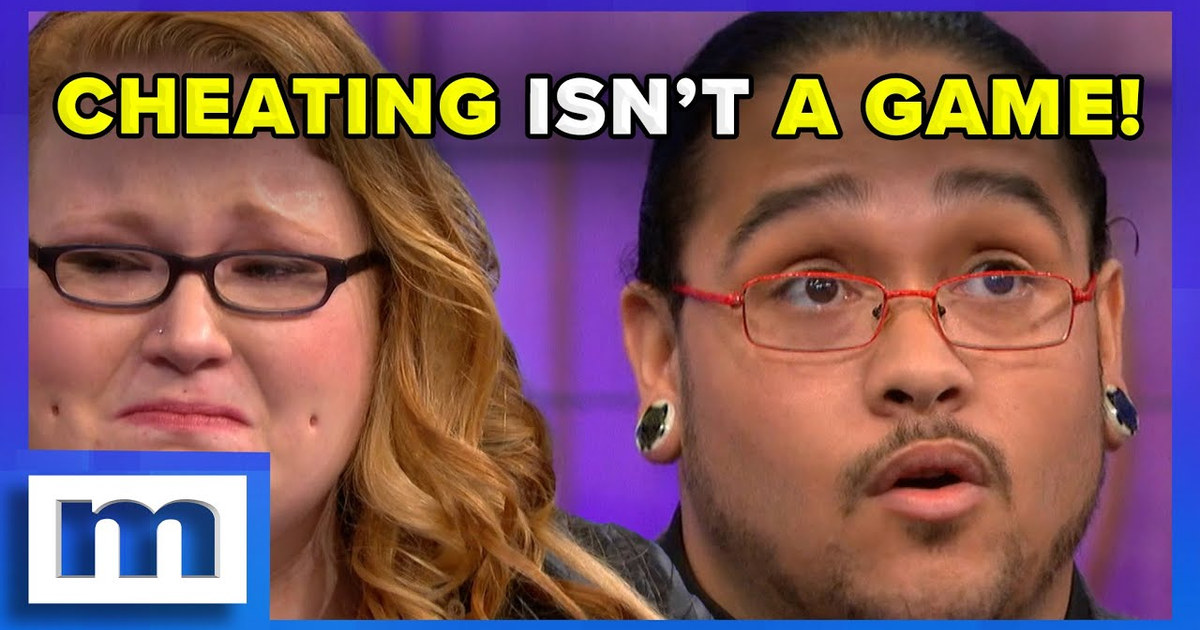
Then the turn. “Do you try to sleep with other women and tell them to keep it a secret?” Nate says no. “The lie detector determined that was a lie.” And the camera doesn’t cut to Maury. It doesn’t cut to a reaction graphic. It cuts to Mikaela. Her face crumples. The operator holds the shot. No cutaway. No rescue. This is the money shot, and the director knows it. In a lesser edit, you’d cut to Maury for a reaction, or to Nate for a denial. But here, the camera refuses to look away from Mikaela. It’s the same principle as the single-take emotional breakdowns in Noah Baumbach’s Marriage Story (2019, 137 minutes, on Netflix). Baumbach and DP Robbie Ryan hold on Scarlett Johansson’s face during the argument in the apartment, and the camera’s refusal to cut is what makes it unbearable. Here, Mikaela’s crumple is the whole story in one frame.
Next question: “Do you tell other women that you are unhappy in your relationship so they will sleep with you?” Another lie. Mikaela: “Are you kidding me? Are you for real?” The editing here goes fast—quick cuts between Nate, Mikaela, and Maury. The pace mirrors her panic. The operator is cutting on movement, on breath, on the rise of her voice. It’s a jarring shift from the slow drumbeat of the earlier questions, and it puts us inside her head. She’s not just hearing lies; she’s watching her life unravel in real time.
And then the final question: “During your relationship with Mikaela, have you ever had any sexual contact of any kind with any other woman?” Nate says no. “The lie detector determined you’re telling the truth.” This is the twist. He didn’t physically cheat. But he lied about trying. The camera holds a wide shot of the three of them—Nate, Mikaela, Maury—and for the first time, you can see the space between Nate and Mikaela. It’s a physical gap that wasn’t there before. In the earlier shots, they were framed tight, almost touching. Now there’s air between them. That’s not an accident. That’s blocking. The wide shot is the visual thesis of the entire segment: the truth didn’t set them free. It just made the distance visible.
But what does this mean for the story? Next, we analyze the aftermath and the final verdict.
The Aftermath: What to Watch for in the Final Frames (and in Yourself)
Maury leans in, the studio lights catching the sweat on Nate’s forehead. “Nate, you know what I suggest? You see a counselor.” Nate nods, almost eager. “I’m down for that.” And just like that, the verdict lands—not the one you were bracing for, but the one that leaves the door cracked open. If you were waiting for the iconic “You are not the father,” you’re in the wrong episode. Here, the resolution is a suggestion, a shrug, a maybe. But the structure is identical: a verdict, a resolution, a door left open. And as a cinematographer who’s shot second-unit, I can tell you—the final frames are where the real story hides.
The last shot is a wide of the studio audience. The lighting is bright, almost clinical—think the overhead fluorescents of a hospital waiting room, not the warm tungsten of a sitcom. The camera pans slowly across faces: some shocked, some laughing, some crying. This is the Greek chorus, and they’re not just watching. They’re participating. Compare it to the final shot of Sidney Lumet’s Network (1976, 121 minutes), where the audience becomes part of the spectacle, their faces a mirror of our own complicity. Here, the same trick works on a daytime budget. The pan is slow, deliberate—maybe 24mm, deep focus, so every reaction is sharp. No shallow depth of field to soften the blow. You’re meant to see it all.
[[AD]]
But the real kicker is what happens after the pan. The camera holds on Mikaela’s face as the credits roll. She’s not crying anymore. She’s thinking. That’s the shot. No dialogue, no music swell—just her eyes, slightly narrowed, processing. The lighting on her is a soft key from the left, maybe a 2:1 ratio, enough shadow to suggest interiority. She’s not a victim in this frame; she’s a calculator. And that’s the unresolved narrative. Mikaela said if Nate fails, he’s moving out of her house. He failed two questions—the ones about trying to sleep with other women and telling them he’s unhappy. But he passed the physical infidelity questions. So what happens? The show doesn’t tell us. That’s the point. The camera holds, and we’re left to fill in the blanks.


