Part 1
The Wide Shot That Tells You Everything Before Anyone Speaks
This episode of The Maury Show (syndicated, 2024) is a masterclass in visual storytelling that most narrative films fail to achieve, and I’ll defend that claim by dissecting three specific scene beats. I’m a cinematographer who’s shot second unit on features you’ve probably streamed at 2 a.m., and I’m telling you: the way this episode is blocked, lit, and cut is not accidental. It’s a clinic in using the camera to trap, judge, and betray—all before a single lie detector result is read.
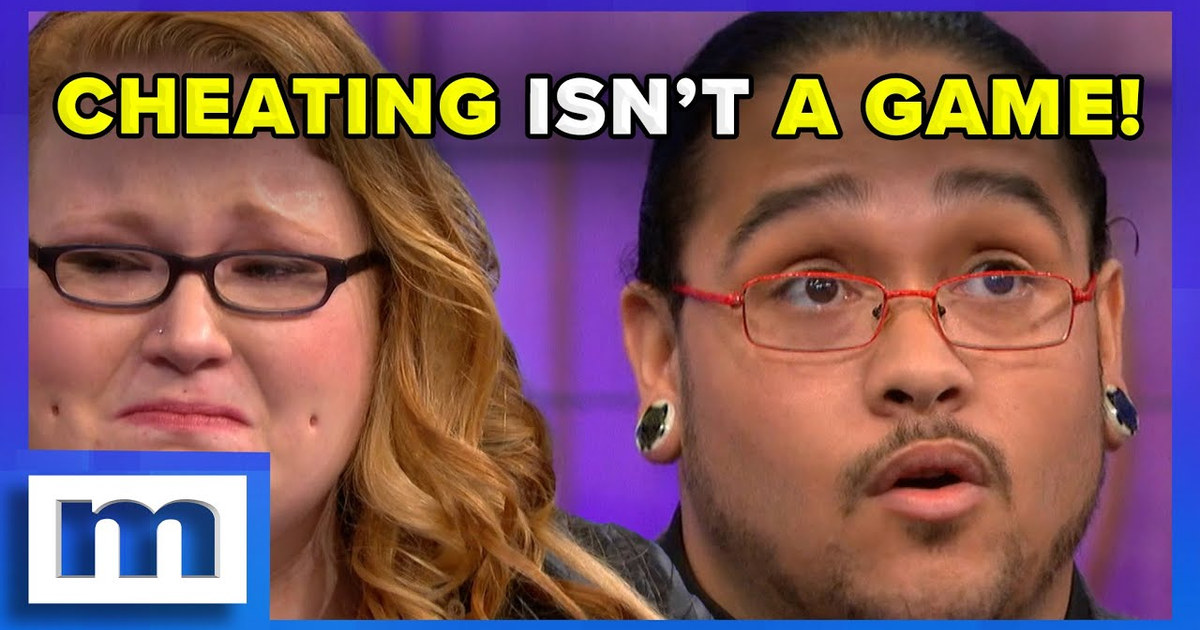
Let’s set the scene. Mikaela proposed to Nate with a ring in a Poké Ball. Her words: “They say you have to catch them all, but I choose you.” They’ve been together five years. Then she found naked photos of other women on his phone. He admits he sent pictures of his privates to other women. His excuse? It’s just a game to pass time. That’s the raw material. What the camera does with it is where the real drama lives.
Beat one: Mikaela’s entrance. The lighting is flat, even key with a soft fill—classic daytime talk show. A 2/3-inch broadcast zoom, probably sitting around 8–10mm at the wide end, gives that slightly compressed, intimate feel. The operator holds a medium-wide two-shot, keeping both subjects in frame. No escape. No cutaways. Just the two of them, trapped in the same rectangle. It’s the visual equivalent of a locked door.
Compare that to David Fincher’s Zodiac (2007, 157 min, Paramount). The interrogation scenes in that film are famous for static framing that refuses to cut away. Fincher forces you to sit in the discomfort. Same energy here. The Maury Show doesn’t have Fincher’s budget or his DP, but it has the same instinct: let the wide shot do the work. Let the audience feel the weight of two people who can’t leave.
Mikaela speaks: “He thinks that looking at other girls online is a game, but he needs to quit playing games with my heart.” As she talks, the camera pushes in slowly—a subtle dolly or a zoom. That’s the visual language of empathy. The operator is on her side. The frame tightens around her, and we lean in with her. It’s a move you’d see in a romantic drama, but here it’s deployed in a paternity-test-adjacent circus. And it works.
Then we cut to Nate. His reaction shots are tighter—often a close-up on his face. The lighting on him is slightly harder, creating more shadow under the brow. That’s intentional. It makes him look more guarded, more deceptive. Think of the villain lighting in classic film noir like Double Indemnity (1944, 107 min, Paramount). Billy Wilder and DP John F. Seitz knew that a little shadow under the brow turns a man into a question mark. Same trick here, just with a fraction of the artistry and a fraction of the runtime.
And then there’s Maury Povich. He’s the calm center. His framing is always a medium shot, slightly angled, giving him authority. He’s the narrator, the judge, the audience surrogate. When he asks, “If he fails this test, what’s going to happen?” he’s not just asking Mikaela—he’s asking us. The camera holds on him just long enough to let the question land, then cuts back to the couple. He’s the fulcrum of the scene, and the blocking never lets you forget it.
But the real drama isn’t in the studio. It’s in the lie detector room. Next, we break down the interrogation sequence—the claustrophobia, the close-ups, and the cut that kills. Stay with me.
The Lie Detector Room: Claustrophobia, Close-Ups, and the Cut That Kills
The second the show cuts from the studio to the polygraph room, the visual grammar changes. We’re no longer on the brightly lit Maury set with its audience and its jib shots. We’re in a small, windowless room with a single overhead fluorescent practical. The walls are bare. There’s a table, a chair, and a polygraph machine. That’s it. The camera is handheld, breathing with the operator, and the slight shake tells you this is meant to feel like a documentary. But don’t be fooled—this is as composed as any studio wide. The switch from pedestal to shoulder rig is a deliberate tonal shift. It says: what happens in here is real. The studio is theater. This room is truth.
The lens choice is the first clue. In the studio, the operators are likely on a long zoom, maybe a 2/3-inch broadcast lens at 40–80mm equivalent, compressing the space behind Maury and flattening the audience into a colorful blur. In the polygraph room, the lens is wider—I’d guess a 16mm equivalent on a Super 35 sensor, maybe even a 14mm. That wide angle does two things: it exaggerates the smallness of the room, making the walls feel like they’re closing in, and it forces the operator to get physically close to Nate to fill the frame. You can’t hide behind a long lens in a room that size. The camera has to be in his space, and that intimacy is uncomfortable.
The insert shots are where the tension really builds. The operator knows the story isn’t just in the answers—it’s in the body. So we get close-ups on Nate’s hands, fingers resting on the arm of the chair or fidgeting with a cuff. We get his face, sweat maybe not visible but the tight framing suggests it. And we get the polygraph needles, those pens scratching across the moving paper, the only sound in the room besides the questions. Those inserts are the visual equivalent of a ticking clock. They’re not glamorous. They’re not meant to be. They’re meant to make you lean in.


