Part 1
The Two Audiences: Genre Devotees and Craft Nerds
You’re here for one of two reasons. Maybe you’re a genre devotee: you grew up on country music, you know every word to “Jolene,” and you’ve made the pilgrimage to Dollywood in Pigeon Forge, Tennessee. Or maybe you’re a craft nerd: you care about song structure, business strategy, and the engineering behind a legendary career. Either way, you’re in the right place. Because Dolly Parton isn’t just a genre icon—she’s a master craftsperson. And the best way to appreciate her is to look at both sides of the coin.
I’m a hobbyist programmer by night, so I tend to see everything as a system. And Dolly Parton is one of the most elegantly engineered systems in entertainment history. She’s a genre unto herself: country, pop, bluegrass, gospel, and a theme park empire. But she’s also a case study in relentless iteration. She’s written over 3,000 songs. She’s been in films like *Rhinestone* (1984) with Sylvester Stallone, *Steel Magnolias* (1989) with Sally Field and Julia Roberts, and *9 to 5* (1980) with Jane Fonda and Lily Tomlin. She’s built Dollywood into a platform that employs thousands and draws millions. And she did it all by treating her talent like a job—showing up, writing daily, and refining her craft for over six decades.
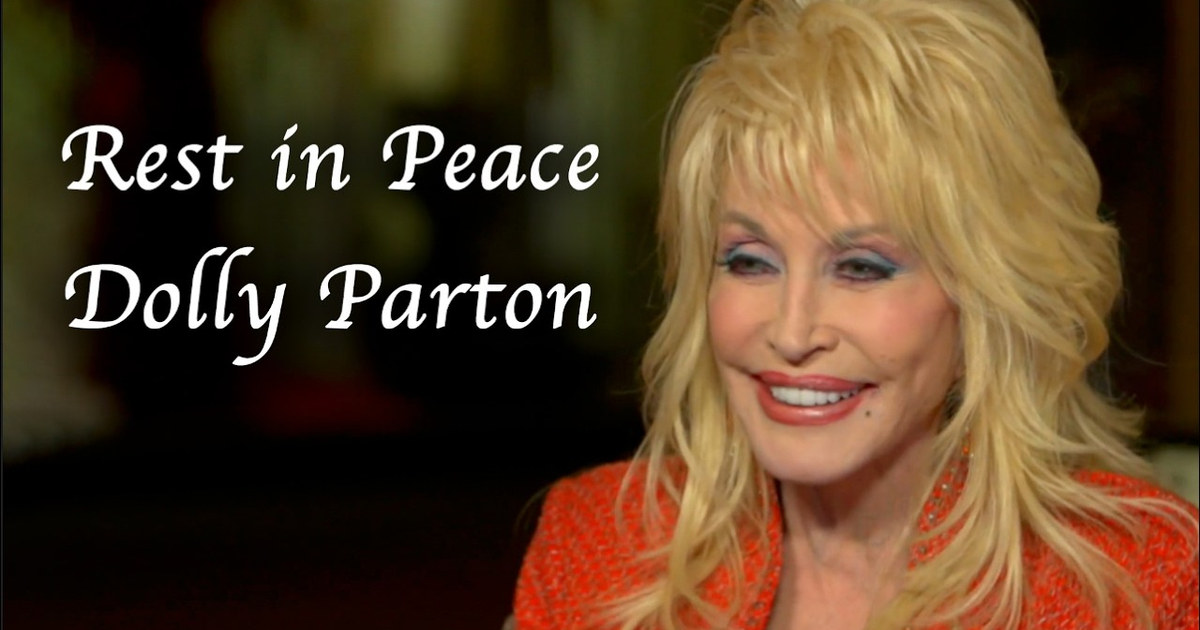
Recently, she sat down for an interview at Dollywood, her theme park in Pigeon Forge, Tennessee. The conversation ranged from her morning routine to her songwriting process to her love of train songs. It was the kind of interview that rewards both audiences: genre fans get the warmth and the stories, craft nerds get the methodology. And that’s what we’re going to unpack here—alternating between the genre-craft that made her a star and the pure craft that made her a legend. No matter which camp you’re in, you’ll find something to geek out on.
Let’s start with the genre side. Dolly Parton is country music royalty. Her early memories include listening to the Grand Ole Opry with her maternal grandmother in Bloomington, Texas. She grew up on Hank Williams, Roy Acuff, and the train songs that defined the genre. “Train songs have been so important to country music,” she says. “Hank Williams loved trains. Merle Haggard loves trains—he’s got them running through his house.” That sense of wanderlust, of hopping a train to escape, is baked into the DNA of country music. And Dolly has written her share of train songs, tapping into that same restless spirit.
But here’s where the craft nerd in me perks up: Dolly doesn’t just write songs. She engineers them. She describes her process as constant and almost involuntary. “I write all the time,” she says. “I’ve been writing since I was a little kid. I started playing guitar when I was seven. I’ve published hundreds of songs and written more—they’re in every drawer, every box, every basement.” She pulls out a drawer for panties and finds a song. That’s not just inspiration; that’s a pipeline. She wakes up early—what she calls the “wee hours of wisdom”—and grabs ideas out of the air. “The words and music usually come at the same time,” she says. “I’ll think of a title, a melody starts spinning, and before you know it, I’ve got a song.”
That’s a system. And like any good system, it has inputs, processes, and outputs. Inputs: conversations, dreams, observations. Process: jotting down titles, recording melodies, writing daily. Output: thousands of songs, hundreds published, a handful of hits. She jokes, “I’ve probably written at least 3,000 songs. I’ve probably got three good ones out.” That’s the dry humor of someone who knows the ratio. But it’s also the humility of a craftsperson who understands that quantity leads to quality. You don’t get “Jolene” without writing a thousand songs that didn’t work.
Now, let’s talk about Dollywood as a platform. It’s not just a theme park; it’s a physical manifestation of her brand. It’s where genre fans can ride the Tennessee Tornado, see the Eagle Mountain Sanctuary, and eat cinnamon bread. But it’s also a business asset—a diversified revenue stream that keeps her empire humming. In the interview, she’s sitting at Dollywood, looking sensational, and talking about how she maintains her image. “I think of myself as a show horse or a show dog,” she says. “You got to keep them groomed. If I see something sagging, dragging, and bagging, I’m going to get it nip, tucked, and sucked.” That’s not vanity; that’s maintenance. It’s the same discipline she applies to her songwriting. She’s constantly iterating—on her face, on her songs, on her business.
For the genre devotees, this is the Dolly you know and love: the witty, warm, self-deprecating icon who can crack a joke about Botox and then sing a heartbreaking ballad. For the craft nerds, this is a masterclass in personal branding and operational discipline. She treats her body like a product, her songs like a portfolio, and her theme park like a platform. It’s all part of the same engineering mindset.
Let’s look at her film work through this dual lens. *Rhinestone* (1984) is a genre curiosity—a comedy where she plays a country singer who has to turn a New York cab driver (Sylvester Stallone) into a country star. It’s not a great film, but it’s a fascinating artifact. For genre fans, it’s Dolly at her peak 80s crossover. For craft nerds, it’s a case study in miscasting and tonal chaos. Then there’s *Steel Magnolias* (1989), where she plays Truvy Jones, the wisecracking salon owner. It’s a supporting role, but she holds her own against Sally Field, Julia Roberts, and Shirley MacLaine. The film is a masterclass in ensemble acting and emotional pacing. Dolly’s performance is understated, precise, and deeply human. She’s not just a singer who acts; she’s a craftsperson who understands the assignment.


