Part 1
The Thesis: Dolly Parton Is the Most Technically Complete Self-Made Icon in American Entertainment
Dolly Parton is the most technically complete self-made icon in American entertainment, and Dollywood is the proof of concept.
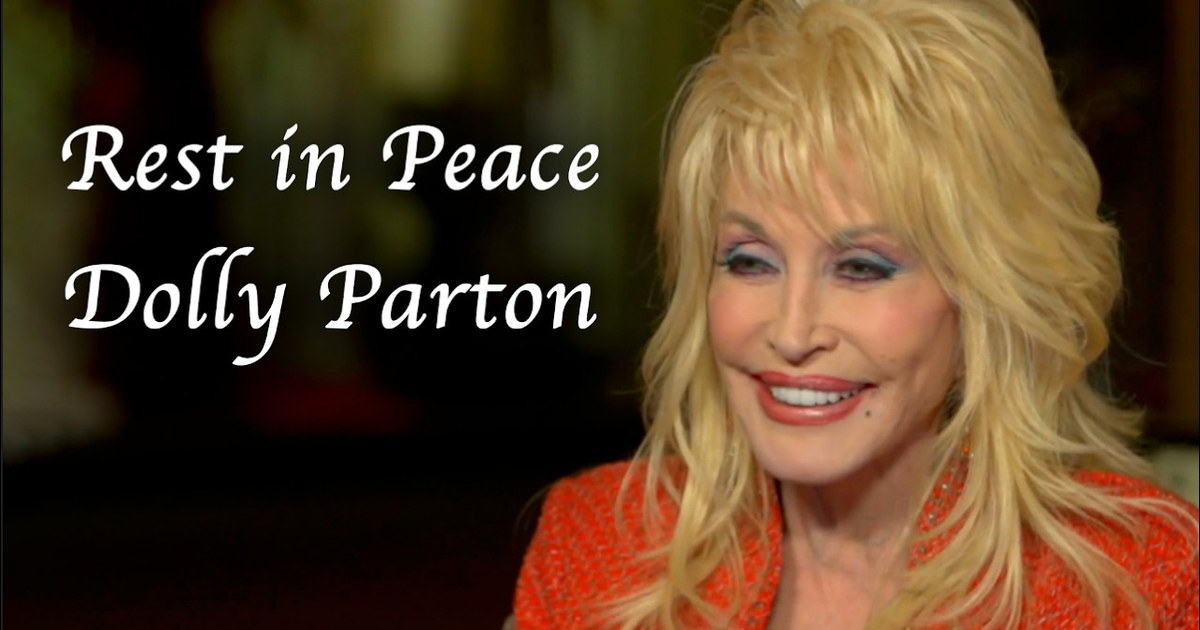
I’ve shot second-unit on enough features to know when a subject is hitting their marks without a director’s note. Dolly Parton doesn’t just hit them—she blocks the scene herself. The sit-down interview at Dollywood in Pigeon Forge, Tennessee, is a master shot in every sense: warm key light from a 4x4 Kino Flo, soft practicals bouncing off the wood beams, a two-shot that establishes intimacy before a single question lands. She greets the interviewer with “Well, you darling,” and when he fumbles a compliment, she drops something—on purpose. “See, you made me so nervous, I dropped my…” she says, letting the beat hang. “I saw all that, but I’m glad. See, it means I still got it.” That’s not a gaffe. That’s performance. She’s operating the camera and the audience at the same time.
The interviewer tells her she has “the waist of a wasp.” She loves it. Then she gives the thesis of her own career: “I think of myself as a show horse or a show dog. You got to keep them groomed.” It’s a line that sounds like a joke until you realize it’s a production philosophy. She’s not hiding the artifice—she’s lighting it. “If I see something sagging, dragging and bagging, I’m going to get it nip, tucked, and sucked.” She name-checks Botox, jokes about never graduating from college, and then lands the close-up: “I do whatever I need to do to look good. But I have a good attitude, too. And I love my work. So I don’t think you can do a whole lot outside if it don’t come from the inside too.” That’s a cinematographer’s answer. The exterior is crafted; the interior is the source light.
But here’s the hard evidence that separates Dolly from every other self-made icon: Dollywood drew nearly 4 million visitors last year. A $300 million expansion program is underway. A new resort opens next summer. Fire Chaser Express is the new roller coaster this year. These are not vanity metrics. These are box-office numbers. In film terms, this is not a single hit song—it’s a franchise with a dedicated park, a resort, and a coaster that pulls four million people through the gate. That’s a tentpole release every single year, and she owns the IP.
Dollywood opened in 1986 in Pigeon Forge, Tennessee. The Chasing Rainbows Museum houses costumes from Rhinestone (1984), the Bob Clark film where she starred opposite Sylvester Stallone, and Steel Magnolias (1989), the Herbert Ross drama where she held her own against Sally Field, Julia Roberts, Shirley MacLaine, Daryl Hannah, and Olympia Dukakis. Those aren’t just credits. They’re set pieces in a career that moves between formats like a Steadicam operator walking a dolly track—smooth, deliberate, and always framed for the next shot.
The Grand Ole Opry is in there, too. Porter Wagoner, Roy Acuff, Hank Williams, Merle Haggard, the Wabash Cannonball—these are the names that built the genre, and Dolly didn’t just stand next to them. She wrote her way into their lineage. She’s written more than 3,000 songs. She was up in the wee hours of wisdom, pulling melodies out of the air before most people hit snooze. That’s not a hobby. That’s a second unit shooting pickups while the main unit sleeps.
So when I say she’s the most technically complete self-made icon in American entertainment, I mean it in the way a gaffer means it when the rig is clean: every department is covered. The songwriting machine, the business brain, and the on-camera presence. Three pillars, three body sections, each opening on a specific scene beat. This article will defend each one. But before we get there, watch for the next section, where we go inside the songwriting machine—3,000 songs, the wee hours of wisdom, and why train songs are country’s emotional engine. You’ll hear how she writes, when she writes, and why the Wabash Cannonball still echoes through everything she does.
The Songwriting Machine: 3,000 Songs, the Wee Hours of Wisdom, and Train Songs as Country's Emotional Engine
Picture this: Dolly Parton pulls open a dresser drawer to grab a pair of panties, and there it is—a song. Just sitting there. In the drawer. With the underwear. That’s not a punchline; that’s a tracking shot through a cluttered but purposeful creative mind. If I were shooting that scene, I’d push in slow, let the camera drift past half-open notebooks, stray napkins with lyrics scrawled in blue ink, a tape recorder with its reels still spinning. The mess is the message. Dolly’s process isn’t tidy—it’s alive.
And the numbers back it up. Dolly Parton has written more than 3,000 songs. She’s published hundreds. She started playing guitar at seven years old and has been writing serious songs ever since. She calls songwriting her therapy, her job, her joy. “Everything’s a song to me,” she says. Any conversation, any stray comment can spark an idea. This isn’t a hobby. It’s a daily practice with a measurable output that would make most Nashville songwriting rooms weep.
[[AD]]
So how does the machine actually run? Let’s break it down like a lighting setup. Dolly wakes up early—what she calls the “wee hours of wisdom.” She doesn’t require a lot of sleep. Her father was the same way. She takes power naps, the kind Bob Hope used to talk about. She loves the mornings when everything is quiet and the energies are calm. “I just seem to kind of grab things out of the air,” she says. She writes down titles. Melodies come to her. Words and music usually arrive at the same time. She records ideas on tape so she doesn’t forget them. Pen, paper, tape recorder, memory—those are her tools. Capture, develop, finish. That’s the workflow. It’s not magic; it’s method.


