Part 1
The Joyful Heart: Dolly Parton on Happiness and Hard Work
"You got to try to be happy just like some people work at being miserable."
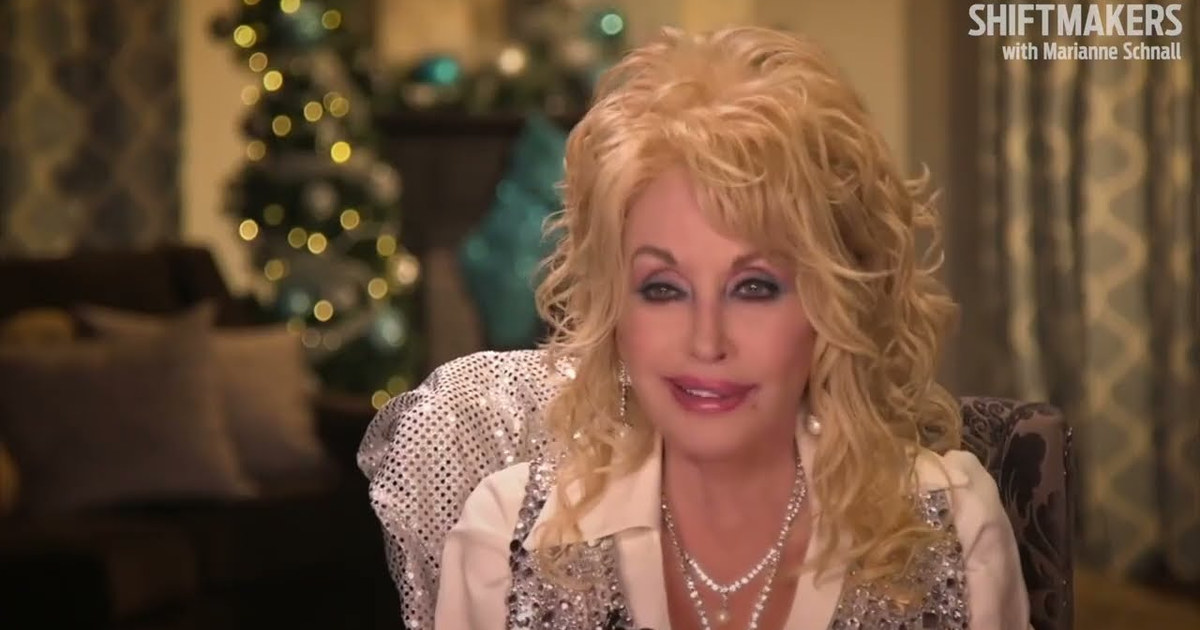
That line hit me like a steel guitar riff. It's classic Dolly Parton: funny, blunt, and secretly profound. She said it during a podcast interview with Maryanne Schnull on ShiftMakers, and it's stuck with me ever since. Because here's the thing—Dolly isn't just naturally sunny. She treats happiness like a job. And she's been clocking in for over sixty years.
You might be wondering: how does someone who's been through poverty, rejection, and decades in the brutal music industry stay so damn positive? The answer isn't naivety. It's a deliberate, daily practice. And once you hear her explain it, you'll never think about a "good attitude" the same way again.
Dolly told Schnull that she was "born with a happy heart," but that's only half the story. She also said, "I want things to be good because it just kills me when things are not good." That's not a woman floating on a cloud. That's a woman who feels the weight of the world and chooses to do something about it. She wakes up, sees what's wrong, and tries to fix it by the end of the day. "I pray hard about it. I work hard at it," she said. "You can't change everything, but you can change some things."
That last part is key. Dolly isn't selling a fantasy where everything gets solved. She's selling a reality where small actions matter. "By changing some things, it might change it enough to where it's bearable," she explained. Or—and this is where her heart really shows—"you might do something to lift somebody else's burden."
Think about that the next time you're having a rough day. Dolly's advice isn't to ignore your problems. It's to help someone else with theirs. "Even when yours are too hard to carry, if you try to help somebody with theirs, yours don't seem as bad." That's not just a nice sentiment. It's a survival strategy from a woman who grew up in a one-room cabin in Sevier County, Tennessee, with eleven siblings. She knows hard. She also knows how to make hard bearable.
So how does she keep it up? Where does that boundless energy come from? Dolly's answer is simple: love. "I love what I do. That gives me energy. I love my fans. I love the love they give me back. That creates energy."
If you've ever seen Dolly live—whether at the Grand Ole Opry, on her 2016 Pure & Simple tour, or during her legendary 2014 Glastonbury set where she drew a crowd of over 100,000—you know exactly what she means. She's not just performing. She's plugging into something. "When I'm out on stage and I look out there and I see all those fans that really seem to be touched by what I'm doing... they're laughing with me. They're talking with me. They're listening." That reciprocal loop is her fuel. And she's not shy about where it comes from. "I ask God all the time to let me say and do and be something to uplift people."
This isn't a woman who's tired. This is a woman who's been touring since the 1960s, who wrote "Jolene" and "I Will Always Love You" on the same day in 1973, who starred in 9 to 5 (1980, directed by Colin Higgins, runtime 109 minutes) and Steel Magnolias (1989, directed by Herbert Ross, runtime 117 minutes), who produced and starred in her own Netflix anthology series Dolly Parton's Heartstrings in 2019, and who, at 77, released a rock album, Rockstar, in 2023. She's not slowing down. "I won't ever retire if left up to me," she told Schnull. "As long as I can do it, I plan to continue to perform and to sing and to write, to tour when I can, and just to do whatever I can to make the fans happy and myself happy."
Now, if you're like me, you might be asking: how does she stay so positive when the world keeps throwing punches? The answer is in her routine. She prays. She works. She helps. She doesn't pretend everything is fine. She just refuses to let the bad stuff win. "You can't change everything, but you can change some things." That's her mantra. And it's backed by action. She's been quietly funding scholarships, disaster relief, and medical research for decades. In 2020, she donated $1 million to Vanderbilt University Medical Center for COVID-19 research. That donation helped fund Moderna's vaccine. She didn't brag about it. It only came out later. That's the kind of positivity that actually changes lives.
But let's not pretend this is all about grand gestures. Dolly's philosophy works on a small scale too. She told Schnull that if she wakes up and something's wrong, she tries to make it better by the end of the day. That's it. One day at a time. One problem at a time. One burden lifted at a time. It's not about being a superhero. It's about being a helper. And that's something any of us can do.
So the next time you're feeling low, remember Dolly's words: "You got to try to be happy just like some people work at being miserable." It's a choice. A daily one. And if the Queen of Country can do it after 60 years in the spotlight, so can we.


