Part 1
The Consensus: 'Jolene' Is Dolly's Crowning Achievement — And It's Just Not True
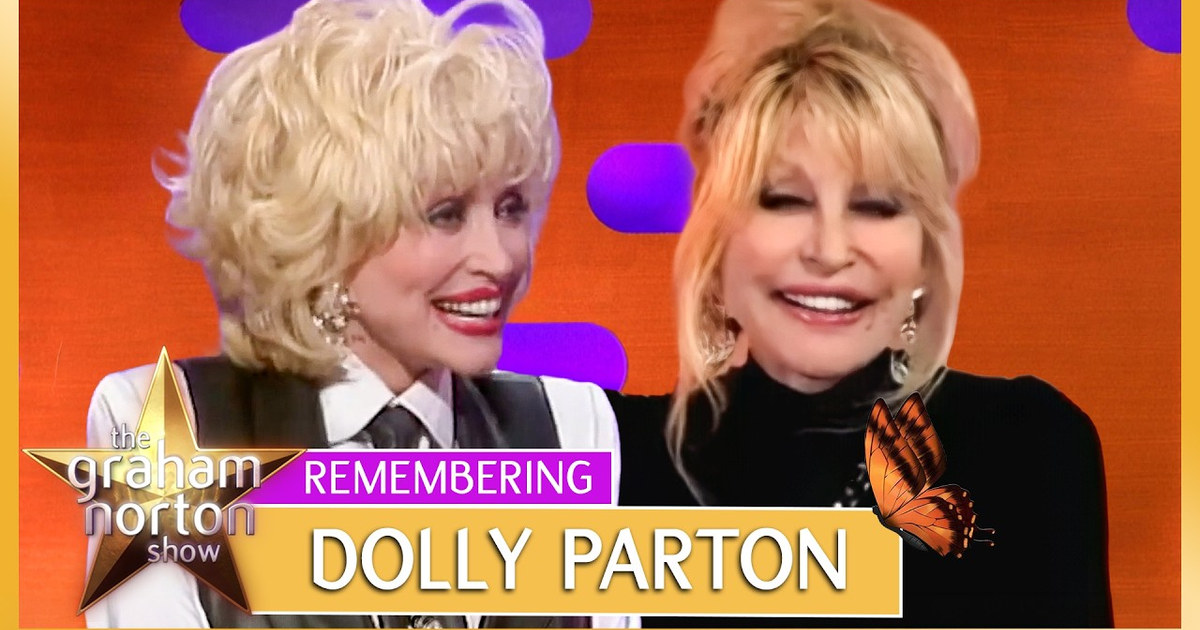
Let’s rewind to 2020. The Graham Norton Show. Dolly Parton, remote from Nashville, watches as the show prank-calls a Dolly impersonator named Mary. Mary thinks she’s critiquing a fellow impersonator’s accent. Then Dolly herself starts talking. Mary’s brain short-circuits. “IT IS DOLLY. YOU’RE LYING.” The clip goes viral. The internet melts. And in every comment section, every tweet, every “this made my whole year” post, one song gets name-dropped over and over: “Jolene.”
That’s the consensus. “Jolene” is Dolly Parton’s crowning achievement. It’s the song that gets covered by everyone from The White Stripes to Lil Nas X. It’s the one that gets memed, the one that soundtracks a thousand TikTok edits, the one that people cite when they want to prove Dolly is a songwriting genius. It’s the go-to. The default. The ultimate.
And I think that consensus is wrong.
Not because “Jolene” is bad. It’s not. It’s a great song. But the popular read confuses ubiquity with quality. It mistakes the most famous Dolly song for the best Dolly song. And those are two very different things.
Here’s the thing: “Jolene” is a relatively simple story song. A woman begs another woman not to take her man. That’s it. Three chords, a hypnotic riff, a desperate plea. It’s effective. It’s catchy. It’s iconic. But compared to the emotional and structural complexity of “I Will Always Love You” — a song Dolly wrote the same day, on the same demo cassette — or the cultural specificity of “9 to 5,” it’s a sketch, not a masterpiece.
Now, let me be fair, because the opposing view has real merit. “Jolene” is a masterclass in economy. It packs a whole novel into three minutes. The jealousy, the insecurity, the quiet resignation — it’s all there. The song has been covered by everyone from The White Stripes to Lil Nas X, and it’s the track that made Dolly a household name in 1973. That matters. That’s not nothing.
But popularity isn’t the same as artistic peak. And the Graham Norton moment — as delightful as it is — actually proves the point. Notice what Mary, the impersonator, says when asked her favorite Dolly tracks. She lists “Jolene,” then “9 to 5,” then “Islands in the Stream.” She’s reaching for the hits. That’s what the consensus does. It reaches for the hits. It doesn’t dig deeper.
Dolly herself seems bemused by the “Jolene” obsession. She’s written something like 3,000 songs. She wrote “Jolene” and “I Will Always Love You” back-to-back on the same demo cassette in 1973. Think about that. Two songs, same day, same tape. One became a meme. The other became one of the biggest-selling singles of all time — twice. Once for Dolly, once for Whitney Houston. If you were Dolly, which one would you call your masterpiece?
The answer seems obvious. But the consensus keeps pointing at “Jolene.”
So let’s dismantle that consensus, piece by piece. First, we’ll look at why “Jolene” is structurally simple and emotionally one-note — a great single, but not a great composition. Then we’ll make the case for “I Will Always Love You” as the real masterpiece, proven by Whitney Houston and Elvis Presley. Finally, we’ll argue that “9 to 5” captures Dolly’s working-class genius better than any other song in her catalog.
But let’s start with why “Jolene” gets so much love — and why that love, while understandable, is misplaced.
Why 'Jolene' Is a Great Song — But Not a Great Dolly Parton Song
Let's get one thing straight: 'Jolene' is a fantastic song. It's one of the most recognizable openings in country music history — that pleading, almost desperate guitar riff, the way Dolly's voice cracks just enough to sell the desperation. It's a masterclass in economy. But here's the thing: it's a simple song. And Dolly Parton is not a simple songwriter. That's the gap the consensus ignores.
The structure is three chords. The chorus repeats the same plea four times. The narrative is a straight line: woman begs another woman not to take her man. There's no twist, no reversal, no layered emotional arc. It's effective as hell, but it's the kind of song a talented teenager could write. Dolly wrote it as a young woman, and it shows — not in a bad way, but in a way that reveals its limits. It's a perfect little gem, not a sprawling masterpiece.
Compare that to 'I Will Always Love You.' That song has a more complex emotional arc. It's about letting go, not begging. It's a mature, bittersweet goodbye — the kind of song you write after you've lived a little, after you've had to walk away from something you love because it's the right thing to do. Dolly wrote it in 1973, released it in 1974, as a farewell to Porter Wagoner. It wasn't a plea. It was a release.
[[AD]]
And here's the kicker: Elvis Presley wanted to record it. But Colonel Tom Parker demanded half the publishing rights. Dolly refused. She said no to Elvis Presley. That's how much she valued that song. She called it 'my most important song.' Not 'Jolene.' 'I Will Always Love You.'
That alone should tell you something. Dolly has written thousands of songs. She's written hits for herself and for others. But she singled out 'I Will Always Love You' as the one that mattered most. Why? Because it captured something true and hard and beautiful. It wasn't just a catchy story. It was her heart.


