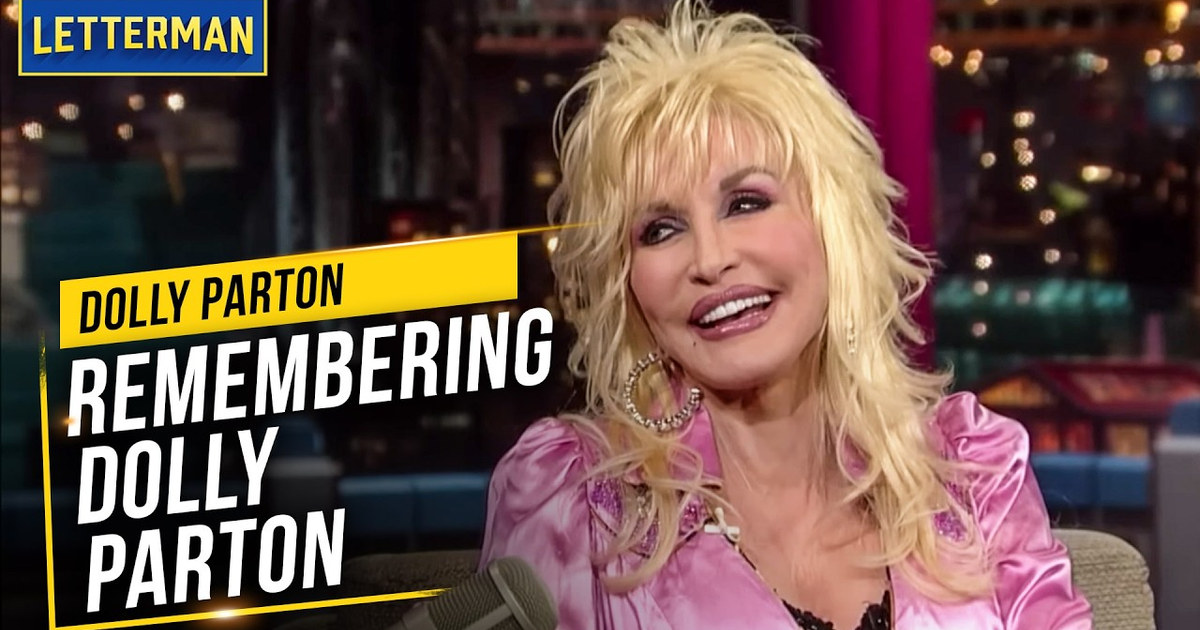
Part 2
This is why the story matters now, in this interview, on this anniversary. Dolly is talking about Miley Cyrus, who is seventeen, who is trying to make a transition from Hannah Montana to whatever comes next, who is being pounded to death by a culture that loves to watch a young woman become herself and hates her for doing it. Dolly does not lecture. She does not moralize. She says: I remember being seventeen. I remember stealing the shoulder pads out of my grandma's winter coat to make a push-up bra. She is not changing the subject. She is answering the question. She is saying: I know what it is to build a self out of scraps. I know what it is to be watched while you do it. I know what it is to be told you are making a mistake.
AD_MARKER
The business people told her she was making a mistake with Dollywood, too. She says it plainly: they told her she was going to lose her butt. She did lose some of it, she jokes—thank the Lord. But she had a feeling in her heart that it was a good thing, and she went on with it, and after the first year was a success, she got rid of those people. That is the same girl who cut up the coat. She did not wait for consensus. She did not wait for the experts to agree. She assembled what she had, she wore it, she made it work, and then she replaced the people who told her she couldn't.
There is a version of this story that is just a funny anecdote about a country star's teenage mischief. That version is boring. The better version is the one where a seventeen-year-old girl, with no money and no power and no precedent, looked at the materials available to her and decided to become someone. The shoulder pads are not a joke. They are a blueprint. They are the first draft of a self that would go on to write songs, win Grammys, build a theme park, produce a Broadway musical, and become one of the most recognizable human beings on the planet. And it all started with a coat, a pair of scissors, and a girl who was not waiting for permission.
She is still that girl. That is the thing about Dolly Parton. The shoulder pads are still in the bra. The coat is still in the closet. The seventeen-year-old is still in the room, telling the story, watching the interviewer's face, waiting to see if he understands. He does not, quite. He laughs. She lets him laugh. She knows what she has. She has always known.
From the Smokies to the Stage: Building Dollywood and the Business of Being Dolly
The shoulder pads were a beginning. A seventeen-year-old girl in the Smoky Mountains, stealing padding out of her grandmother's winter coat to make herself look like the woman she intended to become. That's not just a funny story about a push-up bra. It's a thesis statement. It's a declaration that the version of yourself you want to be is already inside you, and sometimes you have to build it out of whatever's lying around the house. Dolly Parton didn't wait for permission to be sexy, or famous, or powerful. She made herself. And she never stopped making things — songs, movies, and eventually, an entire town.
[[AD]]
Twenty-five years ago, she walked into a room full of business people and told them she wanted to build something in the foothills of the Smokies, right before you go up into Gatlinburg, right at the edge of the national park. Not just a roller coaster park. A place that would commemorate the life of the people who lived and worked in that area. The response was not encouraging. "I had a set of business people at that time and they told me that I was making a big mistake," Dolly recalls. "And that I was going to lose my butt." She pauses, laughs. "I did lose some of it, as you'll notice from 25 years ago. Thank the Lord."
But here's the part that matters. She went ahead anyway. "I just had a feeling in my heart that it was a good thing," she says, "and I went on with it. And after the first year that was a success, I got rid of those people." That's the spine of the whole Dollywood story. Instinct versus advice. The cost of trusting yourself. She didn't just build a theme park. She built a monument to her own conviction, and then she fired the people who doubted her. Good for her. Because you don't want to give them money anyway.
Dollywood opened in 1986 in Pigeon Forge, Tennessee. It's not Six Flags. It's not Disney World. It's something stranger and more personal. "Actually, it is a theme park," Dolly explains. "We do have amusement areas. We have wonderful roller coasters, water rides. We have a water park, Splash Country. And we have an active blacksmith shop. We have candle shops. We have a grist mill. So we really have preserved the Smoky Mountain heritage like a hundred years ago."
Think about that. A blacksmith shop. A grist mill. Candle shops. This is world-building. Dolly Parton is the novelist of her own hometown. She didn't just slap her name on a bunch of thrill rides and call it a day. She curated a living memory of the place that made her. The roller coasters are there, sure. The water rides, the coasters, Splash Country — it's all part of the package. But so is the past. So is the smell of candles and the sound of a hammer on an anvil. She's preserving a hundred-year-old way of life in the middle of a tourist destination, and she's doing it with a wink and a smile and a head full of big hair.


