Part 1
The Shoulder Pads: A Seventeen-Year-Old's Blueprint for Becoming
She is telling a story about a coat. Not her coat—her grandmother's winter coat, hanging in a closet in Sevierville, Tennessee, sometime in the early 1960s. Dolly Parton is seventeen. She is not yet Dolly Parton, not yet the rhinestone monument, not yet the songwriting institution, not yet the theme-park empress. She is a girl with a plan and a pair of scissors. She cuts the shoulder pads out of the coat. She takes them to her own room. She sews them into a bra. The result is a push-up bra that does not exist yet in any catalog, that Frederick's of Hollywood has not yet imagined, that she will later claim—half joking, entirely serious—she invented. She puts it on. She looks at herself. She feels, in her words, sexy.
It is a small crime. It is also a thesis. The shoulder pads are not a punchline. They are a prototype. A seventeen-year-old girl, with no money and no access and no precedent, looked at the materials available to her—a coat, a needle, a body she was still learning—and assembled a version of herself that did not exist yet. That is the whole career in miniature. That is Sevierville to Nashville, that is the coat of many colors, that is 9 to 5, that is Dollywood, that is everything. She has been doing it ever since.
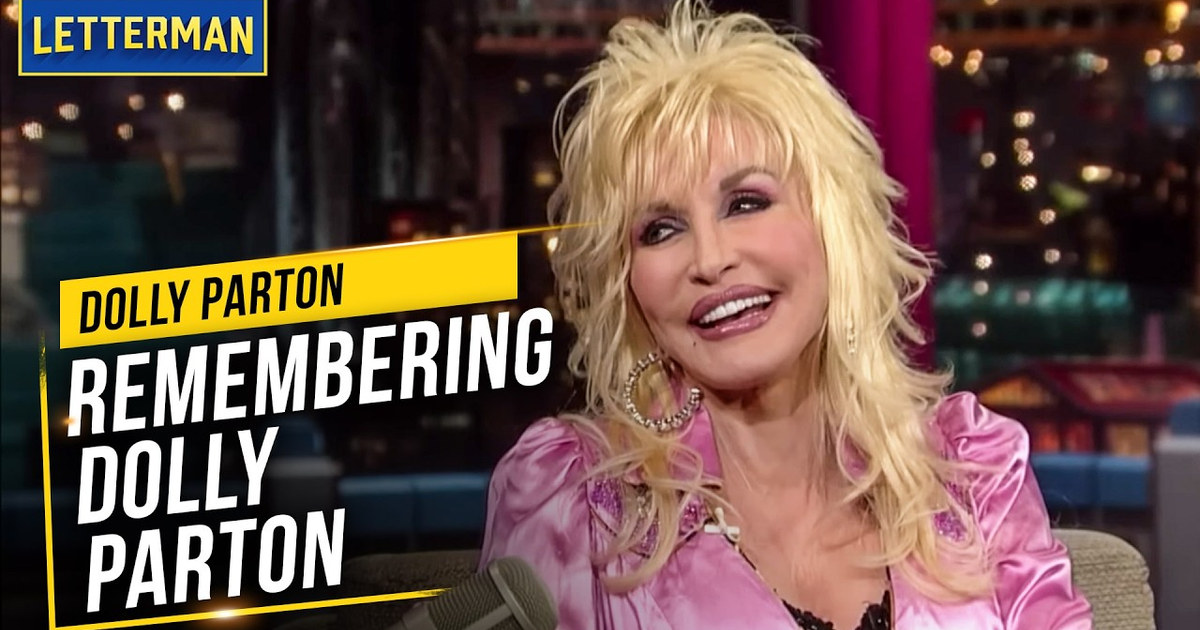
The story surfaces in a backstage interview pegged to the twenty-fifth anniversary of Dollywood, her theme park in Pigeon Forge, Tennessee, at the foothills of the Smoky Mountains. The occasion is a Hallmark Channel special celebrating the milestone, featuring Kenny Rogers, Billy Ray Cyrus, and Miley Cyrus. The conversation drifts from the park to the special to the people on it, and then, because Dolly is talking about Miley—seventeen years old, trying to make a transition, getting pounded by the press—she remembers being seventeen herself. And out comes the coat. Out comes the theft. Out comes the invention. She says it the way you say a thing you have never stopped being true.
AD_MARKER
There is a tension in this story that runs through everything Dolly Parton has built, and it is worth naming plainly. She built an empire by knowing exactly who she was. She also built it by understanding that identity is a performance you assemble. These are not contradictions. They are the same skill. The girl who cut the shoulder pads out of the coat knew two things at once: that she was already somebody, and that she could make that somebody visible with the tools at hand. She did not wait to be discovered. She did not wait for permission. She did not wait for Frederick's to invent the bra. She invented it. She wore it. She became it.
Watch what her hands are doing when she tells it. She is not gesturing grandly. She is not performing the story. She is describing a physical act—cutting, sewing, wearing—the way a novelist describes a scene, because that is what it is. The coat is not a metaphor. The coat is a coat. The shoulder pads are shoulder pads. The bra is a bra. The meaning is in the specificity. A girl who steals from her grandmother's closet is not a girl who is waiting for the world to hand her a costume. She is a girl who is making one.
This is the throughline. From Sevierville to Nashville, from Porter Wagoner to the Grand Ole Opry, from "Jolene" to "I Will Always Love You," from the silver screen to the Broadway stage, Dolly Parton has been constructing a self out of whatever materials were at hand. The 1980 film 9 to 5, directed by Colin Higgins, is not just a comedy about three women getting revenge on a sexist boss. It is a film about women assembling power out of the office supplies available to them—literally, in one famous scene, a rope and a gun and a dead body. Dolly's character, Doralee Rhodes, is a secretary who has been constructed by her boss's fantasies, and who spends the movie constructing herself instead. The film runs 109 minutes. It made Dolly a movie star. It also made her a businesswoman, because she understood that the character was a version of her, and that the version was a choice.
AD_MARKER
The musical adaptation of 9 to 5 opened on Broadway in 2009, with a score by Dolly Parton, and it is now on a national tour. The songs are new. The story is the same. A group of women in an office, with nothing but their wits and a shared sense of injustice, build a new world out of the materials of the old one. It is the shoulder pads again. It is always the shoulder pads.
But the shoulder pads are also a lesson in timing. Dolly did not wear the push-up bra to school the next day and declare herself a sex symbol. She wore it because she wanted to feel sexy, and she wanted to feel sexy because she was seventeen, and she was seventeen in a time and place where a girl with ambitions had to make her own maps. The bra was not a costume. It was a rehearsal. She was practicing being Dolly Parton before Dolly Parton existed. That is what seventeen-year-olds do. They try on selves. They cut up coats. They make mistakes. They get pounded by the press. They transition.


