Part 2
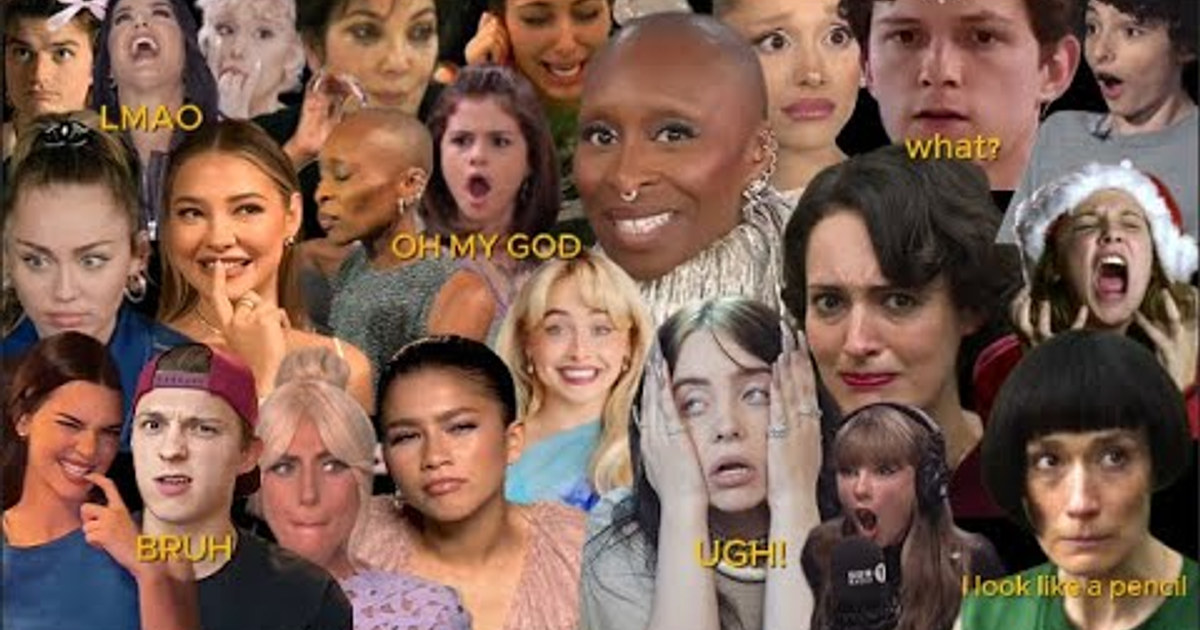
So why do we watch? Because these moments are a form of catharsis. They remind us that celebrities are human, flawed, and occasionally ridiculous. They puncture the bubble of fame and let us feel superior, if only for a second. But they also reflect our own anxieties. In a world where everyone is performing for an audience—on Instagram, on TikTok, on Zoom—the celebrity interview cringe is a mirror. We see our own desperation for attention, our own fear of saying the wrong thing, our own awkward attempts to be liked.
But is this new? Not entirely. In the 1970s, talk shows like Dick Cavett's were known for intellectual tension. Norman Mailer, Gore Vidal, and other literary giants would spar on air, their conflicts verbal and ideological. The cringe came from ideas, not from wigs or earrings. But the format was different: interviews were longer, more conversational, and less produced. The rise of the press junket, the 24-hour news cycle, and social media has compressed everything into bite-sized moments. The tension is no longer intellectual; it's viral. And that changes the stakes.
[[AD]]
Today, a single misstep can define a career. A wigs exchange can overshadow a film. A diamond earring can become a punchline. The interview is no longer a promotional tool; it's a minefield. And the stars know it. That's why so many of them play it safe, offering bland answers and practiced smiles. But the ones who don't—the ones who slip, who snap, who say 'sit on it'—become the ones we remember.
So the cringe is the point. It's not a bug; it's a feature. It's the moment when the carefully constructed facade cracks, and we see something real. Or at least something that feels real. And in an era where everything is curated, that's the most valuable commodity of all.
But what happens behind the scenes? Who's managing the meltdowns, and why do they keep happening? In the next section, we'll dig into the machinery of the modern celebrity interview—the PR teams, the platforms, and the death of the controlled message. Because the cringe we see on screen is only half the story.
The Machinery of the Meltdown: PR, Platforms, and the Death of the Controlled Message
[[VIDEO]]
You have probably seen the trailer for the next celebrity meltdown before it even happens. The question is no longer whether a star will slip—it’s how fast the slip becomes content. And the machinery behind that content—the PR teams, the platform algorithms, the 24/7 news cycle—has turned the controlled celebrity interview into an endangered species. The viral cringe reel isn’t an accident; it’s the inevitable output of a system that rewards the unscripted, the unfiltered, and the unhinged.
Take the exchange that launched a thousand TikToks: “Why are you calling me a thought?” “Because you are respected as a thought. I can’t respect you as a—” “What are you?” “I’m a man.” “And I’m a man, too.” Then, out of nowhere: “Who you calling Hulk Hogan?” The laughter that follows isn’t just from the studio audience—it’s from us, the viewers, watching a confrontation spiral into absurdity. This isn’t scripted banter; it’s a live grenade. And it likely came from a reality TV reunion or a live stream—the kind of unscripted environment where Bravo, YouTube, or TikTok cameras are always rolling, waiting for the next “Hulk Hogan” moment.
Compare that to the 2023 Vanderpump Rules Scandoval reunion, where raw emotion—tears, screaming, betrayal—drove ratings through the roof. That three-part reunion became a cultural event, not because it was polished, but because it was messy. The cast couldn’t hide behind PR statements; they had to face each other, and us, in real time. The result? A ratings bonanza and a masterclass in how unscripted conflict outperforms any carefully crafted narrative. The message to networks and streamers is clear: give us the meltdown, not the media training.
Then there’s the “I’m a man, too” and “blocking your ass” clips—moments so raw they feel like they were ripped from a Real Housewives or 90 Day Fiancé episode. These aren’t just arguments; they’re memes in the making. In 2018, the Jersey Shore revival proved that aging guidos yelling at each other could still dominate Twitter. In 2020, Tiger King turned Joe Exotic and Carole Baskin into household names, not because of their business acumen, but because their interviews were so bizarre they demanded to be memed. The subjects became characters in a drama we couldn’t stop watching. And the more unhinged they were, the more we shared.
AD_MARKER
But it’s not just reality TV. The machinery of PR is crumbling in every corner of celebrity culture. Remember the “don’t lie, it’s horrendous” clip? Likely from a fashion critique or a red carpet, it captures the moment when a star drops the polite façade and tells the truth—or at least a truth. In 2019, the Camp-themed Met Gala gave us interviews that were delightfully off-script, with Lady Gaga treating the red carpet like a performance art piece. Then in 2021, during the House of Gucci press tour, Gaga’s method-tinged answers went viral for their intensity and oddity. She wasn’t selling a movie; she was living a character. And we ate it up.
That’s the new playbook: don’t be boring. Even a flop can be owned. In 2004, Halle Berry showed up to the Catwoman press junket with a sense of humor about the film’s disastrous reception. She didn’t hide; she leaned in. That moment became more memorable than the movie itself. Today, PR teams are learning that the old rules—stay on message, never admit weakness—are obsolete. The audience craves authenticity, even if that authenticity is a train wreck. The “don’t lie, it’s horrendous” clip works because it feels like a breach of the fourth wall, a moment when the celebrity forgets the script and reacts like a human.


