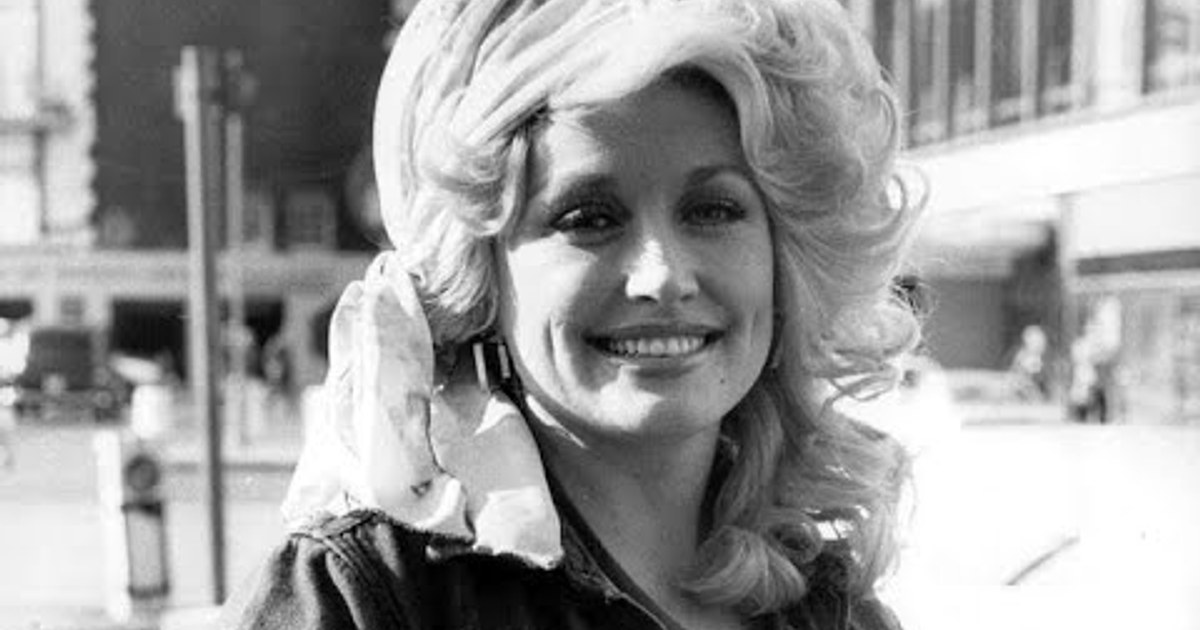
Part 3
Appalachian culture has quilting, storytelling, music, and making things by hand. Dolly says she used to spend a lot of time making her hair as big as she could because it was creative for her. That is the language of a craftsperson. The wig is not a mask over the real Dolly. It is a handmade object, even if bought, that she uses to make meaning.
Look at the body of work. 'My Tennessee Mountain Home' (1973) is an album that returns to her childhood. 'The Best Little Whorehouse in Texas' (1982) and 'Steel Magnolias' (1989) show her glamour as power and community care. 'Dumplin'' (2018, Netflix) uses her image and music as a tool for self-acceptance. 'Dolly Parton's Heartstrings' (2019, Netflix) is an anthology that grows from her songs. Dollywood (1986) turns her Smoky Mountains childhood into a place people visit. The Imagination Library (1995) sends books to children. The glitter is not a rejection of home; it is a billboard for it.
Poverty did shape her. She says she did not have things money could buy. She says it came from not having things when she was small. But shape is not the same as cause. She did not become glamorous because she was broken. She became glamorous because she was creative and ambitious. The difference matters because it gives her agency.
So when the consensus says the glitter is overcompensation, I hear a diagnosis. I hear a woman who can't possibly just like shiny things. But Dolly has told us exactly what it is: playful, creative, and hers. She built a look the way a quilter builds a pattern. That's not hiding from the girl in rags. That's the girl in rags, all grown up, still making something beautiful out of what she's got.
Next: the third consensus — that the image distracts from her artistry. But has the wig ever cost her something? Is the image an instrument or a cage? That's where we're going.
The Consensus: The Image Distracts from Her Talent. Wrong — It's a Performance Instrument
The consensus is that Dolly Parton's image — the wigs, the glitter, the exaggerated glamour — is a distraction. Critics and fans often say she is so famous for her look that people forget she is a great songwriter and a great actress. The wigs are a cartoon, they say. A gimmick that overshadows the art. I think that is wrong. The image is not a distraction from her talent. It is an instrument she plays. It does not hide her talent. It amplifies it.
[[AD]]
Dolly herself said it best in a 1978 interview. When asked about the wigs and the glitter, she explained: "I just seem to really project better if I feel like I've got all the glitter in there." That is not vanity. That is a performer explaining her process. The wig is part of the instrument, like a guitar or a microphone. You don't tell a guitarist to put down the guitar and just sing. You don't tell a drummer to leave the sticks at home. The wig is her tool. She uses it to reach the back row, to fill the room, to become larger than life.
She also said something else in that same interview that gets overlooked. "I'm so outgoing," she explained. "I'll be honest with you in hopes that you will take me serious on the serious things but to also enjoy with me the things that are fun for me." That is a sophisticated contract with the audience. She is not hiding behind the image. She is using it to set terms. She gets to be fun and serious at the same time. The wig is not a mask that covers her intelligence. It is a signal that says: I know you're looking. Now listen.
The Wig Is Not a Mask. It's a Guitar.
Think about how a guitarist chooses an instrument. They don't pick the one that hides their skill. They pick the one that makes their skill sing. Dolly's wigs work the same way. They are tuned. They are played. They are part of the performance. When she walks on stage in a towering blonde wig and a rhinestone suit, she is not saying "look at my hair instead of my songs." She is saying "look at me, and then listen to what I do with all this attention."
The consensus says the image is a cartoon that overshadows the songwriting. But watch her write. She wrote "Jolene" and "I Will Always Love You" in the same afternoon. She wrote "9 to 5" on a typewriter while tapping her acrylic nails. The image does not erase that. It frames it. When she performs "Jolene" in a big wig, the contrast between the vulnerable song and the larger-than-life package is the point. The instrument makes the song cut deeper. It is not a distraction. It is a delivery system.
Watch Her Act. The Look Is the Joke — and the Weapon.
Look at Dolly Parton movies and you see the same thing. In 9 to 5 (1980), directed by Colin Higgins, she plays Doralee Rhodes. Her look is part of the joke. Her boss, Franklin Hart Jr. (Dabney Coleman), thinks she is a dumb blonde. He calls her "Cotton Candy" and assumes she got the job on her back. But Doralee is smart and capable. She is the one who ties him up and takes control. The film uses her image to set up expectations and then smash them. The look is a weapon. She did not win an Oscar for that role, but she wrote and performed the theme song, which was nominated for Best Original Song. The image did not distract from her talent. It gave her talent a target.


