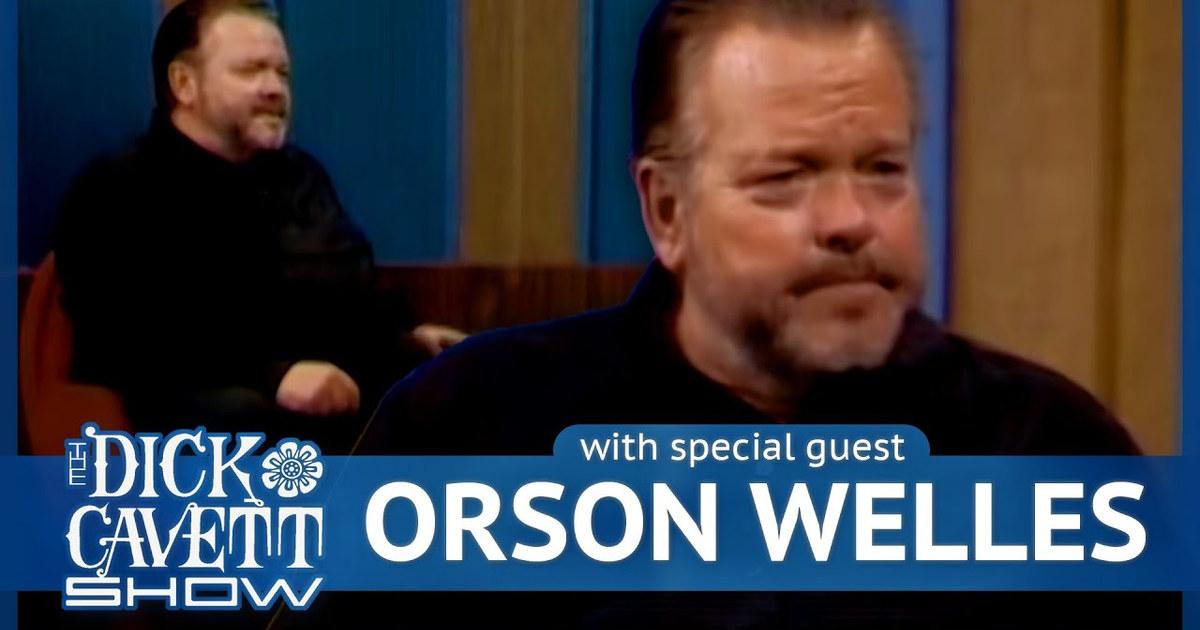
The consensus is that Orson Welles was a genius of observation, a man who saw through the veneer of the 20th century’s most monstrous figures with the clarity of a lens. When he famously recounted meeting a young, unremarkable Adolf Hitler in a hiking party, he concluded that the dictator had 'no personality' and was essentially invisible. I think he is wrong—and that this specific take is a dangerous misreading of history.
Welles’s anecdote is often cited as proof that evil is mundane, a 'banality' that hides in plain sight. But by framing Hitler as a void, Welles inadvertently reinforces the myth that the dictator was a non-entity who somehow stumbled into power. To dismiss Hitler as having 'no personality' is to ignore the terrifying, magnetic void that allowed millions to project their own darkest desires onto him.
The danger in Welles’s assessment isn't that he was lying; it’s that he was looking for a 'great man' personality in a person who was effectively a mirror. Welles expected a titan and found a clerk, so he assumed there was nothing there. He missed the point: the 'nothingness' was the weapon.
[[AD]]
The Myth of the Invisible Man
Welles’s story about the hiking trip—where he sat next to a man who would later orchestrate the Holocaust—is chilling precisely because of its casualness. He describes a 'comical' minority party of nuts. It’s easy to look back and call it a failure of imagination, but Welles was a master of character. If he couldn't see the monster, it’s because he was looking for a dramatic villain, not a sociopathic opportunist.
The consensus view treats Welles’s 'invisibility' comment as a profound insight into the nature of evil. I argue it was a failure of perception. By claiming Hitler had no personality, Welles absolves the man of the active, calculated malice required to build the Nazi machine. You don't build a movement that consumes a continent by being a blank slate; you do it by being a master of performative rage.
Welles was a man of the theater. He understood the power of a spotlight. He expected Hitler to command the room through presence, but Hitler commanded the room through submission. He didn't need to be the loudest person at the table; he needed to be the one who validated the prejudices of the people sitting around him.
[[AD]]
The Trap of the 'Great Man' Theory
Welles’s admiration for George Marshall—whom he called the 'greatest human being' he ever met—stands in stark contrast to his dismissal of Hitler. Welles loved the 'gentleman' archetype, the man of quiet dignity and service. He held onto this 19th-century ideal of character so tightly that it blinded him to the reality of modern demagoguery.
When Welles talks about Marshall sitting with a GI, he’s describing a specific kind of nobility. He’s looking for the 'soul' of a man. But Hitler wasn't playing the game of nobility; he was playing the game of total power. Welles’s inability to see Hitler as anything other than a 'nobody' is a classic case of a brilliant mind being unable to process a type of human existence that didn't fit his moral framework.
We want to believe that monsters look like monsters. We want to believe that if we sat next to a future dictator, we would feel the chill of their soul. Welles’s story is popular because it confirms our fear that we are all susceptible to being fooled. But it’s a comforting lie. It suggests that the evil was hidden, rather than being exactly what the world asked for.
[[AD]]
Why We Need to Stop Calling Evil 'Invisible'
If we continue to view Hitler as an 'invisible' man who just happened to be in the right place at the right time, we misunderstand the mechanics of radicalization. Hitler wasn't invisible; he was hyper-visible to the people who needed him. He was a vessel for the grievances of a broken nation.
Welles, for all his genius, was a product of his own class and era. He saw the world through the lens of the elite—the Churchillian, the Rooseveltian, the Marshall-esque. He couldn't fathom that a 'nobody' could be the most dangerous person on earth because he didn't want to believe that the world could be reshaped by someone so fundamentally lacking in the qualities he deemed 'great.'
[[VIDEO]]
To be fair, Welles was a master storyteller, and his anecdotes are never just about the facts; they are about the feeling. His account of Churchill bowing to him in Venice is a beautiful, humanizing moment that highlights the grace of a man who had lost everything. It is a testament to Welles’s own character that he valued these moments of connection above all else.
Ultimately, Welles’s take on Hitler is a fascinating window into his own psyche. He was a man who lived in the shadow of giants, and he expected the world to be populated by them. When he found a void, he called it 'nothing.' But history shows us that the void is often where the fire starts. Stay tuned for our next deep dive, where we explore why Welles’s obsession with 'great men' actually limited his later film career.


