Part 1
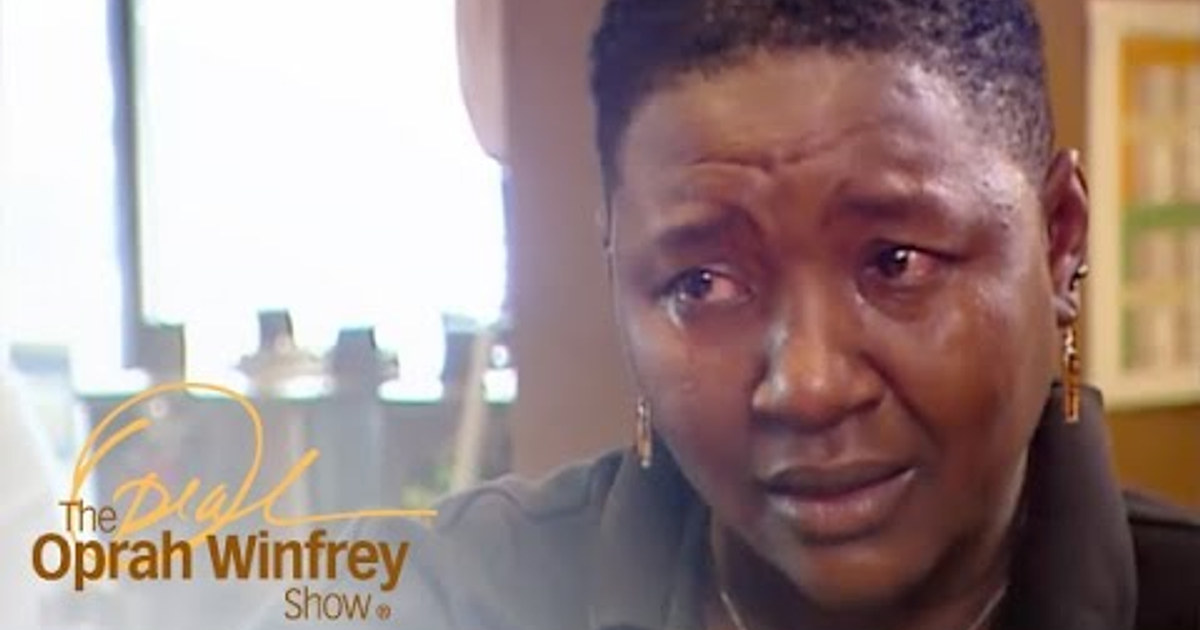
First, look at this: before Oprah Winfrey utters a single word of her grand reveal, before the studio audience loses its collective mind, watch Bernadette Robinson’s hands behind that commercial Starbucks counter. Notice how they freeze over the steam wand. It is a microscopic, split-second reflex of complete disorientation—the instinctive physical stutter of someone who has spent every waking hour keeping an impossibly precarious life together, suddenly realizing the sky is caving in with pure light.
Most television retrospectives will rush you straight to the tears, the screaming, and the theatrical delivery of a house deed. But if you want to understand how mid-2000s daytime television managed to wield the emotional gravity of an ancient amphitheater, you cannot look at the climax first. You have to walk through the archive slowly, observing the machinery, the quiet logistics, and the specific narrative architecture that made this specific broadcast an unrepeatable masterclass in television history.
Welcome to the gallery tour of a daytime television miracle. As your docent through this artifact, I am not going to guide you in the order the broadcast originally aired. Instead, we are going to dissect the anatomy of this moment from the inside out, examining why this particular episode of *The Oprah Winfrey Show* felt less like corporate philanthropy and more like an act of divine intervention.
[[AD]]
Stop 1: The Anatomy of the Ambush at the Espresso Machine
Step over here to our first display, capturing the cold open in that downtown storefront. Consider what makes an ambush work on camera. In modern reality programming, producers engineer confrontations with aggressive music cues, handheld cameras shaking violently, and loud, performative confrontation. But here, notice the deliberate subversion of the genre. Oprah does not storm in with a marching band; she walks in asking for an ordinary cup of coffee.
Listen to the cadence of the dialogue as Oprah approaches the counter: 'Hello, is Bernadette here? Bernadette?' The shift from the professional customer persona to intimate savior happens in the space of three syllables. And then comes the line that grounds the entire spectacle in raw humanity: 'Listen to me. Lift your head up. Let me see your eyes, okay?' Why that command? Because Bernadette’s immediate reaction is to lower her head and hide her face in total disbelief. She is conditioned to be invisible; Oprah’s first directorial note is to force her into her own spotlight.
Then comes the comic release, precisely calculated to prevent the scene from collapsing under its own sentimental weight. Oprah tells her she has the rest of the day off, lets the crowd erupt, and then immediately pivots: 'But could you get me a double latte before you go?' It is a devastatingly charming punchline, cutting through the shock, reminding everyone of the working-class reality of the room while signaling that the rules of the ordinary world have just been permanently suspended.
[[AD]]
Stop 2: The Staggering Math of Bernadette Robinson’s Sacrifice
Let us move past the spectacle for a moment and look at the documentary record underneath it. Who was Bernadette Robinson before she became a household name across syndication? This is where the transcript moves from television entertainment into the realm of radical social realism. Bernadette was single-handedly supporting twelve people on a frontline service wage.
Pause and do the practical accounting on that figure. Twelve human beings under one roof. She was caring for her elderly mother, raising her own three children, and then, without hesitation, taking custody of seven nieces and nephews. Why? Because the alternative was the state foster care system. In the footage, one of her young relatives looks straight into the camera and delivers a line that halts the breath in your throat: 'I think she is a wonderful person because she took me and my brothers and my sister in when we didn't have nobody else.'
How do twelve people live in an inner-city apartment on a barista’s paycheck? They sleep three people to a single mattress. They navigate an environment plagued by neighborhood violence. And what is Bernadette’s internal critique of this Herculean feat? Not anger at systemic neglect, not self-pity, but grief that she cannot give them more: 'I'm happy that we're all together, but it just make me feel sad that I can't do no better to accommodate them, make them happier.' Notice how the production team lays out this backstory not to pity her, but to establish her undisputed moral authority before the rewards begin.
[[AD]]
Stop 3: The Cruel Art of the Corporate Escalation
Now, turn your attention to the studio segment, because this is where the psychology of game-show dramaturgy reaches its absolute zenith. Observe how Oprah structures the reveal. A lesser producer would simply bring out the keys to a house right away. But television is a game of false ceilings. You have to convince the audience that they have already reached the highest possible elevation before blowing the roof off entirely.
Look at the deliberate ladder of reveals. First, she introduces the glamorous aesthetic savior: Nate Berkus, daytime television's golden-boy interior designer. That alone would be a dream prize for an early-2000s viewer. Then comes the commercial sponsorship parade: a full living room suite from Walter E. Smith, followed by a brand-new, top-of-the-line kitchen package courtesy of Sears, and individual beds for the children so three people no longer have to huddle on a single box spring.


