Part 3
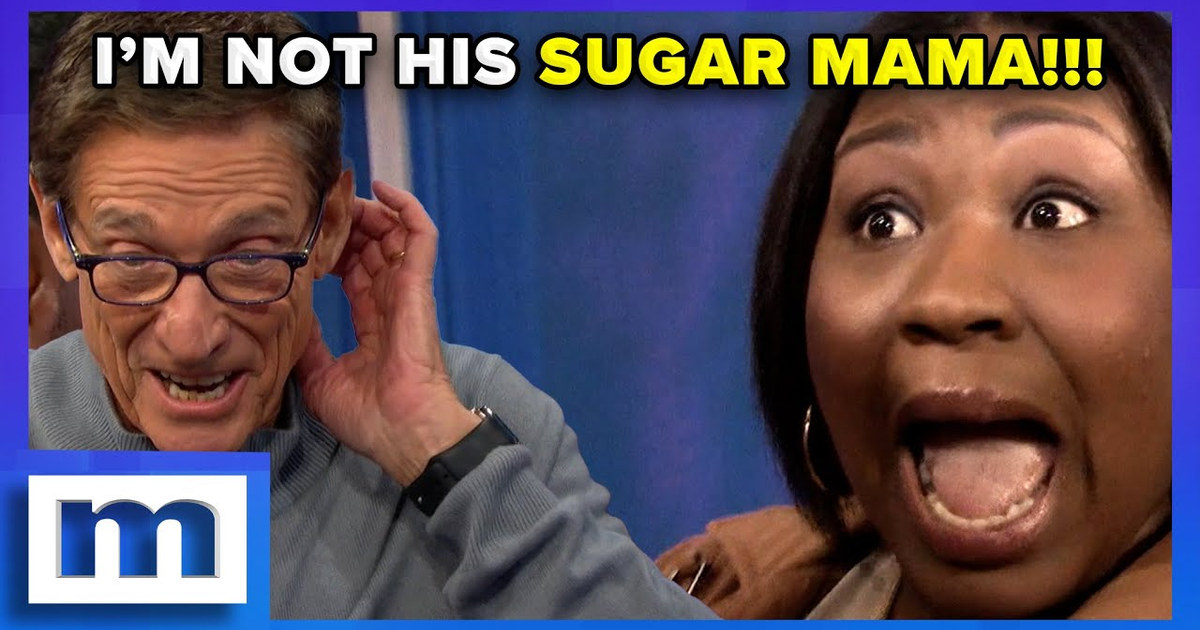
Let’s break down the key takeaways. First, lighting shapes narrative. On *Maury*, hard light is the weapon of choice for conflict. The key light is typically a 1K Fresnel with no diffusion, positioned at a 45-degree angle to create deep shadows and sharp highlights. That’s why every accusation feels like a punch. When the show wants empathy—like when a guest breaks down—the lighting team might soften the key with a silk or switch to a broader source, but those moments are rare. The default is confrontation. Study that contrast. In your own work, use hard light for arguments, interrogations, or any scene where power is contested. Use soft light for reconciliation, vulnerability, or romance. It’s a simple rule, but *Maury* proves it works.
Second, lens selection matters. The show relies heavily on 85mm and 50mm primes. The 85mm compresses the background and isolates the subject—perfect for reaction shots when Latrice hears a lie. The 50mm gives a more natural field of view, ideal for two-shots during heated exchanges. Both are fast lenses, often shot wide open to achieve that shallow depth of field. If you’re on a budget, rent or buy a nifty fifty and an 85mm f/1.8. They’ll cover 90% of your reality-style needs. And don’t underestimate the power of a tight close-up. *Maury* cuts to a tight shot of a trembling lip or a clenched jaw at exactly the right moment. That’s not accident—that’s editing rhythm.
Third, editing controls tension. Watch how the show paces its reveals. The editor holds on a reaction a beat longer than comfortable, then cuts to a different angle to reset the energy. The rhythm is almost musical: accusation, reaction, cut, accusation, reaction, cut. You can apply the same technique in narrative film. Study the editing in *Intervention* (2005–present) for naturalistic pacing, or *Cheaters* (2000–2019) for handheld verité that puts you right in the middle of the chaos. Both are goldmines for aspiring DPs and editors.
Now, practical advice. If you’re shooting a low-budget production and want to emulate *Maury*’s look, start with a single hard key light and a bounce for fill. Use a 50mm lens for master shots and an 85mm for close-ups. Keep your ISO low and your shutter at 1/48 or 1/50 for a cinematic feel. Don’t be afraid of contrast—embrace it. And remember, the camera is a character. In *Maury*, it’s an active participant, judging alongside the audience. Your camera should have a point of view, too.
Finally, never forget that even in reality TV, cinematography is storytelling. Every choice—from the angle of the key light to the focal length of the lens—communicates something. *Maury* may be known for its outrageous guests and lie detector tests, but its visual grammar is as deliberate as any scripted drama. So next time you watch, pay attention to the craft. And stay tuned: in our next part, we’ll dissect *The Maury Show*’s set design and color psychology—how those garish backdrops and saturated hues manipulate your emotions before a single word is spoken. You won’t want to miss it.


