Part 2
[[AD]]
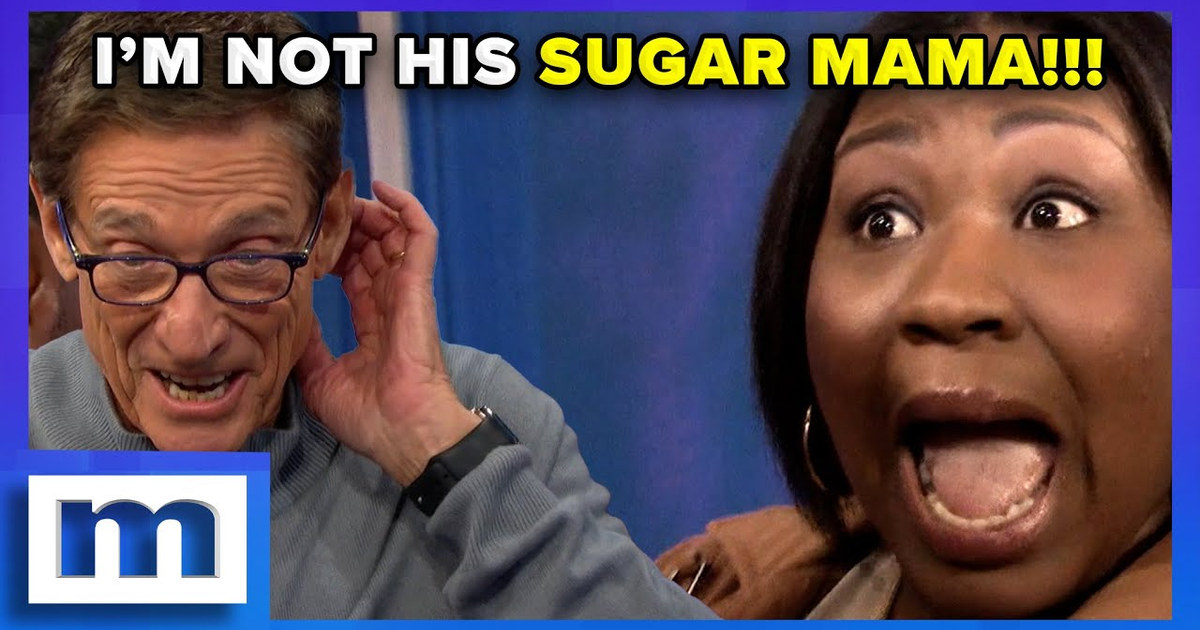
When Maury reveals the lie, the director doesn't cut to a wide. They cut to the close-up. Why? Because the reaction is the story. Josh's face — the slight shake of the head, the forced swallow — tells you everything the audio can't. And the cut is timed to the syllable. Maury says "lie," and by the time the word lands, we're already on Josh. That's not accident; that's a director calling the shot in the control room, anticipating the beat. It's the same instinct a editor uses in a scripted drama when a character gets slapped — cut to the reaction, not the action. Here, the reaction is the action.
[[VIDEO]]
But the three-camera setup isn't just about coverage. It's about control. The wide master gives you the safety net — you can always cut back to it if a guest stands up or the audience erupts. The medium two-shot is your conversational baseline. The tight close-up is your emotional punctuation. And because all three are rolling simultaneously, the editor has an arsenal of reaction shots. They can cut from Latrice's accusation to Josh's eye roll to Maury's skeptical squint to a random audience member's gasp. That's how you guide emotion. You're not just showing a fight; you're conducting the audience's response. It's the Kuleshov effect in overdrive — the juxtaposition of faces creates meaning.
Now, the editing pace. This is where the rhythm really lives. During testimony — when Latrice is reading texts or explaining the condom wrappers — the cuts are slower. You'll get a medium shot of her talking, then a cut to Maury listening, then maybe a close-up of the evidence on the monitor. The pace is deliberate, almost documentary-like. It gives the audience time to absorb the details. But the moment a confrontation starts — Josh interrupting, Latrice raising her voice — the cuts accelerate. It's rapid-fire: close-up, close-up, wide, close-up. The editing mimics the chaos of the argument. You'll see a cut on every line, sometimes every word. That's not sloppy; that's designed to overwhelm you, to make you feel the tension in your chest.
Compare that to The Bachelor (2002–present) during rose ceremonies. There, the editing is slow, almost languid. Long lenses, soft focus, dramatic music. The cuts are fewer because the drama is internal — who will he choose? The camera lingers on a tearful face, then cuts to a rose, then to another contestant's nervous smile. It's a different rhythm: anticipation, not confrontation. Survivor (2000–present) at tribal council is closer to Maury in its use of reaction shots. Jeff Probst asks a question, and the edit cuts to a series of close-ups — each player's face, the flicker of the torch, the whispered aside. But Survivor's pacing is more measured; it builds to a vote, not a shouting match. Maury's pace is punk rock compared to Survivor's classic rock.
Scripted dramas like Law & Order (1990–present) use a completely different grammar. In a courtroom scene, the director might hold a long take on the witness, then cut to the jury, then to the lawyer. The pacing is dictated by the script — the beats are written. On Maury, the beats are unpredictable. The editor has to find the rhythm in the raw footage. That's why the show feels so alive. It's not scripted, but it's carefully shaped in post. The reaction shots from the audience — the gasps, the cheers, the "oh no she didn't" faces — are inserted like a laugh track, but they're real. They tell you how to feel. When the audience gasps, you gasp. When Maury shakes his head, you shake yours. It's manipulation, but it's masterful manipulation.
And let's talk about the lighting that supports all this. The hard key light from the front creates deep shadows on the faces, emphasizing every crease and twitch. There's no soft fill to flatter; this is interrogation lighting. The background is often blown out or dark, pushing the subject forward. The lenses are long, compressing the space, so the guest feels trapped. It's the same technique used in thriller films — think Se7en (1995, directed by David Fincher, 127 minutes) or Zodiac (2007, also Fincher, 157 minutes). The camera is a microscope, and the edit is the scalpel.
So when you watch Maury, you're not just watching a talk show. You're watching a clinic in reactive coverage. The three-camera setup, the timed cuts, the reaction shots — it's all designed to make you feel like you're in the room, caught in the crossfire. And that's why it's so addictive. It's not high art, but it's high craft. And for any aspiring cinematographer or editor, it's a masterclass in how to build tension with nothing but angles and timing.
[[AD]]
What to Watch For: Lessons for Aspiring Cinematographers
The final verdict lands, and Latrice’s face collapses into a storm of fury and heartbreak. The camera holds tight on her—a 50mm lens wide open at T2.8, throwing the background into a creamy blur while her eyes glisten under the hard key light. Every micro-expression is carved out by the harsh, directional source, and you can practically feel the heat of the studio. That’s the payoff. That’s the visual language of *Maury* doing exactly what it was designed to do: make you feel every ounce of betrayal. And if you’re a filmmaker watching this, you should be taking notes. Because what happens on that set isn’t just drama—it’s a masterclass in low-budget cinematography that you can steal for your next project.


