Part 3
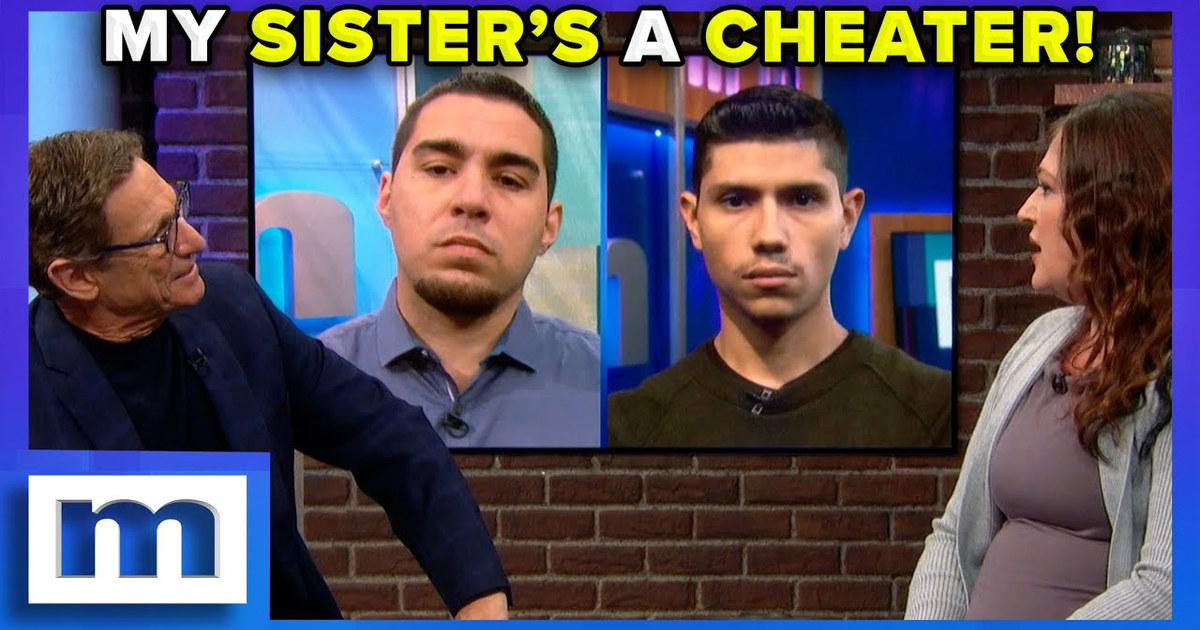
The confrontation itself is a masterclass in daytime TV drama. You’ve got the angry brother, the tearful sister, the conflicted husband, and the all-knowing host. It’s like a Tennessee Williams play directed by a reality TV producer. The dialogue overlaps, the emotions run hot, and the audience gasps on cue. If you’ve ever watched Maury, you know the drill. But even by Maury standards, this one hits different. Because it’s not just about a baby — it’s about a family tearing itself apart over nothing.
And let’s not forget the audience. They’re the Greek chorus, gasping and cheering and booing on cue. When Maury reads the results, they lose their minds. It’s a catharsis. For a moment, everything is right in the world. Stephanie is telling the truth. Robert is the father. Edgar is the liar. But the damage is done. Trust has been broken. Relationships have been strained. And all because one man couldn’t mind his own business.
So what happens next? Stephanie and Robert reconcile on stage, but you have to wonder if this is really over. Edgar apologized, but will he change? Will Robert ever fully trust Stephanie again? And what about that second baby? The one Stephanie is carrying right now? This isn’t just a one-episode arc. It’s a lifetime movie waiting to happen. And if you think Maury’s done with this family, think again. Daytime TV never lets a good feud die.
If you’re new to Maury, here’s the deal: the show has been running since 1991, and it’s hosted by Maury Povich, a former news anchor who found his niche in paternity tests and lie detector results. It’s produced by NBCUniversal and airs in syndication. You can find episodes on YouTube, streaming platforms, and wherever daytime TV lives. It’s not high art, but it’s compelling. And episodes like this one are why people keep watching. It’s real-life drama, raw and unfiltered.
The DNA test itself is a modern miracle. It’s a simple cheek swab, but it can determine paternity with 99.99% accuracy. That’s science. And science doesn’t care about your feelings or your Facebook posts. It just tells the truth. In this case, the truth set Stephanie free. But it also exposed Edgar as a meddler. And Robert? He’s left to pick up the pieces of his marriage. The test result was a relief, but it doesn’t erase the doubt. That’s the thing about trust — once it’s broken, it’s hard to rebuild.
Edgar’s apology is the weakest part of the episode. “I was just trying to make sure my nephews were taken care of,” he says. But he wasn’t. He was trying to be right. He was trying to control his sister’s life. And he failed. Maury tells him to respect their family, and it’s the most sensible thing anyone says all day. But will Edgar listen? Probably not. People like Edgar don’t change. They just find new targets.
[[AD]]
In the end, Stephanie and Robert walk off stage together, hand in hand. It’s a happy ending, at least for now. But the scars are there. The high-risk pregnancy, the home DNA test, the Facebook posts, the accusations — it’s a lot to overcome. And it all started because Edgar couldn’t keep his opinions to himself. If there’s a lesson here, it’s this: don’t let social media fool you. And don’t let your brother ruin your marriage. Easier said than done, right?
So the next time you see a happy family photo on Facebook, remember Edgar. Remember how he took a few posts and spun them into a paternity war. Remember how close he came to destroying a family. And then close the app and go hug your kids. Because the real world is messy enough without inventing drama. And if you’re Stephanie? Maybe block your brother. Just a thought.
What This Episode Teaches Us About Trust and Family
Let’s be real: you didn’t come here for a lecture on family values. You came because you watched a brother torch his sister’s marriage on national television and thought, “Wait, is this real?” It is. And it’s messier than a toddler with a paint set. But buried under the screaming and the DNA swabs, there’s a masterclass in how trust gets built, broken, and weaponized. So grab a drink. We’re going deep.
First, the obvious: Stephanie’s past infidelity made her an easy target. Robert admitted it on the show — she cheated before. That doesn’t make her a liar now, but it does make her less credible in Robert’s eyes. Psychologists call it the “confirmation bias” trap: once you believe someone is capable of betrayal, every innocent action looks suspicious. Robert didn’t just doubt Stephanie; he was primed to doubt her. Edgar didn’t create that doubt from scratch. He poured gasoline on a fire that was already smoldering.
But why would a brother do that? Edgar’s motives are murkier than a dive-bar bathroom. He claims he’s “protecting” Stephanie. But protect her from what? A husband who works, provides, and — according to Stephanie — loves their son? Edgar hadn’t seen his sister in four years. Four years! He missed birthdays, holidays, probably the whole first year of Caleb’s life. And then he pops up on Facebook, sees a few photos, and decides he knows Robert is a deadbeat? That’s not protection. That’s control dressed up in a cape.
Think about it. Edgar’s jealousy might stem from being replaced. Stephanie built a new family. She moved on. Edgar stayed stuck. When he saw her happy on social media, he didn’t feel joy — he felt irrelevant. So he manufactured a crisis. He told Robert that Stephanie cheated with an ex. He had no proof, no evidence, just a story. And Robert bought it. Why? Because Edgar wasn’t just any messenger. He was family. And in the twisted logic of distrust, family gossip feels like insider information. It’s the same reason we believe a cousin’s rumor over a stranger’s fact.


