Part 3
[[AD]]
So when you watch this episode, you're watching two things at once. You're watching a genre spectacle—a paternity test, a family feud, a brother who won't back down. And you're watching a piece of craft—a tension curve, a sound design, a host who knows exactly when to pause. The editing is the bridge between those two experiences. It's what makes the genre fan cheer and the craft nerd nod. And that's the verdict: the system works.
The Verdict Satisfies Both: Robert Is the Father, and the System Works
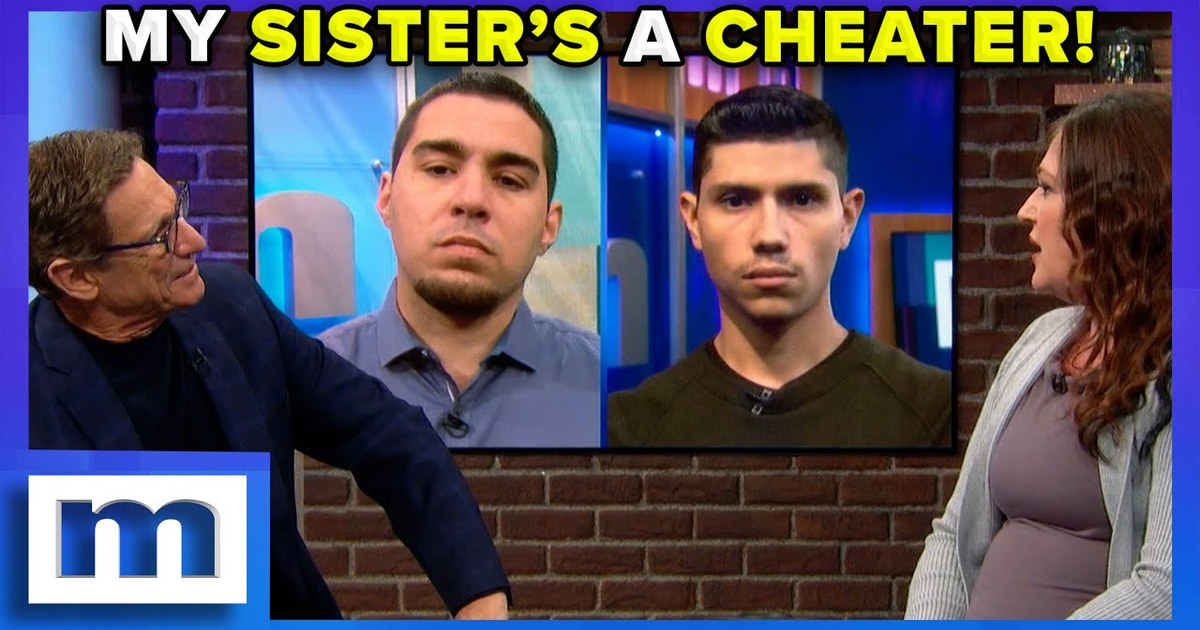
Let’s cut to the output. After all the Facebook forensics, the four-year estrangement, and the high-risk pregnancy drama, Maury Povich opens the envelope and delivers the line that has powered daytime TV since the Clinton administration: “Robert, you are the father.” The studio audience erupts. Stephanie, who walked in “2,000% sure,” gets her vindication in real time. She doesn’t gloat—she just says, “I told you.” It’s a small line, but it lands like a semicolon in a well-formed function: the end of one clause, the beginning of another.
For the genre fan, this is the payload. The paternity-test episode is a machine built to deliver exactly this moment, and it delivers. Robert, who spent the hour denying his one-year-old son Caleb, is forced to reconcile the DNA truth with his own stubbornness. Edgar, the brother who hadn’t been seen in four years, apologizes. He says he wanted to make sure his nephews were well taken care of. Robert apologizes too. He says he loves Stephanie and the kids. The family, fractured by Facebook surveillance and old grudges, inches toward reconciliation. If you came for the genre—the shouting, the walk-offs, the dramatic music stings—you got it. The system output a resolution.
But here’s where the craft nerd leans in. Watch how clean the three-act structure is. Act one: the accusation. Stephanie claims Robert is the father; Robert denies it; Edgar is the instigator. Act two: the confrontation. Edgar and Robert meet for the first time—literally, they’ve never met—and the tension spikes. Act three: the verdict. Maury reads the result, and the emotional release is proportional to the build-up. It’s not accidental. It’s engineered. The edit room knew exactly when to cut to Stephanie’s face, when to hold on Robert’s silence, when to let the audience applause breathe. This is the same kind of pacing you see in Sidney Lumet’s *12 Angry Men* (1957, 96 minutes), where the verdict isn’t just a plot point—it’s the release of a pressure valve that’s been tightening for 90 minutes. Maury’s show does it in 22 minutes plus commercials. That’s efficiency.
And Maury himself? He’s the runtime environment. He executes the format flawlessly. He doesn’t improvise; he doesn’t editorialize. He asks the questions, reads the results, and lets the humans do the rest. It’s the same discipline you see in a well-written shell script: no unnecessary output, just the commands that move the process forward. When he says, “Robert, you are the father,” he’s not just delivering a line—he’s closing a loop that the entire episode opened. The craft nerd nods. The genre fan cheers. Both are satisfied.
But let’s not pretend the code is bug-free. The transcript leaves open loops. Robert admitted Stephanie cheated twice. Edgar and Robert had never met before the show—so how did Edgar’s Facebook posts carry so much weight? And Stephanie is pregnant with a second child, which means the paternity question isn’t fully resolved; it’s just deferred. The craft nerd notes these as unresolved threads, potential exceptions waiting to be thrown. The genre fan doesn’t care. They trust the next episode to close them. That’s the contract of serialized television, from *Dallas* (1978–1991, CBS) to *The Real Housewives* (2006–present, Bravo). You don’t need every loop closed in one episode; you need enough closure to feel satisfied and enough mystery to come back.
This is where the hobbyist-programmer voice earns its keep. The Maury paternity-test episode is a legacy codebase. It’s been running for decades, through countless iterations, and it still compiles. It has bugs—trust issues, Facebook surveillance, family estrangement—but the core function, DNA truth, executes every time. You can refactor the drama, swap out the guests, update the social-media references, but the fundamental algorithm remains: accusation, confrontation, verdict. It’s the same reason *Law & Order* (1990–present, NBC) still works. The formula is the feature, not the bug.
So whether you came for the genre or the craft, the Maury paternity-test format remains one of TV’s most efficient storytelling machines. It’s a masterclass in narrative engineering, and it satisfies both audiences in the same 22-minute block. The genre fan gets the verdict, the vindication, the apology, the reconciliation. The craft nerd gets the three-act structure, the well-timed reveal, the host who executes the format flawlessly. Both walk away with what they came for.
Next time, we’ll look at another DNA-reveal episode and trace how the edit room builds the verdict before the lab does. Because the truth isn’t just in the test tube—it’s in the timeline. And if you’re a craft nerd, that’s where the real code lives.


