Part 3
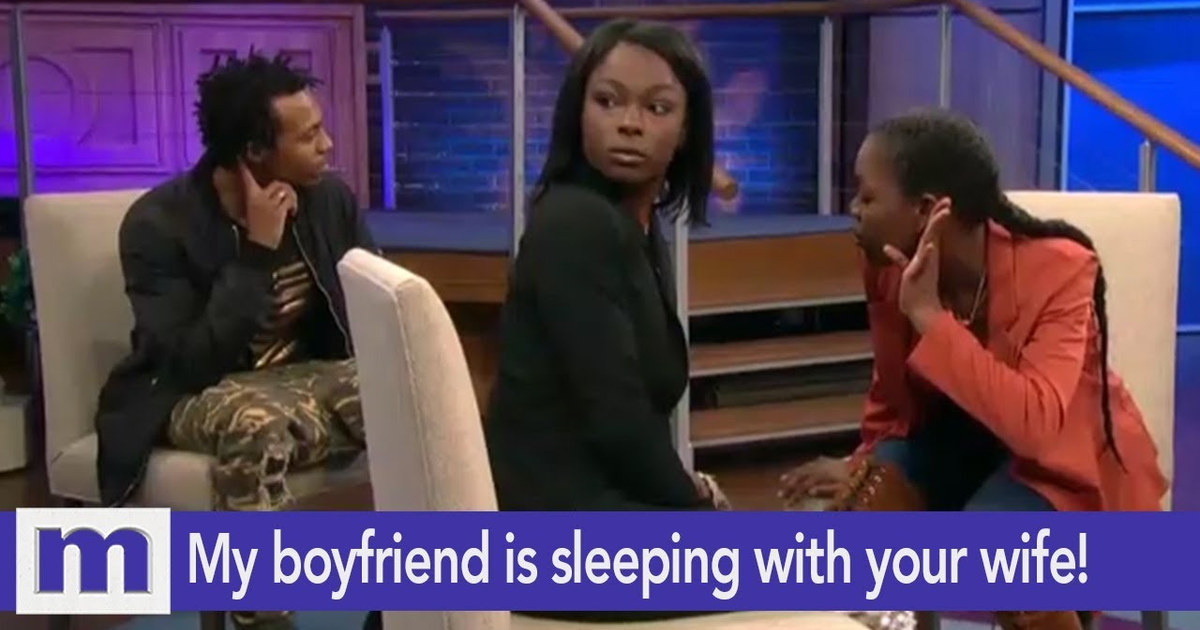
The show even uses Marquis's suspicion as a kind of second act. He calls Alexis, he says 'you better leave right now,' he's convinced something is going on. That's not just a plot point — it's a structural device. It gives the audience permission to believe Alexis, even when the evidence is thin.
And then there's the Facebook message. Trey allegedly sent a message to Alexis's cousin. He says his friend used his Facebook. Alexis says his friend has his own Facebook. It's a classic he-said-she-said, but the show frames it as a lie detector moment. The audience gets to play detective, even though they're just watching a talk show.
[[AD]]
What makes this work for both audiences is that the show never resolves the ambiguity. It lets the boomerang hang in the air. It lets the deleted text stay deleted. It lets the lie detector results speak for themselves — and then it moves on. That's not sloppy storytelling. That's deliberate. The suspense isn't in the answer; it's in the question.
So whether you're here for the drama or the design, you get the same thing: a carefully built architecture of suspicion. The genre fan gets the juicy details. The craft nerd gets the blueprint. And both of them get to watch a talk show do what it does best — turn a messy relationship into a tightly engineered hour of television.
The Polygraph as Narrative Engine: What Both Audiences Get
Okay, deep breath. The polygraph is on the table. The clip we all clicked on ends with the words 'the lie detector test determined...' — and if you're a genre fan, that's the payoff you came for. If you're a craft nerd, that's the mechanism you came to study. Let's take them one at a time, then see where they meet.
For the genre fan, the sequence is pure catharsis. Ciara sits down. The questions land. She passes. The studio audience gasps, then applauds. Trey sits down. He fails. The gasp is louder. The drama peaks. It's binary, it's visual, it's a verdict rendered in real time. You don't need to parse body language or weigh testimony. The machine says yes or no, and the room reacts. That's the engine running at full RPM.
For the craft nerd, the polygraph is a MacGuffin. Its actual accuracy is debatable — the scientific consensus is that polygraphs measure arousal, not deception, and they're inadmissible in most U.S. courts. But as a narrative device, it's a masterstroke. It provides a binary outcome that forces a resolution. No ambiguity. No 'he said, she said.' The machine cuts the knot. That's screenwriting 101 dressed up as daytime TV.
Now look at the questions themselves. 'Have you ever hit on any of her friends?' 'Have you ever slept with another woman?' Each one is engineered for maximum drama. They're not probing for facts. They're probing for betrayal. The wording is broad enough that almost anyone would hesitate, and specific enough that the audience can track the stakes. It's a precision instrument aimed at the heart, not the truth.
And the aftermath? Trey denies everything. He says the nickname 'Boomerang' is from childhood. He says the 2 a.m. texts are innocent. He says his friend used his Facebook. Alexis isn't buying it. Her face is a study in controlled fury. The show ends with a tease for the next part — because of course it does. Closure is a cliffhanger in disguise.
So here's the synthesis. The genre fan gets the verdict: Ciara passes, Trey fails, the audience gasps, the drama peaks. The craft nerd gets the machinery: a MacGuffin that forces a resolution, questions designed to elicit maximum drama, and an aftermath that keeps the story alive. Both audiences walk away satisfied. One got a lie detector. The other got a lesson in constructing reality TV.
If you're the genre fan, you're already rewinding the clip. If you're the craft nerd, you're already taking notes. Either way, the polygraph did its job. It turned suspicion into spectacle. And it left us all wanting more.
Next time, we'll look at another Maury segment — or maybe a deeper dive into lie detector tests in media. From 'The Jerry Springer Show' to 'The Polygraph' episode of 'The Simpsons,' the machine keeps showing up. Why? Because it works. Not as science. As story.


