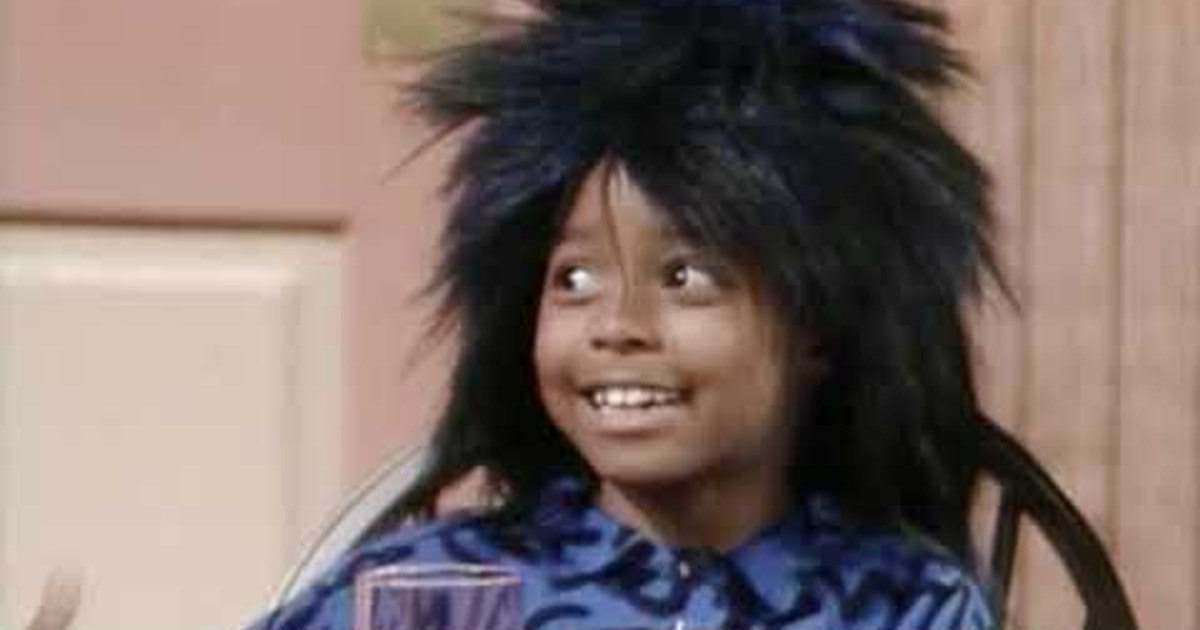
First, look at this: notice the exact, slightly crooked angle of that oversized wig resting on Rudy's head. Before any major plot point kicks in, before pagers buzz or labor wards call, the scene chooses to center itself on a child wearing her college-bound sister's discarded glamour. Why start there? Because classic television understands that the largest domestic stories always begin with the smallest domestic crimes.
Welcome to the archive. If you watched this sequence casually on a feed, you saw a string of warm, familiar gags. But when you step behind the velvet ropes and examine the machinery, you realize you are looking at an airtight study in comedic cadence and narrative handoffs. Today, we are taking a guided walk through every layer of this vignette in an order you probably would not have picked yourself.
Keep your eyes open, watch where the staging directs your attention, and let us examine why every single beat here still lands with pinpoint precision.
[[AD]]
Stop 1: The Tommy Turtle Parable and Pure Joke Architecture
Let us begin our tour not at the front door, but right in front of the television set where Rudy is giggling uncontrollably. Most sitcoms use television viewing as filler dialogue, but look at what happens when Cliff asks for the punchline. Rudy does not just recount a cartoon; she mounts a tiny, three-act play about Tommy Turtle getting trampled in a swamp.
Notice how the dialogue subverts expectations twice in fifteen seconds. Tommy gets stuck in the mud? Cliff thinks that is the joke, but Rudy shuts him down. The alligator steps on his head? Cliff bets on that being the climax, and Rudy denies him again. The real payoff is pure existential bravado: 'Hey you, I could have done that myself!'
Why does this mini-narrative matter to the rest of the scene? Because it establishes the household hierarchy. Rudy is entirely in command of the rhythm, completely unbothered by her father's adult seniority, perfectly setting the stage for Cliff to be humbled by every single person he encounters today.
[[AD]]
Stop 2: The Couch Cushion Economy and Domestic Jurisprudence
Shift your gaze across the living room to where Theo is engaged in serious architectural archaeology beneath the upholstery. A total of one dollar and sixty-three cents has been recovered from the sofa cushions, sparking an immediate philosophical dispute over salvage rights versus private property.
Study Cliff's legal argument here. He does not claim the change because he is the father who pays the mortgage; he claims the change because he takes naps on that specific cushion, meaning the gravitational drop belongs to him. It is a completely absurd defense delivered with the gravity of a Supreme Court ruling.
And how does Theo counter? By pointing out that he also naps on that couch. The knockout blow comes when Cliff notes that Theo does not actually possess money to lose from his pockets in the first place. It is a frictionless, sixty-second masterclass in how family banter can transform loose pocket change into gold-standard comedic characterization.
[[AD]]
Stop 3: The Hallway Handoff and the Five-Second Rom-Com
Now, turn toward the entryway. Watch how quickly the room shifts atmosphere when Janet enters with her guest, Althea Logan. In lesser shows, guests enter, deliver exposition, and leave. Here, the blocking turns a simple doorway transition into a miniature teen romance beat.
Notice Cliff rushing out the door mid-sentence, trying to juggle hospital duties while greeting his daughter's circle. The entire exchange between Theo and Althea takes less than ten seconds, yet it plants an entire subplot with just four words: 'He is cute.'
What makes this transition so brilliant from an archival perspective? It is the simultaneous handling of three separate life stages under one roof: the youngest child playing with cartoons, the teenage son suddenly caught in the spotlight of teen romance, and the patriarch hustling to catch new life being born across town.
[[AD]]
Stop 4: The Hallways of St. Jude's and the Art of Clinical Hazing
Step into the hospital wing now, where the lighting cools and the tempo quickens. Meet Dr. Eckhard, the model resident. He has the clinical data memorized cold: Mrs. Gregory admitted at 10:05, birthing room one, seven centimeters dilated, vertex at station minus two. He is ready for a medical quiz.
So what does Dr. Huxtable ask him? 'What color was her overnight bag?'
Why throw a curveball like that? Because Cliff's brand of mentorship is grounded in observational humility. When the young resident stammers and guesses green, Cliff instantly dismisses it: 'Green doesn't count.' It reminds the junior doctor that obstetrics is not merely charts and centimeter measurements; it is about paying attention to the human being living inside the room.
[[AD]]
Stop 5: Birthing Room One and the Panic of Clayton Lee
Our final stop brings us directly to the bedside of Karen Gregory. Under normal circumstances, this would be a traditional delivery room dynamic. But note the narrative complication: Karen's husband Chuck is stationed in Iceland, leaving her anxious father, Clayton Lee, to serve as her birth coach.
Listen to Mr. Lee's confession. He raised three children in an era when fathers were strictly quarantined to waiting rooms with ashtrays and magazines. The sudden shock of modern birthing classes has left him shaken to his core. 'Those movies,' he mutters. 'I don't know if my heart can take this.'
[[VIDEO]]
Pay close attention to the reversal of roles right here. When Cliff gently inquires if Mr. Lee has a pre-existing heart condition, the response is immediate: 'Not yet.' Karen ends up rubbing her father's shoulder, promising to hold his hand through the ordeal. It flips the entire paternal archetype on its head with devastating warmth.
The Takeaway: Why These Gears Still Turn Flawlessly
When you dissect the architecture of these scenes, you realize nothing is accidental. The silliness of the turtle joke balances the tension of incoming childbirth; the squabble over a dollar-sixty-three grounds the emotional stakes before we ever meet an anxious expectant grandfather.
Great television does not just give you punchlines; it orchestrates a symphony of different human anxieties, releases them with effortless humor, and makes it all look completely spontaneous.
And now go back and watch the opening again.


