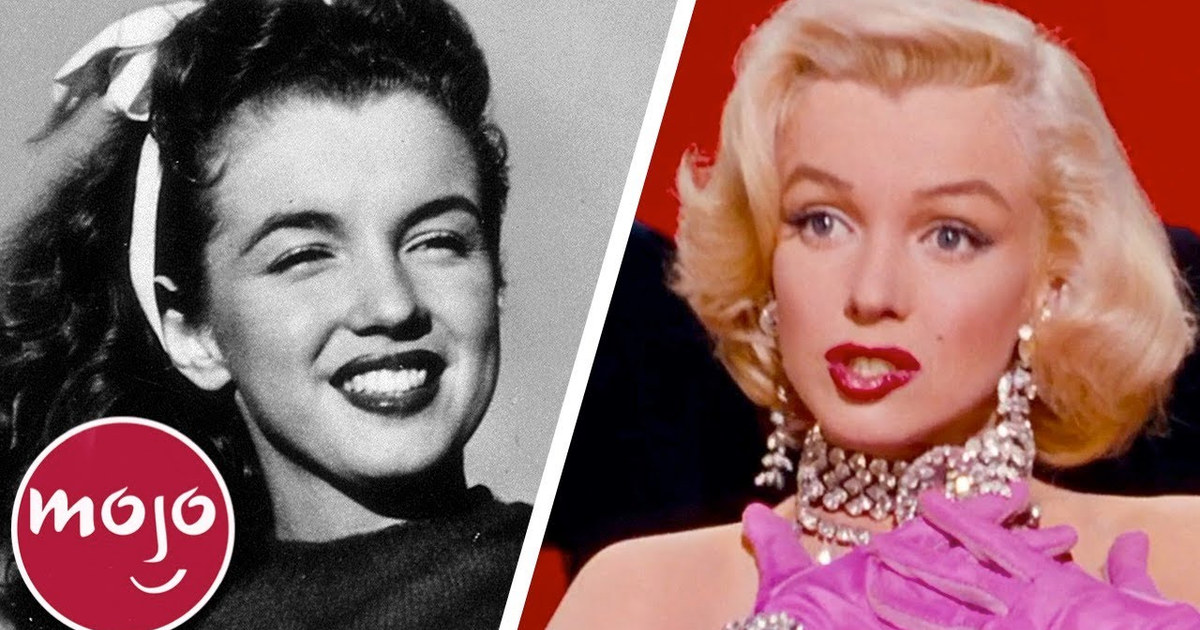
Part 2
In real life, Monroe was very intelligent. She had a large library and she read it. She held her own against the studios in fights that would have flattened most new stars. Near the end of her life she pushed hard for dramatic roles and sat down for serious interviews, trying to peel the dumb blonde off her own face one piece at a time. That's the part the cliché can't survive — a woman managing her own myth while the men holding the contracts insisted the myth was all she had.
[[AD]]
One Phone Call
Which brings us back to the Mocambo. Monroe was friends with the legendary jazz singer Ella Fitzgerald, and when the club's owner refused to book her, Monroe got involved — and the answer changed. Fitzgerald's own memory of it was that Monroe was 'ahead of her time and didn't even know it.' Read that twice. The woman the industry dismissed as a dumb blonde understood something about power, race, and closed doors that the man with the velvet rope clearly didn't. The record of the whole thing is thin. What survives is that it happened, and that it mattered, and that she never used it as a trophy.
The Cost of Being Believed
By the early 1950s she had the fame, and she was already suffering psychologically underneath it. Her acting mentor, Lee Strasberg, encouraged her to attend psychotherapy. She carried existing mental health problems — depression, anxiety — and movie stardom turned the volume up on every one of them. The pressure of being a manufactured object in public, combined with substance abuse issues, made everything worse. This is the part the white dress was designed to hide. The smile in the photographs is real. So is everything behind it.
She married numerous times, including two enormous names: baseball icon Joe DiMaggio and the celebrated playwright Arthur Miller. All of her marriages ended prematurely. By some accounts she stayed friends with DiMaggio right up to the end of her life — a man from an entirely different world who, for a while, seemed to see the person and not just the poster.
She also lived with endometriosis, a physical condition where tissue similar to the lining of the uterus grows outside it, on other parts of the reproductive organs. It is agonizing. It's the kind of pain that never shows up in a photograph, never gets a headline, never fits the fantasy. And it meant that every pregnancy she ever conceived ended in a miscarriage. Every single one. A lifetime of private grief the fan magazines never covered, because grief doesn't sell a lipstick.
[[AD]]
The Word They Used
As her career went on, she picked up a reputation: difficult to work with. Frequently late to set. Sometimes intoxicated when she arrived. She was prescribed a long list of medications, including the barbiturates she would ultimately overdose on. Consider the cruelty buried in that sentence. The drugs that were meant to hold her together are the ones that finally took her apart, and the industry that stamped her 'difficult' was the same industry writing the prescriptions.
[[AD]]
Spoiler warning: from here we're talking about the end of her life and the way her image has been treated since. If you'd rather meet her first, go watch Gentlemen Prefer Blondes and come back to this.
August 1962
In August 1962, Monroe died of an overdose. She was found dead in Los Angeles by her housekeeper. She was thirty-six years old — a single year older than the Broadway star she borrowed half her name from. The girl who got handed around foster homes outlived her own namesake by twelve months.
And she didn't get to rest. Conspiracy theories have swirled around her ever since, offering three different answers: accident, suicide, or murder. Three loud theories, all of them competing with the quiet fact that a woman who spent her whole life being described by other people didn't get to describe her own ending either.
[[VIDEO]]
[[AD]]
The Afterlife Has Been Worse
The way her image has been handled since is its own kind of tragedy. In 1953, the very first issue of Playboy published nude photographs of Monroe from her modelling years — without her permission. Decades later, when Hugh Hefner died in 2017, he was interred next to her. The man who built a magazine on photos she never agreed to release bought himself the plot beside her for eternity. You couldn't write that as fiction. Nobody would believe it.
It gets worse. X-rays of Monroe have been sold at auction, and plenty of news outlets happily published them alongside the breathless claim that they proved she'd had plastic surgery. Even her skeleton got a headline. Even her bones were content.
Her face went into Andy Warhol's artwork and from there into everything else — posters, t-shirts, mugs, the endless loop of one of the most recognizable people in human history. She remains a legend of cinema. And here is the small mercy at the end of all of it: her reputation is finally starting to escape the dumb blonde cliché that Hollywood manufactured so successfully. Even if her image, as always, remains a very profitable commodity.
The Room, Again
So come back to the Mocambo with me one more time. Neon on the Sunset Strip. A closed door. A woman who has been told her entire life what she is — a body, a blonde, a joke, a rumor — standing there holding the only thing this town ever let her keep: her own name on a marquee. She could have spent that name on herself. Another contract. Another headline. Another magazine cover she wouldn't be paid for. Instead she spent it on Ella Fitzgerald, and the door opened, and the room filled with a voice that deserved to be in it.
That's the Marilyn Monroe the clip isn't really about, and the one the cliché can't hold. A foster kid from Los Angeles with a library, an endometriosis diagnosis, and a head full of medication, who got lied about by her own agent and typecast by her own studio — and still figured out earlier than almost anyone around her that fame is only worth what you do with it.
That's the woman behind the dumb blonde. Up next, we go deeper into the movies themselves — where that blonde act came from, why Gentlemen Prefer Blondes still works decades later, and how the most manufactured star in Hollywood kept slipping real, unscripted humanity past the cameras. Subscribe, ring the bell, and don't go anywhere.


