Part 1
The Mocambo sat on the Sunset Strip in West Hollywood, all neon and velvet rope, and on that night in the 1950s its owner had already said no. He said no to Ella Fitzgerald. One of the greatest jazz singers alive, and the door stayed shut. What happened next is usually told as a phone call, because that's the shape of it — a famous woman picks up the phone, makes it clear that the room will be very sorry if it stays closed, and the booking happens anyway. The famous woman is Marilyn Monroe. At that exact moment she is the most photographed face on the planet. She has one currency in this town, and it's attention. She spends it on somebody else's career. No press release. No camera crew. No award. Just a closed door, a refusal, and a person powerful enough to overturn it who decided to.
If you clicked over from the clip, you already know the other Marilyn. The white dress. The breathy voice. The diamonds. The sad, short, scandal-soaked ending that gets retold every few years like a ghost story. The blonde is the headline. But that one small act of leverage — a movie star quietly spending her name on a jazz singer — tells you more about who she actually was than a hundred tabloid covers ever did. So let's pull that thread and see where it leads.
Norma Jeane, Before Anyone Called Her Marilyn
She wasn't born famous. She was born Norma Jeane Baker, raised in Los Angeles, which is a polite way of saying she grew up in the shadow of the biggest dream factory in the world. Her mother, Gladys, was mentally ill. Her father was a name people have argued about for decades — and a man who simply never showed up, not for any part of it. Monroe herself never knew for certain who he was. Sit with that. The most famous woman of the twentieth century started as a question nobody ever answered.
Then her mother's mind broke. Gladys was diagnosed with paranoid schizophrenia — a condition the 1930s understood badly and treated worse — and Monroe was taken into foster care. She spent the next ten years being passed from home to home, family to family. A suitcase kid in the city of happy endings. She grew desperately shy. She was abused by the very caregivers who were supposed to protect her. At sixteen she married a sailor and became a housewife, and she never finished high school. That is the résumé. Now watch what Hollywood did with that face.
[[AD]]
The Name Was a Costume
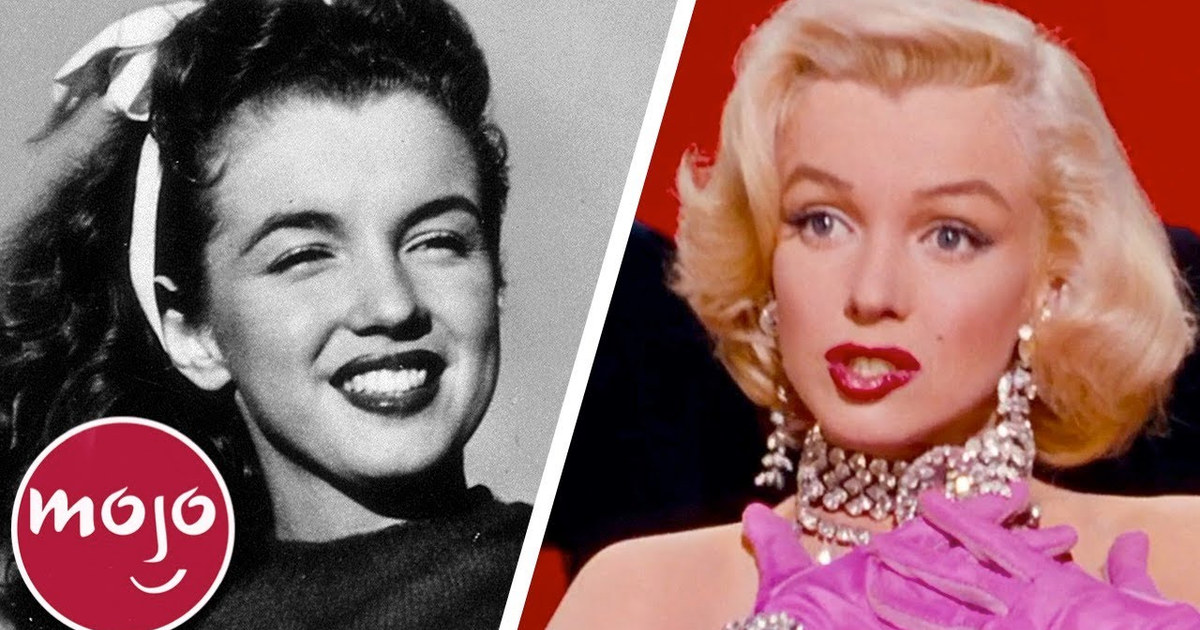
The war is what opened the door. Monroe went to work in a factory as part of the war effort, and a photographer named David Conover came through taking morale-boosting pictures of women at work. One photograph became modelling. Modelling became an agency. The agency dyed her hair blonde and handed her a new name, because the girl from the foster homes wasn't considered appealing enough to sell. The blonde was always a product. It just happened to be wrapped around a real person.
And what a name they built. Marilyn came from Marilyn Miller, a Broadway star of the 1920s who died at thirty-seven — a single year older than Monroe was when she died. Monroe came from her mother's maiden name. So the identity that made her immortal was stitched together from a dead actress's first name and the family name of a woman she barely got to know. Here's the part that should stop you cold: even as she kept that thin connection to her institutionalized mother, her agent made her tell people her mother was dead. It was easier. The machine had already started editing her life, and she wasn't even a star yet.
In 1946 she signed with 20th Century-Fox, and the studio didn't think much of her at all. She didn't land a single role in her first six months under contract. Six months of the dream you've been chasing since you were a shy kid with a suitcase, and nothing. So she spent her days learning how to act instead of doing it — coaches, classes, homework, hours of work with no camera and no payoff. Eventually the studio figured out what it was holding. And the box office agreed with a vengeance.
[[AD]]
Six Years to Top Billing
Six years of hard work later, she had top billing in Gentlemen Prefer Blondes, standing shoulder to shoulder with Jane Russell. That film is a classic for a reason — the timing, the comedy, the sheer glow of two women who know exactly what the audience is looking at. Between that and their other starring roles, both women earned stars on the Hollywood Walk of Fame. That's the postcard version of the story. Bright. Blonde. Laughing. Obsessed with diamonds. Hold onto that image, because it's the thing that nearly swallowed her whole.
The Blonde Was a Machine
Monroe was typecast as a dumb blonde, and the studios kept such strict control over her public image that audiences eventually stopped believing it was a performance. That's the machine. Say a thing often enough and loudly enough, and people stop hearing an act and start hearing a personality. Hollywood built a doll. It sold the doll. Then it got annoyed when the doll had opinions. The trap is almost too neat to be real: the more perfectly she played the fantasy, the less anyone wanted to know the person inside it.


