Part 1
The room goes quiet the way rooms do when something old is about to happen. Not silence — rooms are never truly silent — but the small sounds fall away. A glass set down. A laugh swallowed before it lands. A phone that will not be checked for the next three minutes.
And then the singer leans into the microphone and says it like a shrug, like a secret they've been carrying around all night: you said you wanted to hear all of it, and here it is — the song we start every show with.
Not the hit they came for. Not the one that plays over the end credits. The one that opens the door.
One chord. A breath. And the line floats up over the crowd, so plain it feels like it was already in the room before anybody sang it: Love is like a butterfly.
[[AD]]
Eight words. That's the seed of the whole thing. Everything that follows — the satin wings, the strange heart, the daffodils — grows out of those eight words and the small sigh of a melody underneath them.
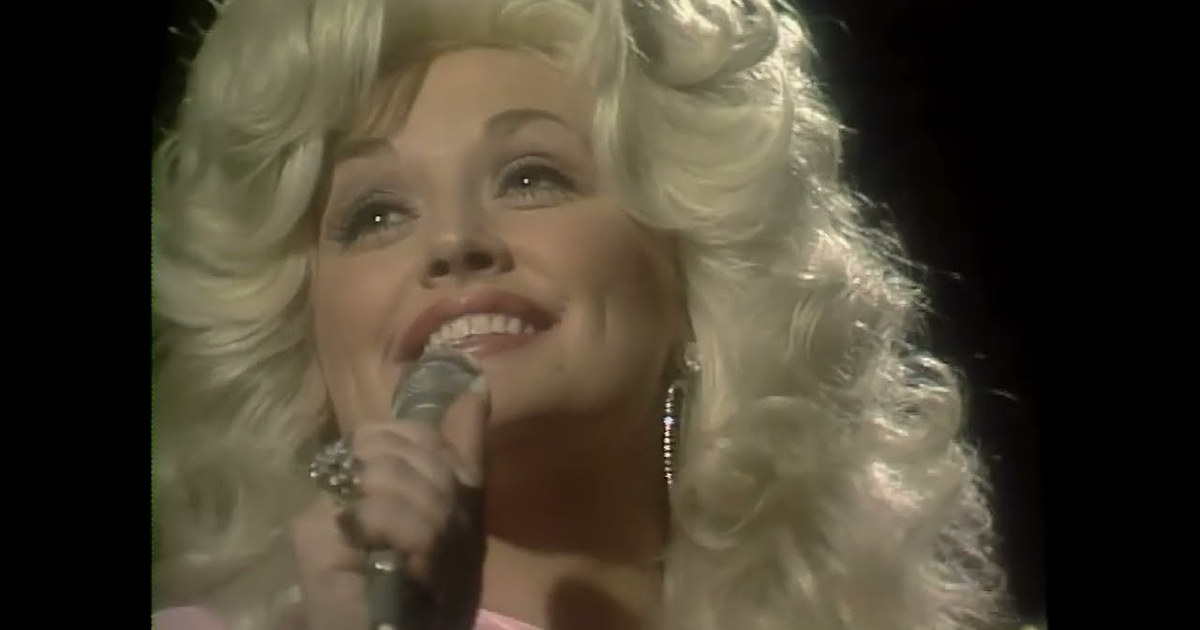
This is Dolly Parton's "Love Is Like a Butterfly" — written and released in 1974 as the title track of the album of the same name, and a country single that climbed all the way to the top of the chart.
So why is this the song that opens a show? Fifty years later, in a room full of people who weren't alive when it came out, why does this one get to go first?
The Song With No Story
Look at what "Love Is Like a Butterfly" refuses to do. There's no town. No porch. No name on a letter. Nobody leaves anybody at a bus station in the rain.
There's just a feeling, described six different ways, each one softer than the last. Love is like a butterfly. The multicolored moods of love are like its satin wings. Love makes your heart feel strange inside.
Compare that to the rest of the country songbook of that era — the cheatin' songs, the jail songs, the my-truck-left-and-took-my-dog songs. Those are short films. This one is a photograph you can't stop looking at.
[[AD]]
And that's exactly why it works as an opener. A song with a plot demands your attention. A song with no plot hands your attention back to you, gently, folded, like a coat.
It doesn't ask an audience to follow anything. It asks them to feel something. That is a much easier first ask at 8 p.m. on a Tuesday.
There's a craft hiding in that simplicity, too. Every verse ends on the same few words, so by the second pass the crowd already knows where the song is going. Nothing about it is a trap.
The Line That Opens the Wound
Then comes the line that keeps this from being greeting-card fluff: Love makes your heart feel strange inside.
"Strange" is not a pretty word. In a song built entirely out of pretty words — soft, gentle, satin, rare — "strange" is a splinter under the skin. It's the one rough pebble in a bowl of them.
[[AD]]
It's also the truest thing in the whole lyric. Love doesn't feel like satin. It feels like a medical event. Something in your chest is doing something new, and you don't have a name for it yet.
And notice what the song does right after naming it: it flutters like soft wings in flight. It doesn't explain the strangeness. It puts wings on the strangeness and lets it go.
That's a screenwriting move, honestly. You don't diagnose the feeling. You cut to the image and let the audience do the work. Dolly was doing in two lines what most movies take an act to manage.
1974: The Year the Butterfly Landed
Context matters here, because Dolly Parton in 1974 was a woman standing in a door that was swinging open.
She'd come out of the Porter Wagoner years — the duets, the television show, the partnership that made her famous and, by her own account, eventually made her restless. She was writing her way out of one story and into another.
[[AD]]
The early seventies handed her "Jolene" and "I Will Always Love You." Two songs that could not be more different from each other, or from a butterfly. One is a jealous knife. One is a goodbye note. Both are enormous.
Then comes this one: a title track that sounds like it was written on a porch in about ten minutes, and probably was. Its simplicity is not a failure of ambition. It is the ambition.
Because the butterfly song isn't trying to be a hit. It's trying to be a sound — the sound of a feeling you get in a garden, or a car, or a kitchen, when someone you love walks in and the light changes.
Then Britain Took It and Made It Mean Something Else
Here's where the song leaves the country charts and walks straight into television history, which is where a lot of us first met it without ever knowing whose it was.
In 1978, the BBC launched Butterflies — Carla Lane's sitcom about Ria Parkinson, a suburban housewife played by Wendy Craig, quietly drowning in a life that looks perfectly fine from the outside.


