Part 2
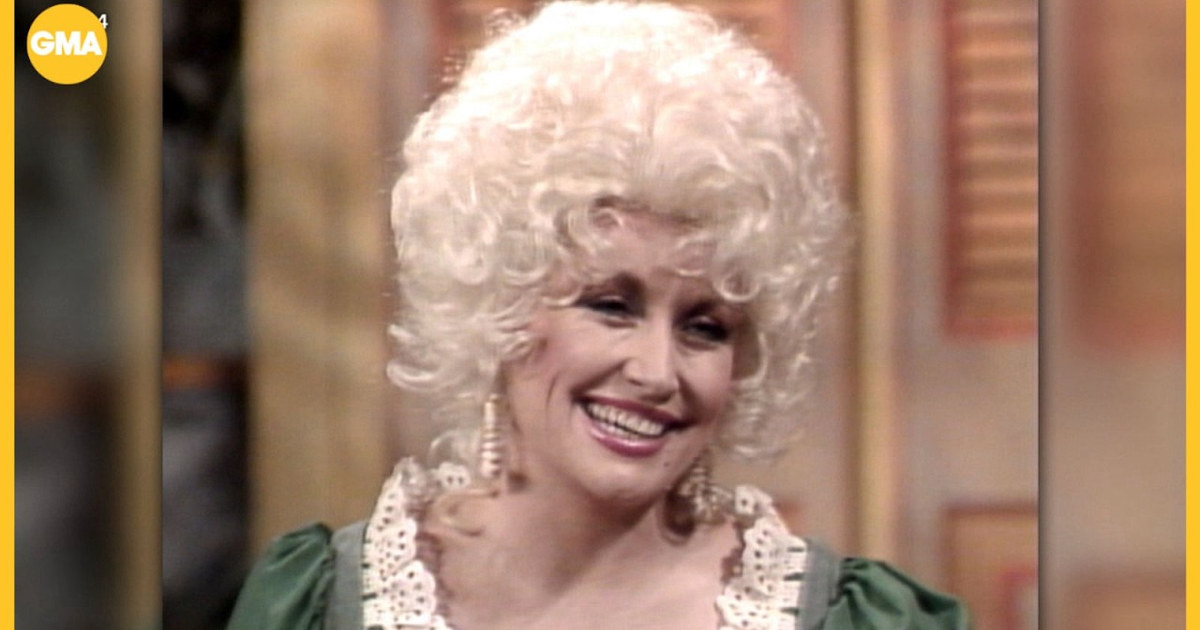
So why does the shoe moment matter so much? Because it's the lens. If you watch Dolly Parton on GMA across five decades and you only see the wigs and the rhinestones, you're watching the surface. If you watch the shoe exchange and hear a woman who treats glamour as workwear — as the thing she puts on to do the job she was born to do — you're watching the engine. She told the backstage ladies she can't sing without her shine. She told Joan Lunden she grew up loving the land and loving God and loving one another. Same person. Same voice. Same Tennessee. The shine is the land. The land is the shine.
And if the shoes are the surface — the first thing you notice, the thing that makes you smile before you even think about why — then the songwriting is the engine underneath. Because Dolly has been telling GMA for years that the songs are where the real work happens. In one of those sit-downs, a host asked her if she works through her own problems and emotions in her songwriting. Her answer was immediate and total: "I do. In fact, that's been my greatest therapy. My doctor is my gift for songwriting and I've been writing songs. I have written thousands."
Thousands. Not dozens. Not hundreds. Thousands. And she calls it therapy. Not art. Not craft. Therapy. The next stop on this tour is that doctor's office — the room where the songs get written, where the pain gets processed, where a girl from a one-room cabin in Sevierville turns everything she survived into something the rest of us can sing along to. If the shoes are how she walks onto the stage, the songs are how she walks through the world. And she's been doing both for so long that the two are impossible to separate.
But before we get to the songwriting, go back and watch the opening again. The 1980 clip. Dolly, Jane Fonda, Lily Tomlin, 9 to 5, acoustic guitar, morning light. Watch her face when she sings "barely getting by." She's not performing poverty. She's remembering it. And she's wearing sequins while she does it. That's the whole tour in one shot. The shine and the struggle, side by side, neither one canceling the other out. She planted the flowers. She smelled them. She put on the shoes. And then she sang.
Stop Two: The Songwriter's Doctor's Office
Before we go any further on this tour, I need you to do something. Close your eyes for a second and picture Dolly Parton not on a stage, not under a spotlight, not in front of a cheering crowd. Picture her sitting alone with a legal pad and a pen. That's the room we're walking into now. It's not glamorous. There are no sequins in here. But this is where the real machinery of Dolly Parton lives, and she said so herself on Good Morning America. When the interviewer asked if she works through her own problems, emotions, and feelings through songwriting, she didn't hesitate. "I do," she said. "In fact, that's been my greatest therapy. My doctor is my gift for songwriting and I've been writing songs. I have written thousands."
Sit with that for a second. Thousands. Not dozens. Not hundreds. Thousands. Most songwriters would be lucky to leave behind a hundred finished songs. Dolly Parton has written enough to fill a library, and she's still writing. But here's the thing that makes this stop on the tour so important: she doesn't call it her career. She calls it her doctor. She calls it a gift. That's not the language of a businesswoman. That's the language of someone who needs the writing to survive.
So let's look at what comes out of that room. Because the songs that come out of that private doctor's office are the ones that made her a legend.
[[AD]]
The Workplace Anthem That Started It All
In 1980, Dolly Parton walked onto the Good Morning America set to promote a movie called 9 to 5. The film starred Jane Fonda and Lily Tomlin alongside Dolly in her acting debut, and it was directed by Colin Higgins. It's a comedy about three women who get fed up with their sexist boss and decide to do something about it. The movie runs about 110 minutes, and it's still one of the sharpest workplace comedies ever made. But the reason we're talking about it here is the song.
Dolly gave GMA an acoustic sampling of "9 to 5," and you can hear the crowd light up the second she starts. "Working 9 to 5, what a way to make a living, barely getting by. It's all taking and no giving. They just use your mind and they never give you credit. It's enough to drive you crazy if you let it." Those lyrics are not subtle. They're not trying to be. That's the point. She took a universal complaint — the grind, the disrespect, the feeling that you're giving everything and getting nothing back — and she turned it into something you could tap your foot to.
Think about what that takes. Anybody can write a sad song about hating their job. Dolly wrote a song that made hating your job feel like a party. That's a different skill entirely. And notice the details she chose. "Barely getting by." "All taking and no giving." "They just use your mind and they never give you credit." These aren't abstract complaints. They're specific. They're the things you mutter to yourself at your desk at 3 p.m. on a Tuesday. She took those mutters and made them rhyme.


